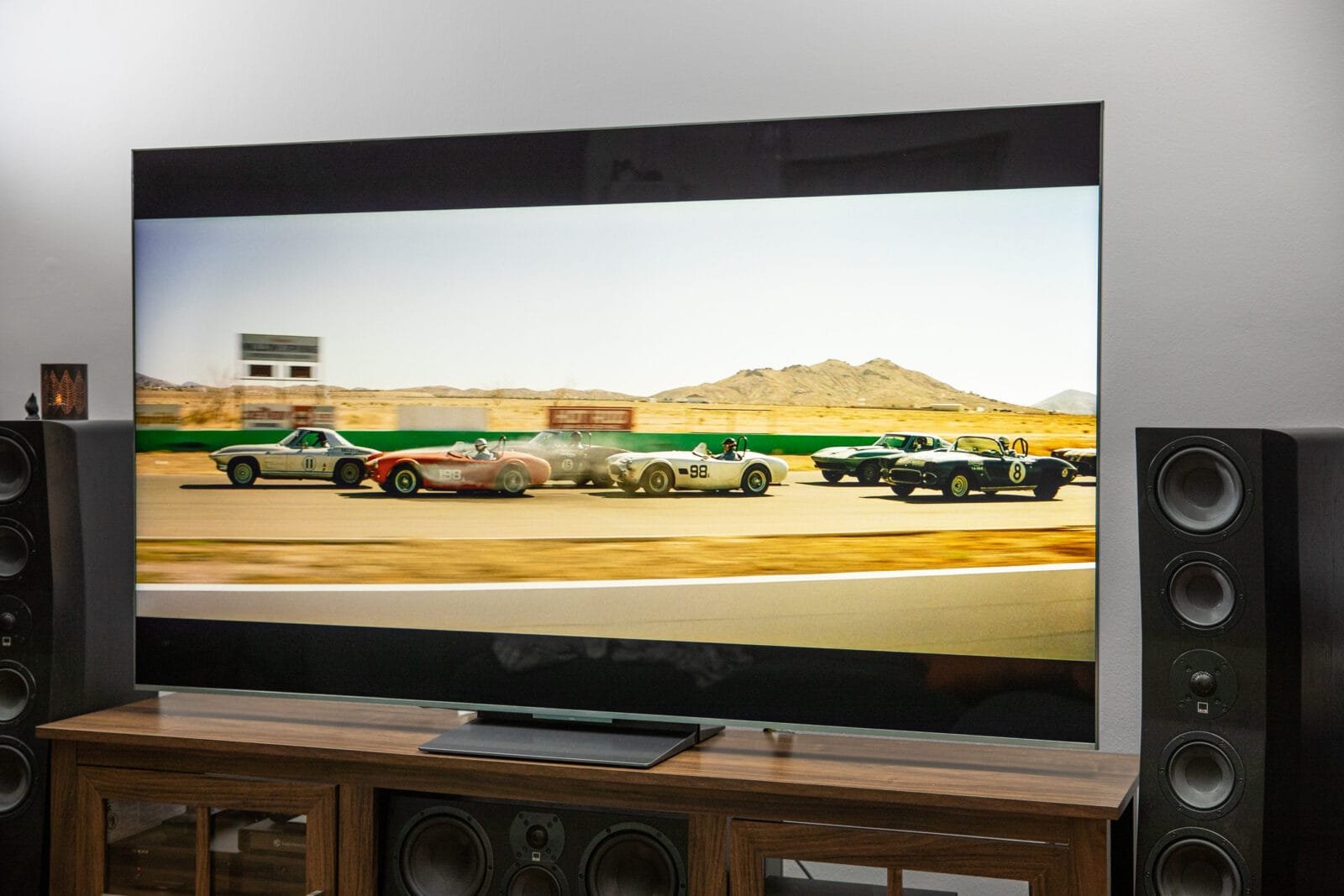

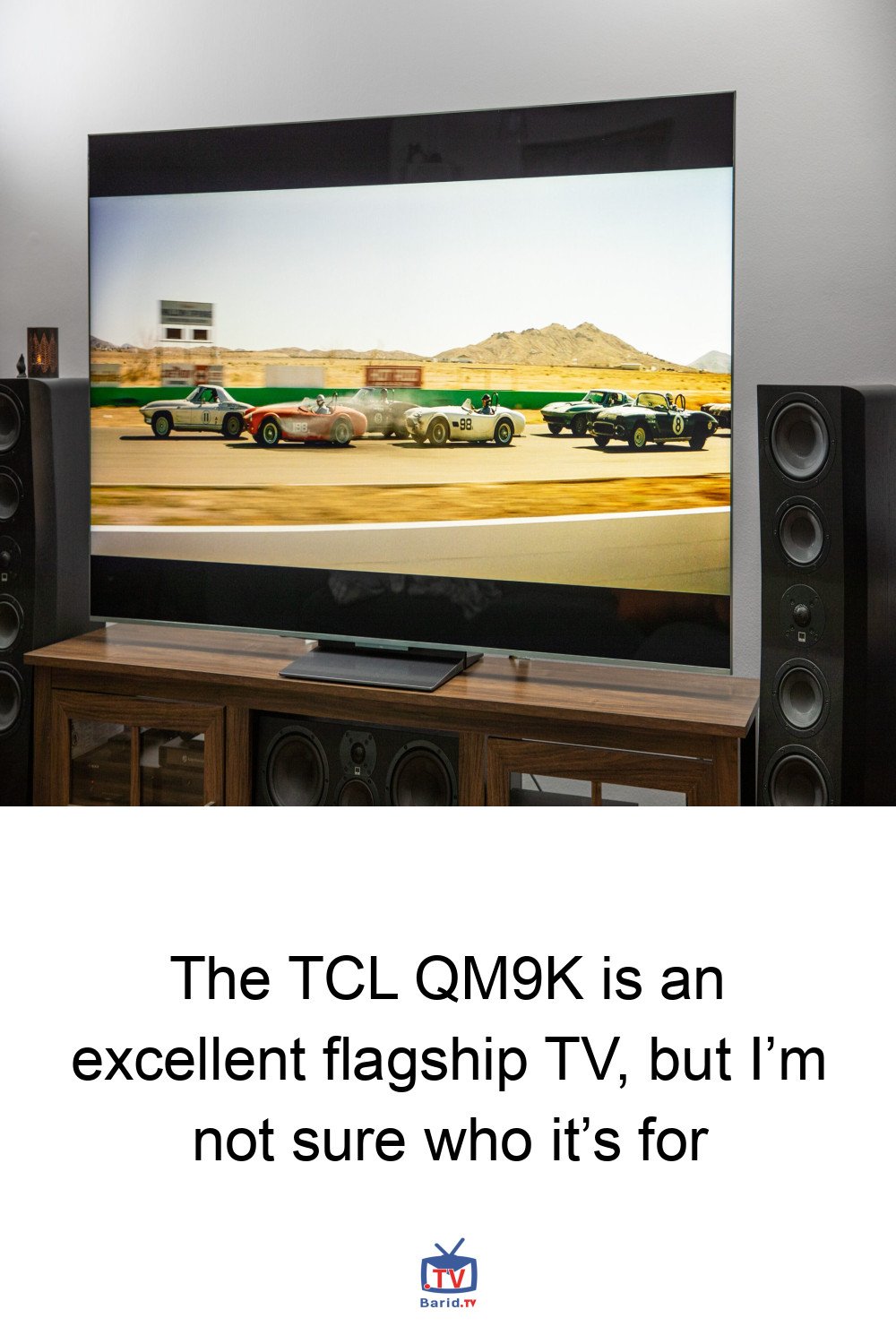
The TCL QM9K is an Excellent Flagship TV, but I’m Not Sure Who It’s For
Meanwhile, TCL has been a solid competitor in the midrange TV market for years, going head-to-head with Hisense. Not only are TVs from both manufacturers competitive on features, they even use similar nomenclature to categorize their TV lines.
However, with TCL’s new flagship QM9K, its sights are set higher, toward Sony and its flagship Bravia 9. This year, TCL launched its Ultimate Series, which includes the QM8K (dubbed “The Ultimate Choice”) and the QM9K (“The Ultimate Performance”), billed as the best TCL TV ever released.
Key Features and Specifications
Consequently, the QM9K is available in four different sizes: 65 inches ($2,999.99), 75 inches ($3,499.99), 85 inches ($3,999.99), and 98 inches ($5,999.99). It was the first TV to launch with Google Gemini, it has a presence sensor that can turn on its ambient mode to show artwork, and TCL claims it’s capable of up to 6,500 nits of brightness.
Moreover, the QM9K is remarkably similar to the QM8K, which is $500 less across all model sizes except the 98-inch, where it’s $1,000 cheaper. Both models have 144Hz native refresh rate with FreeSync Premium Pro support, use WHVA panels for wider viewing angles than regular VA panels, and utilize improvements to TCL’s backlighting introduced in 2025 to minimize blooming.
Performance and Testing
Therefore, I set up each TV in my living room on my home theater credenza. I stream movies and shows through the TV’s apps, play discs on my Oppo UDP-203 4K Blu-Ray player, and play games on my Xbox Series X and PlayStation 5. This is done at different times of the day and under different lighting conditions.
Meanwhile, I use Portrait Displays’ Calman color calibration software, a Murideo 8K Seven pattern generator, an X-rite i1 Pro 3 spectrophotometer, Portrait Displays’ C6 HDR5000 colorimeter, a Konica Minolta LS-100 luminance meter, and Leo Bodnar 4K lag tester for measurement.
Conclusion
However, the QM9K’s brightness capability is its most notable feature. The height to which both TCL and Hisense have pushed in TV brightness over the past couple years is nothing short of astounding, and the QM9K is the brightest so far. In Filmmaker Mode with the Peak Brightness setting at Boost, I measured a maximum light output of 5,844 nits.
Therefore, the QM9K is great to use in a bright room and deliver excellent specular highlights. And the highlights really pop; the QM9K’s black level performance is exceptional for an LED TV.
Source: Link