





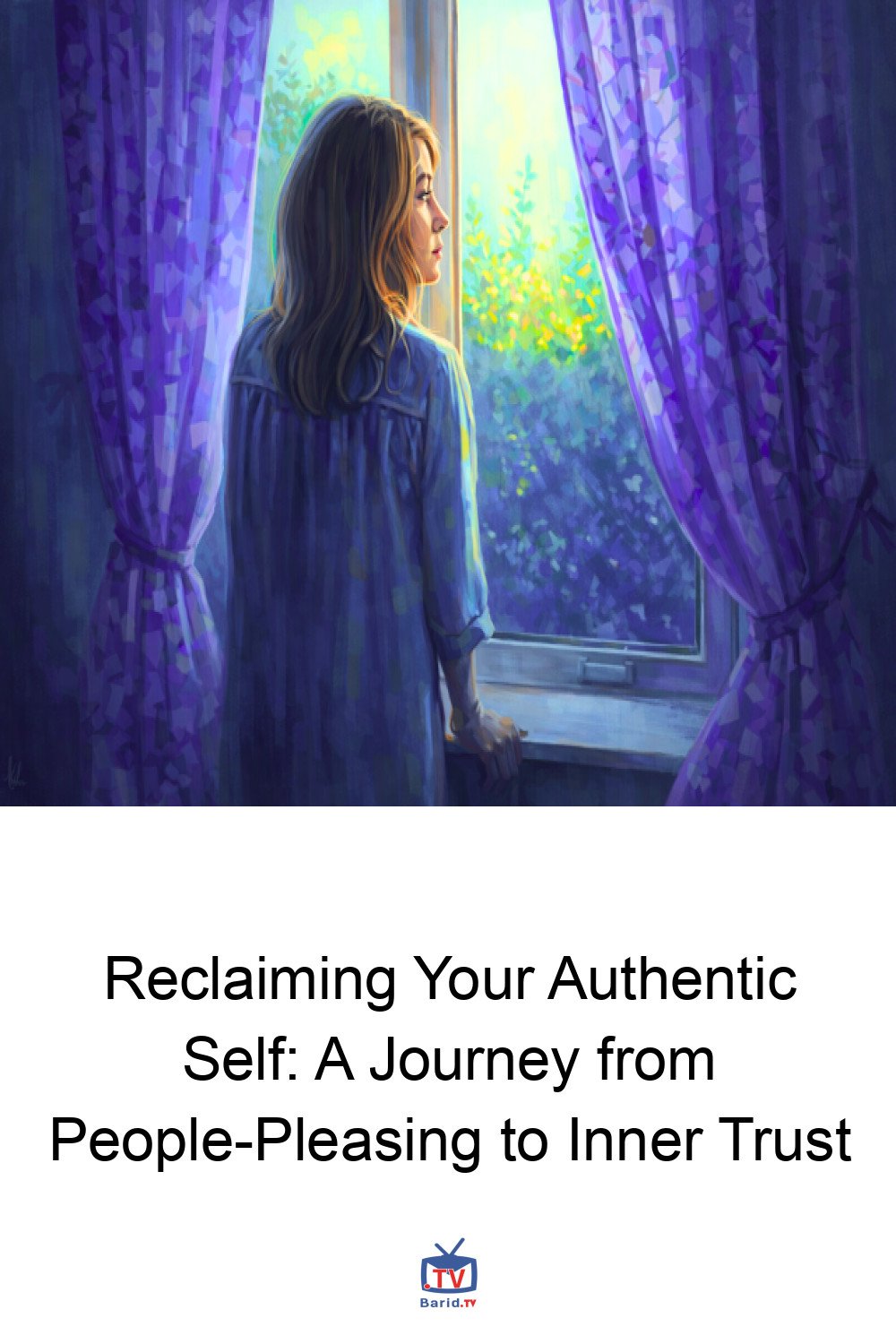
Reclaiming Your Authentic Self: A Journey from People-Pleasing to Inner Trust
“The privilege of a lifetime is to become who you truly are.” – Carl Jung
The question seemed simple enough: “Where do you want to eat tonight?” Yet, for years, this seemingly innocuous query would send my mind spiraling, not through a delightful menu of culinary options, but through a labyrinth of potential conflicts. My focus wasn’t on my own cravings, but on anticipating and neutralizing any possible tension. I had learned, through countless subtle cues and overt disagreements, that an honest answer often came with a price. My preferences could be challenged, dismissed, or even ignite a full-blown debate. Standing my ground meant an evening spent on high alert, hyper-aware of every minor imperfection – the service, the food, the ambiance – perpetually bracing for a misstep. More often than not, I defaulted to indecision, only to be met with the stinging accusation of being “boring” or lacking an opinion entirely.
The Erosion of Self: A Descent into People-Pleasing
This wasn’t always my narrative. My younger self, particularly through my early twenties, was characterized by a vibrant spirit, an unshakeable confidence, and a clear sense of purpose. I was known for being feisty, opinionated, and driven, pursuing my desires with quiet determination. Ironically, it was precisely this strength and self-assurance that initially captivated my partner when we first met during college orientation. Yet, not long into our marriage, these very qualities began to fuel a simmering tension.
A relentless barrage of arguments, manipulative distortions of reality, and the constant undermining of my judgment slowly but surely eroded my self-belief. I found myself trapped in a cycle of anxiety, perpetually second-guessing every thought and action. My world narrowed to the singular objective of maintaining domestic peace, leading me to prioritize my partner’s needs above all else. As my focus shifted entirely outward, my connection to my inner guidance withered. My survival instincts took over, transforming me into the archetypal people-pleaser.
This insidious pattern wasn’t confined to my personal sphere; it seeped into my professional life. I began to perceive colleagues as inherently superior—smarter, more capable, better skilled. Every strategic decision, every project execution, became an agonizing process of overthinking and hesitation. I habitually deferred to those in positions of authority, convinced my own insights were inadequate. Similarly, my personal relationships became starkly one-sided. Believing myself to be rigid, quiet, and generally uninteresting, I adopted the persona of the “easy,” low-maintenance friend, terrified that any expression of disagreement or strong preference would shatter the bond.
The Glimmer of Recognition: A Path to Rediscovery
The turning point arrived when I finally gathered the strength to leave that relationship and return to my hometown. It was in the familiar embrace of old friendships that the stark reality of my transformation became undeniable. These were individuals who had known me before my retreat into survival mode, and their surprise at my newfound hesitation, my muted opinions, and my tendency to shrink from even the simplest preferences served as a powerful mirror. Through their loving, discerning eyes, I glimpsed the vibrant woman I once was, and the profound distance I had traveled from my authentic self.
This realization, though initially painful, ignited a flicker of hope. If I had meticulously trained myself to constantly ask, “What will keep the peace?”, surely I could retrain myself to ask a different, more empowering question: “What feels true for me right now?” If you, too, are experiencing the unsettling awareness that your current self feels diminished compared to the person you once were, understand this is not a sign of weakness. It is a testament to the fact that, at some point, shrinking felt like the safer option than standing tall. But what if life could be different? What if you could reclaim your voice, honor your preferences, and live authentically?
The Practical Path to Rebuilding Self-Trust
1. Tune into Your Inner Barometer: Your Body
The question, “What feels true for me right now?” is profoundly powerful. Yet, initially, I found myself so disconnected from my own wants, needs, and desires that the answer would dissolve into a chaotic swirl of options and potential repercussions. To bypass my overthinking mind, I consciously shifted my awareness to my body. I began to notice subtle physical cues: a tightness in my chest often signaled an impending agreement to something that felt fundamentally wrong; a wave of nausea could indicate an emotional response misaligned with my authentic feelings. By diligently practicing this somatic awareness, you can create a crucial pause, allowing these quiet physical signals to emerge. They become an invaluable inner guide, helping you interrupt the automatic impulse to override your true self.
2. Begin with Low-Stakes Decisions
Through consistent practice, these physical sensations gradually became reliable indicators of my genuine preferences. To my surprise, I discovered that my desires, needs, and opinions hadn’t vanished; they had merely been buried beneath layers of self-suppression. Reacquainting myself with these inner truths was one hurdle; finding the courage to voice them was another entirely. Speaking up felt alien, even unsafe. So, I started small.
I strategically identified individuals in my life who were least likely to challenge or dismiss my nascent preferences. I also ensured that I didn’t overburden my fragile, re-emerging decision-making capacity with anything too significant. My twenty-five-year friend became my initial confidante. When extending a dinner invitation, I consciously included the phrase, “I’m really in the mood for Italian.” As these words, representing my truth, rolled off my tongue, I had to actively resist the ingrained urge to add the familiar caveat, “but whatever you prefer.” During that dinner, a small but significant surge of pride washed over me as I savored my chosen meal, a quiet victory in the journey back to myself.
For more details, visit our website.
Source: Link






Leave a comment