



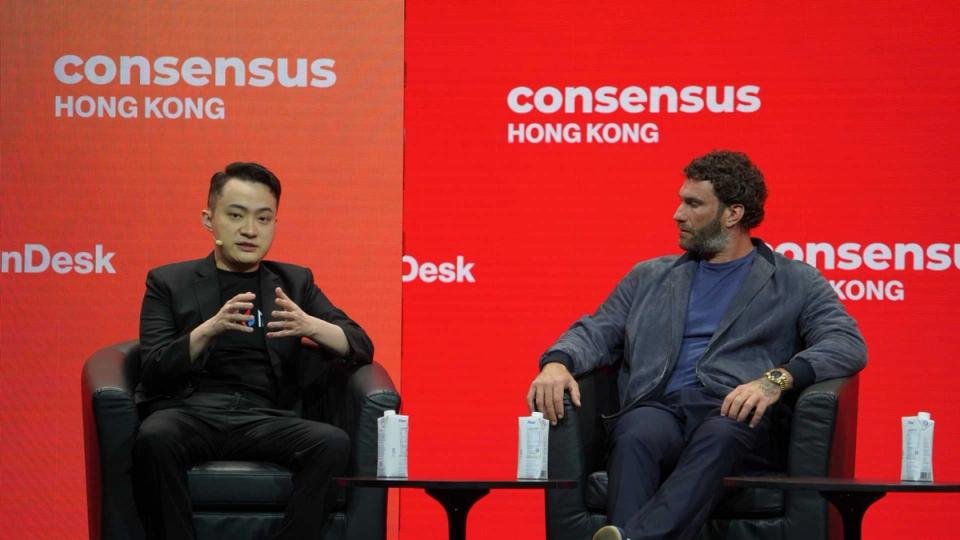

In a dramatic turn of events shaking the decentralized finance (DeFi) landscape, Tron founder Justin Sun has publicly denounced World Liberty Financial (WLFI), a project notably backed by the Trump family. Sun, once a significant early investor, has accused WLFI of treating its users as a “personal ATM” and engaging in “illegitimate” fee extraction, following a controversial $75 million DeFi loan that sparked widespread liquidity concerns.
A High-Stakes DeFi Maneuver and Its Fallout
The core of Sun’s ire stems from WLFI’s recent decision to deposit 5 billion WLFI tokens as collateral on the DeFi lending platform Dolomite, subsequently borrowing approximately $75 million in stablecoins. This substantial transaction had immediate and severe repercussions, briefly pushing Dolomite’s USD1 pool to a staggering 100% utilization. This critical bottleneck effectively locked out ordinary stablecoin depositors from accessing their own funds, raising alarms across the crypto community about market manipulation and user protection.
Adding another layer of complexity, Dolomite co-founder Corey Caplan also serves as an advisor to World Liberty Financial. On-chain analysts have highlighted this dual role, suggesting Caplan functions as WLFI’s de facto CTO, a position that raises questions about potential conflicts of interest in facilitating such a large-scale loan. To accommodate WLFI’s massive deposit, Dolomite reportedly increased its WLFI supply cap to 5.1 billion tokens.
Sun: “First and Single Largest Victim”
Justin Sun’s public break with WLFI is not without its own history. He claims to be the project’s “first and single largest victim,” a sentiment rooted in a 2025 incident where WLFI froze his wallet. This action locked him out of 595 million unlocked WLFI tokens, valued at approximately $107 million at the time. WLFI had justified the freeze as part of a broader crackdown against 272 wallets linked to phishing attacks, asserting its intervention was solely to “protect users, never to silence normal activity.”
However, Sun vehemently disputes this narrative, framing the September 2025 freeze as the project’s “original sin.” He argues that the blacklisting violated fundamental investor rights and core blockchain principles of fairness, especially given his earlier efforts to stabilize the project with a $30 million token purchase after a lukewarm initial launch.
Allegations of Unfair Governance and Predetermined Outcomes
Beyond the financial maneuvers and personal grievances, Sun has also cast a shadow over WLFI’s governance processes. He alleges that the votes cited to justify actions like the wallet freezes were “not conducted through a fair or transparent process.” Furthermore, he claims that “key information was withheld from voters” and that “the outcomes were predetermined,” suggesting a lack of genuine decentralization and community input.
Interestingly, Sun meticulously separated his critique of WLFI’s operational team from President Trump himself. He began his public statement by reaffirming his “ardent support of President Trump and his crypto-friendly policy,” directing his condemnation squarely at “the bad actors at WLFI” rather than the political figure associated with the project.
Market Reaction and Future Implications
The controversy has undoubtedly impacted WLFI’s market standing. The token is currently trading around $0.079, experiencing an 18% decline over the past week, according to CoinDesk data. The public spat with a prominent figure like Justin Sun, coupled with concerns over liquidity management and governance transparency, could further erode investor confidence.
The Broader DeFi Landscape
This incident serves as a stark reminder of the inherent risks and complexities within the rapidly evolving DeFi ecosystem. It highlights the critical importance of transparent governance, responsible liquidity management, and the potential for conflicts of interest, especially when high-profile projects and significant capital are involved. As the crypto space matures, such public disagreements underscore the ongoing need for robust regulatory frameworks and self-governance mechanisms that genuinely prioritize user protection and market integrity.
For more details, visit our website.
Source: Link





Leave a comment