



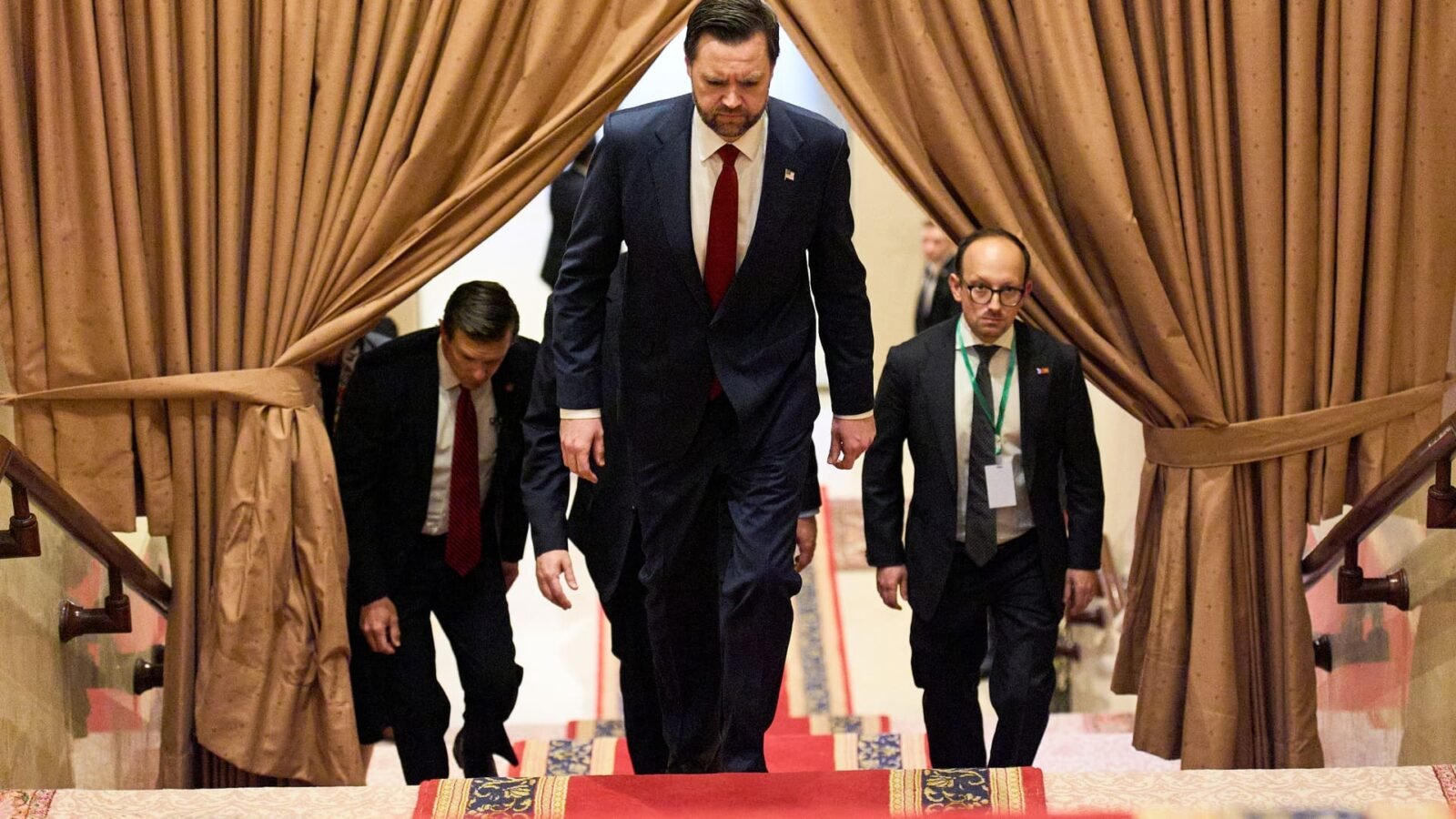

In a significant diplomatic setback, U.S. Vice President JD Vance has concluded peace talks in Islamabad, Pakistan, without securing a breakthrough agreement with Iran. After 21 hours of intense negotiations, Vance announced early Sunday that the American delegation was departing, citing Iran’s steadfast refusal to abandon its pursuit of nuclear weapons as the insurmountable obstacle.
Nuclear Ambitions: The Unyielding Sticking Point
The core of the diplomatic impasse revolved around Washington’s unequivocal demand for Iran to cease its nuclear weapon development. “We need to see an an affirmative commitment that they will not seek a nuclear weapon, and they will not seek the tools that would enable them to quickly achieve a nuclear weapon,” Vance stated at a press conference. He emphasized that this was President Donald Trump’s primary objective for the negotiations, adding grimly, “They have chosen not to accept our terms.”
Despite extensive consultations with President Trump, Secretary of State Marco Rubio, Treasury Secretary Scott Bessent, and Adm. Brad Cooper of U.S. Central Command, the American team’s “final and best offer” was rejected. Vance, flanked by special envoy Steve Witkoff and Jared Kushner, expressed hope that Iran might still accept their proposal, but his departure on Air Force Two moments later underscored the immediate failure.
Iran’s Counter-Demands and Regional Tensions
Iranian state media, particularly Tasnim news agency, quickly attributed the breakdown to “excessive” U.S. demands. Tehran reportedly presented its own set of “non-negotiable conditions” to Pakistani mediators, including the removal of nuclear materials from the country and the crucial reopening of the Strait of Hormuz.
The talks unfolded against a backdrop of escalating regional tensions. A fragile two-week ceasefire, announced just days prior, is now under severe strain. Iran’s continued blockade of most shipping traffic through the Strait of Hormuz—the world’s most critical oil choke point—exacerbates global energy concerns. Furthermore, Israel’s ongoing military actions against Iranian-backed Hezbollah in Lebanon, which have reportedly claimed over 2,000 lives according to Lebanon’s health ministry, cast a long shadow over any prospects for de-escalation.
The Iranian delegation arrived in Islamabad dressed in black, mourning the late Supreme Leader Ayatollah Ali Khamenei and other war casualties. They reportedly carried personal effects of students killed in a U.S. bombing near a military compound, an incident the Pentagon is currently investigating.
A Tense Atmosphere in Islamabad
A Pakistani source close to the negotiations described a volatile atmosphere, noting “mood swings from the two sides and the temperature went up and down during the meeting.” The high stakes were reflected in Islamabad itself, a city of over 2 million, which was placed under a stringent lockdown with thousands of paramilitary and army troops deployed to ensure security for the high-level U.S.-Iran discussions.
Military Maneuvers in the Strait of Hormuz
Coinciding with the diplomatic efforts, two U.S. warships, the USS Frank E. Peterson and the USS Michael Murphy, transited the Strait of Hormuz for the first time since the conflict began. U.S. Central Command confirmed these guided-missile destroyers were part of a broader mission to clear Iranian-laid sea mines from the vital waterway, a clear signal of Washington’s intent to maintain freedom of navigation despite Iran’s blockade.
The failure of these pivotal talks leaves the region in a precarious state, with the ceasefire hanging by a thread and the specter of continued conflict looming large. The international community now watches anxiously for the next developments in this deeply entrenched geopolitical standoff.
For more details, visit our website.
Source: Link







Leave a comment