





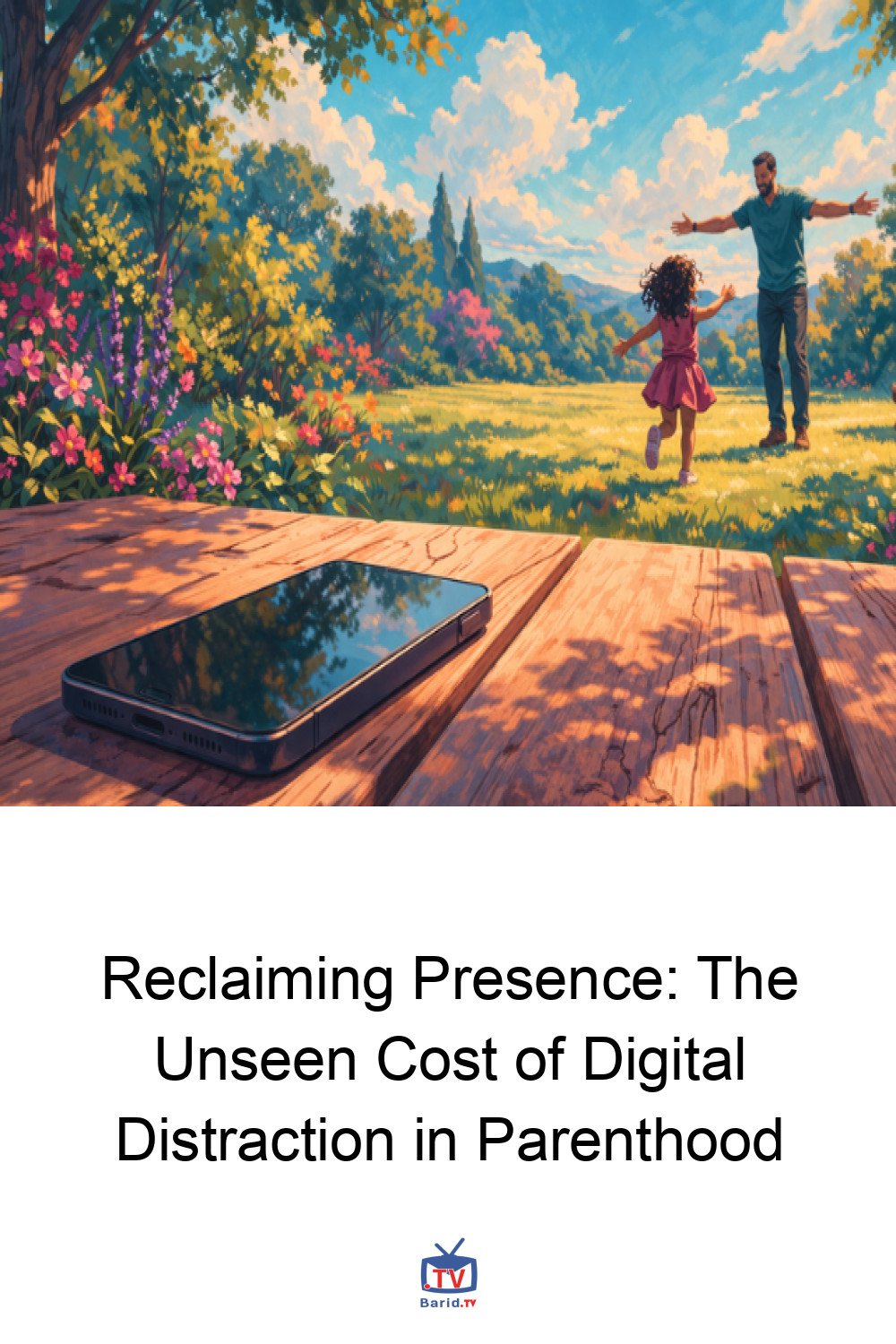
“The most precious gift we can offer anyone is our attention.” ~Thich Nhat Hanh
It was a seemingly innocuous moment, yet it marked the beginning of a profound realization. Judy, my three-year-old daughter, had meticulously stacked every couch cushion in our Vancouver living room, crafting what she clearly envisioned as an Olympic-grade launchpad. Her eyes, wide with anticipation, met mine – that unmistakable gaze children give just before a daring feat. “Baba, watch!” she exclaimed, poised for her grand jump.
My phone, an ever-present extension of my hand, held my gaze. A Slack message, an email, or perhaps just the habitual pull-to-refresh – the specific content is lost to memory, as most fleeting digital alerts are. “One sec, habibti,” I murmured, my thumb scrolling reflexively. She jumped. The soft thud of cushions scattering across the hardwood floor was the only sound. When I finally looked up, she was already retreating, a stuffed elephant trailing mournfully behind her. I returned to my screen, oblivious.
At the time, it was just another blip in the daily rhythm. Kids jump, parents check phones; it rarely registers as a moment of future regret. But this was the nascent stage of a pattern, an insidious erosion of presence that, like all absences, was almost impossible to perceive as it formed.
The Silent Scorekeeper: How Distraction Becomes Absence
Over the next two years, Judy’s invitations to witness her world grew progressively quieter. “Baba, look at this.” “Baba, come see.” “Baba, watch me.” Each plea was met by a version of me physically present but mentally tethered to a 6.1-inch screen. My professional life as an engineering team leader revolved around hyper-responsiveness, juggling multiple threads, and an unwavering commitment to immediate replies. I prided myself on my context-switching prowess, believing it a superpower. This ingrained mentality, however, bled unchecked into my home life.
The Engineering Mindset at Home
I never questioned whether this professional urgency belonged within the sanctuary of our front door. My identity was forged in the crucible of digital demands, and I unconsciously carried that expectation of constant availability into my interactions with my family. What I failed to grasp, what took an embarrassingly long time to comprehend, was that Judy was meticulously, silently, keeping score.
A Child’s Unspoken Verdict
The turning point arrived one Saturday when Judy was five. She was engrossed in drawing at the kitchen table, narrating a fantastical tale of a purple dog, a rainbow, and a cloud named Martin planning a moon birthday party. I offered what I believed were convincing interjections – “wow,” “oh cool,” “then what happened” – all while my phone, hidden beneath the table, consumed my attention with a deployment crisis.
Her narration ceased. The silence didn’t register immediately. Perhaps fifteen, twenty seconds passed before I noticed and looked up. She was watching me, her small face utterly neutral. No anger, no overt hurt, just a quiet observation, the kind that confirms a long-held suspicion. That image haunts me: a five-year-old, having already done the math, her expression a knowing, silent verdict. Children are acutely perceptive, especially when we believe they aren’t. They don’t need a verbal announcement that our phones are more compelling; they discern it from the fractional pause before our response, the subtle drift of our eyes, the mechanical “tell me more” uttered while our thumbs continue to scroll.
The Unbearable Truth: When “Watch Me” Fades
It was my wife, Sarah, who finally held up the mirror. Months later, with Judy asleep, we sat at the kitchen counter, our laptops open. “She doesn’t ask you to watch anymore,” Sarah stated, her words hanging in the four-second silence that followed. “Have you noticed that?”
I hadn’t.
The realization hit me with the force of a physical blow. I tried to recall the last time Judy had tugged at my shirt, pleading, “Baba, watch?” The memory was elusive; the requests hadn’t ended, they had simply evaporated. Like a sound fading into nothingness, impossible to pinpoint the exact moment it crossed the threshold from barely there to utterly gone.
Confronting the Digital Reflex
Sitting there, my laptop still glowing, I understood: Judy hadn’t stopped wanting me to watch. She had stopped believing I would. This distinction was a chasm, and the weight of it was the worst feeling I had ever experienced.
That night, sleep was a distant luxury. I lay awake, conducting a painful inventory of my daily habits. How many times did I reach for my phone? The next morning, I tried to count, losing track before lunch. I found myself reaching for it while brushing my teeth, while the kettle boiled, even during the forty-foot walk from the car to the front door – a testament to the pervasive, almost unconscious grip of digital devices. This profound personal narrative serves as a stark reminder of the invisible cost of our digital lives.
Our attention, as Thich Nhat Hanh wisely observed, is indeed the most precious gift. It’s a gift we owe not just to our children, but to all the people we love, a conscious choice to put down the screen and truly, deeply, see them.
For more details, visit our website.
Source: Link








Leave a comment