



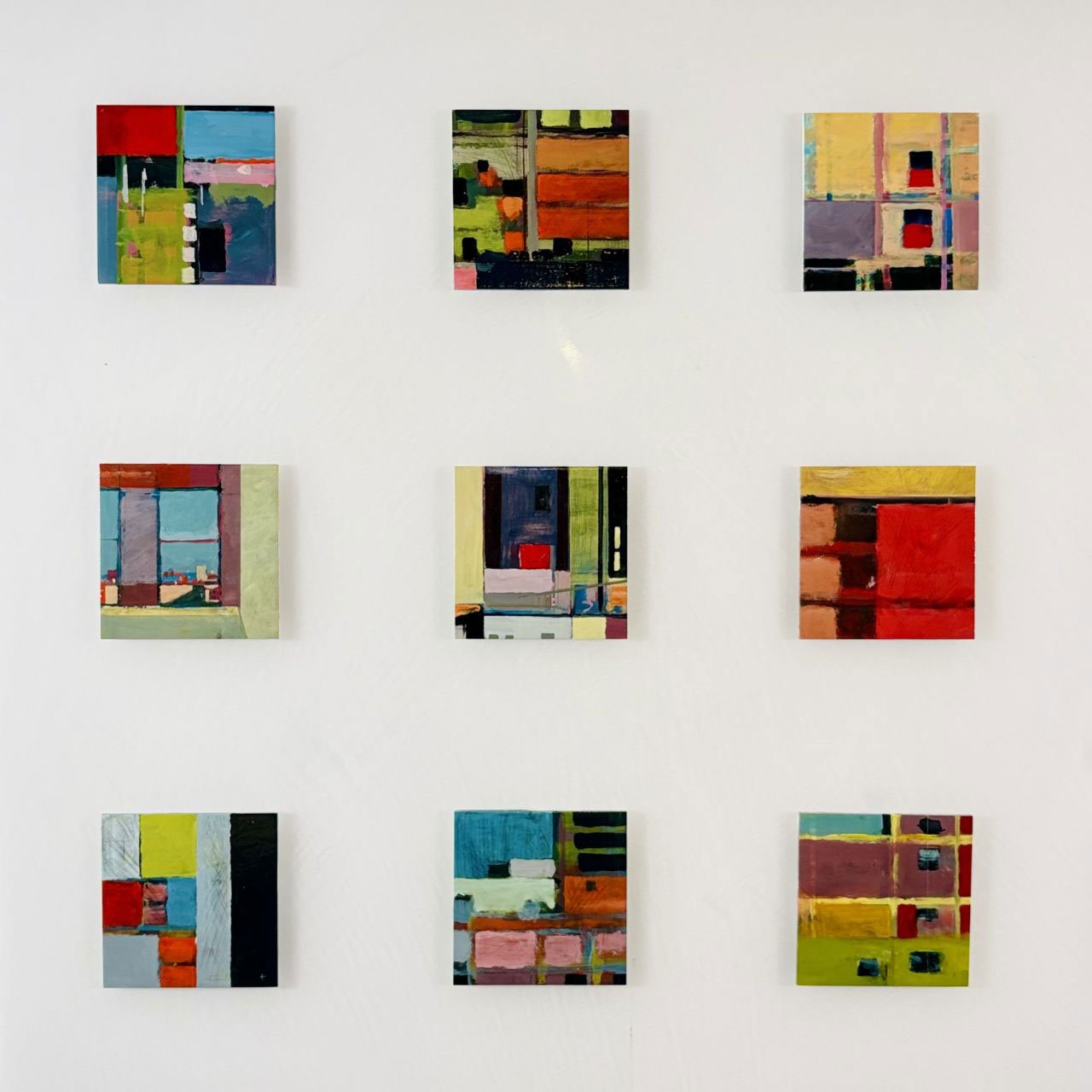

In the vibrant tapestry of contemporary art and design, few individuals bridge the gap between disciplines with the profound insight and meticulous execution of Barry Ginder. A Pennsylvanian native, Ginder’s journey began at Temple University, where an architectural foundation was seamlessly interwoven with artistic enlightenment. Under the tutelage of art professor Larry Spaid, Ginder honed a distinctive methodology: a repeated engagement with the full surface, culminating in a refined balance that breathes life into his creations. This dual mastery allows him to not merely observe but to actively document and interpret the world around him, transforming raw experience into compelling visual narratives.
The Art of Urban Abstraction
While his roots are firmly planted in the structural logic of architecture, Ginder’s artwork transcends literal representation. His canvases become abstract excerpts of urban landscapes, geometric forms pulsating with an inherent dynamism. He delves into the very essence of space—how we navigate it, connect within it, and are shaped by its presence. His beloved Philadelphia, particularly the energetic pulse of the Mid-Atlantic region, serves as a muse, its textures and rhythms echoed in his layered compositions.
Ginder’s innovative technique involves applying acrylic to plexiglass, a surface he meticulously sands to achieve unique transformations. Vibrant hues interplay with a spectrum of lines, from the sharply defined to the fluidly gestural. These intricate layers shift with the viewer’s perspective, creating a profound depth that mirrors the rich diversity of the city itself. For Ginder, the sketchbook is a sacred space where ideas germinate, whether sparked by a poignant quote, a melody, or a subtle architectural detail. “I trace the idea and record it on paper,” he explains, “Over time, that process develops meaning and becomes a proposal.”
Five Pillars of Inspiration
Ginder’s creative wellspring is fed by a diverse array of influences, each contributing to the depth and resonance of his work.
Sean Scully: The Power of Repetition
Scully’s work captivates Ginder with its intense depth and the sheer power derived from repeatedly painting the same image. The consistent strength evident in both monumental and intimate pieces underscores a profound artistic discipline that resonates deeply with Ginder’s own iterative process.
Finn Juhl — Chair 45: Timeless Design Innovation
The revolutionary Chair 45 by Finn Juhl stands as a testament to timeless design. Its pioneering detachment of the backrest and seat from the frame, creating a captivating floating effect, and its iconic organic form coupled with meticulous joinery, represent an enduring standard of innovation and craftsmanship for Ginder.
Gerhard Richter + Richard Serra: Parallel Expressions of Power
A dual exhibition in 2016 featuring Gerhard Richter’s paintings and Richard Serra’s sculptures left an indelible mark on Ginder. He perceived a powerful resonance in their work’s similarity, where the raw materiality of steel and the nuanced textures of stretched paint became parallel expressions of pure power and profound emotion.
My Son’s Hands: Everyday Wisdom
Perhaps the most personal of his inspirations, Ginder finds profound wisdom in his son’s hands. He speaks of his son’s journey, rising to a level often associated with “wise old souls,” evident in simple, everyday acts like tending his garden and gathering its daily harvest. This connection to life’s fundamental rhythms fuels Ginder’s artistic spirit.
Sunlight on My Paintings: The Ultimate Composition
Light, in its purest form, is a primary source of inspiration for Ginder. He frequently draws material from cityscapes bathed in light. His plexiglass works, with their continuous layering, expertly capture the subtleties of depth and transparency, mirroring surfaces saturated in light or shade. The ultimate moment, he reveals, is when natural sunlight illuminates a completed painting in his studio, spontaneously creating an entirely new composition.
A Portfolio of Visionary Design
Beyond his canvases, Ginder’s architectural and design prowess manifests in projects that are equally thoughtful and evocative.
B+G Residence in Mechanicsburg, Pennsylvania
Co-designed with Suzanne Brandt, this modern home on 2.5 acres is a masterclass in experiential design. Eschewing mere style, it was shaped by the interplay of light, wind, exterior vistas, and interior relationships. Crafted with traditional materials like handmade brick, mahogany siding, and a metal roof, alongside oversized windows, it presents as a contemporary farmhouse – a handcrafted object seamlessly integrated into the landscape, offering both expansive views and intimate framed perspectives.
Private Residence Renovation
This renovation project transformed a historic stone building with a distinctive reddish-purple hue. Ginder’s addition, designed in copper, was chosen for its ability to naturally oxidize over time, developing a similar purplish tone. This thoughtful material choice created a modern interpretation that harmonized with the original stone, with copper elements extending into the kitchen to reinforce the connection between old and new.
Philadelphia Cityscapes: 2026 View East no3 & 3 Squared Painting
Ginder’s deep personal connection to Philadelphia, forged during his time at Temple University, is vividly expressed in his ongoing series of paintings based on a specific 11th-floor view looking east from West Philadelphia. “2026 View East no3” is a zoomed-in detail, capturing the dynamic shifts of light throughout the day, particularly in the afternoon. The “3 Squared Painting” expands on this theme, offering a nine-squared composition that presents a more zoomed-out, actual city view rather than a purely graphic interpretation, yet still rooted in that iconic Philadelphia vista.
Favorite Bench: Form Meets Function
Ginder’s “Favorite Bench” embodies his design philosophy: elegant details and minimal parts yielding maximum outcome. Its simple, shaped, and folded leg structure provides robust support. Cushions invite comfort for perching and conversation, rather than lounging. An extended walnut seat offers a practical surface for objects, while the combination of walnut and textured cotton upholstery showcases a handcrafted modern aesthetic.
Barry Ginder’s work, whether in paint, steel, or wood, consistently invites viewers to engage with space, light, and emotion. His unique ability to translate the tangible into the abstract, and the personal into the universal, solidifies his position as a compelling voice in contemporary art and design.
For more details, visit our website.
Source: Link





Leave a comment