





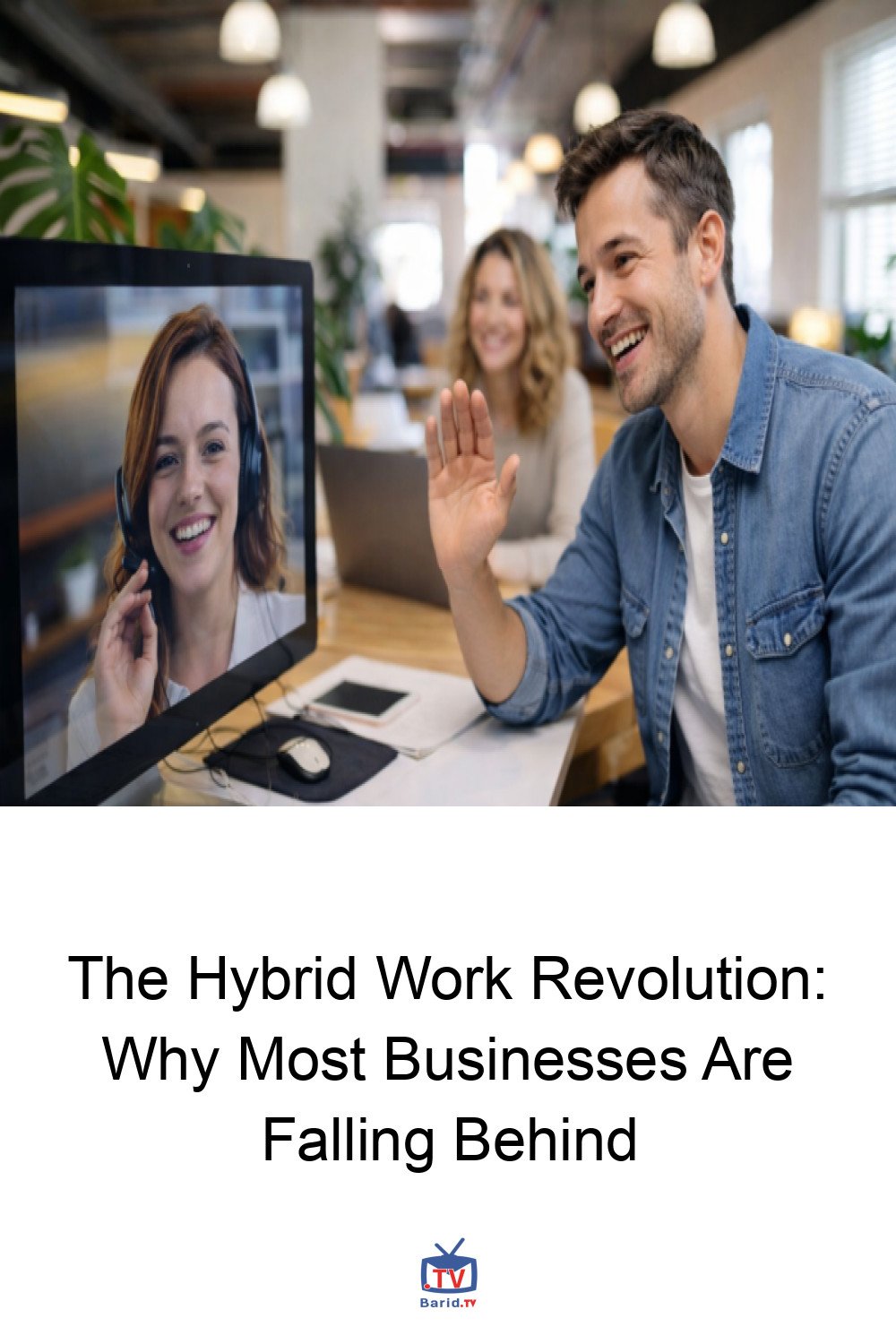
The Quiet Revolution: Hybrid Work’s Strategic Evolution
A profound, yet often underestimated, transformation is reshaping the corporate landscape. It’s not about massive hiring sprees or endless capital injections; it’s about working smarter, and at the heart of this shift lies a critical insight: hybrid work isn’t merely about offering flexibility – it’s about intelligent design. While many businesses initially viewed hybrid models as a temporary fix, the most successful organizations are now recognizing it as a strategic imperative for sustained performance and employee engagement.
From Temporary Fix to Strategic Imperative
What began as a necessity during unprecedented times has evolved into a fundamental change in how we work. Employees didn’t just adapt; they thrived, with many UK businesses reporting improved productivity under flexible arrangements, according to the Chartered Institute of Personnel and Development. Simultaneously, employee expectations have solidified: flexibility is no longer a perk, but a baseline expectation. This creates a new pressure point for leaders: not just to offer hybrid work, but to master its implementation.
Redefining the Office: A Hub for Purpose, Not Presence
For decades, the office was synonymous with presence and productivity. You showed up, you worked. Simple. Yet, hybrid work has unveiled a truth many instinctively knew: different tasks demand different environments. Deep focus, collaborative brainstorming, quiet contemplation – these don’t all fit neatly into a single, fixed space. The most forward-thinking companies aren’t trying to force a return to the old ways; they’re fundamentally rethinking the office’s purpose.
Crafting Spaces for Connection and Momentum
Today’s office is transforming into a dynamic hub – a place designed for specific, high-value interactions. It’s where teams build momentum, foster connection, and engage in work that genuinely benefits from co-location. If an office fails to provide this distinct value, employees will naturally gravitate elsewhere, regardless of company policy. The shift is from a mandatory attendance zone to an intentional destination.
The Peril of Unstructured Flexibility
A common misstep for many businesses is introducing hybrid work without a clear framework. Without defined structures, explicit expectations, or thoughtful space utilization, what appears flexible on the surface quickly devolves into chaos. Communication falters, teams drift, and office spaces become either ghost towns or unexpectedly overcrowded. This ‘flexibility without intention’ creates friction, not efficiency.
Designing for Adaptability: The Smart Approach
In contrast, smarter businesses don’t just permit flexibility; they engineer it. This might involve reconfiguring existing spaces or, increasingly, embracing adaptable solutions like Serviced Office Spaces in dynamic urban centers. These options allow environments to evolve with the business, avoiding the rigidity of fixed models. It’s a subtle shift in mindset that yields monumental results.
Hybrid Work: A Journey, Not a Destination
One of the most critical misconceptions about hybrid work is that it’s a problem to be solved once and for all. The reality is far more dynamic. As insights from the UK Parliament House of Commons Library emphasize, hybrid models require continuous evaluation and adjustment as teams grow and business needs change. What works today may be obsolete in six months. The businesses that embrace this ongoing journey – willing to test, learn, and refine – are the ones that will truly lead.
The Core Principle: Alignment for Peak Performance
Ultimately, the debate isn’t about remote versus office. It’s about alignment. When a business’s operational model harmonizes with how its people perform best, everything flows more smoothly: work accelerates, decisions are sharper, and talent retention improves. Conversely, a disconnect between structure and reality inevitably leads to underperformance, even if metrics appear stable on paper.
The future of work isn’t dictated by location; it’s defined by the intelligence with which a business is constructed around its people. The trailblazers aren’t chasing fads or reacting to external pressures. They are asking deeper questions and, crucially, building the agile systems that provide the answers.
For more details, visit our website.
Source: Link







Leave a comment