




Global Markets Reel as Trump Threatens ‘Extremely Hard’ Strikes on Iran
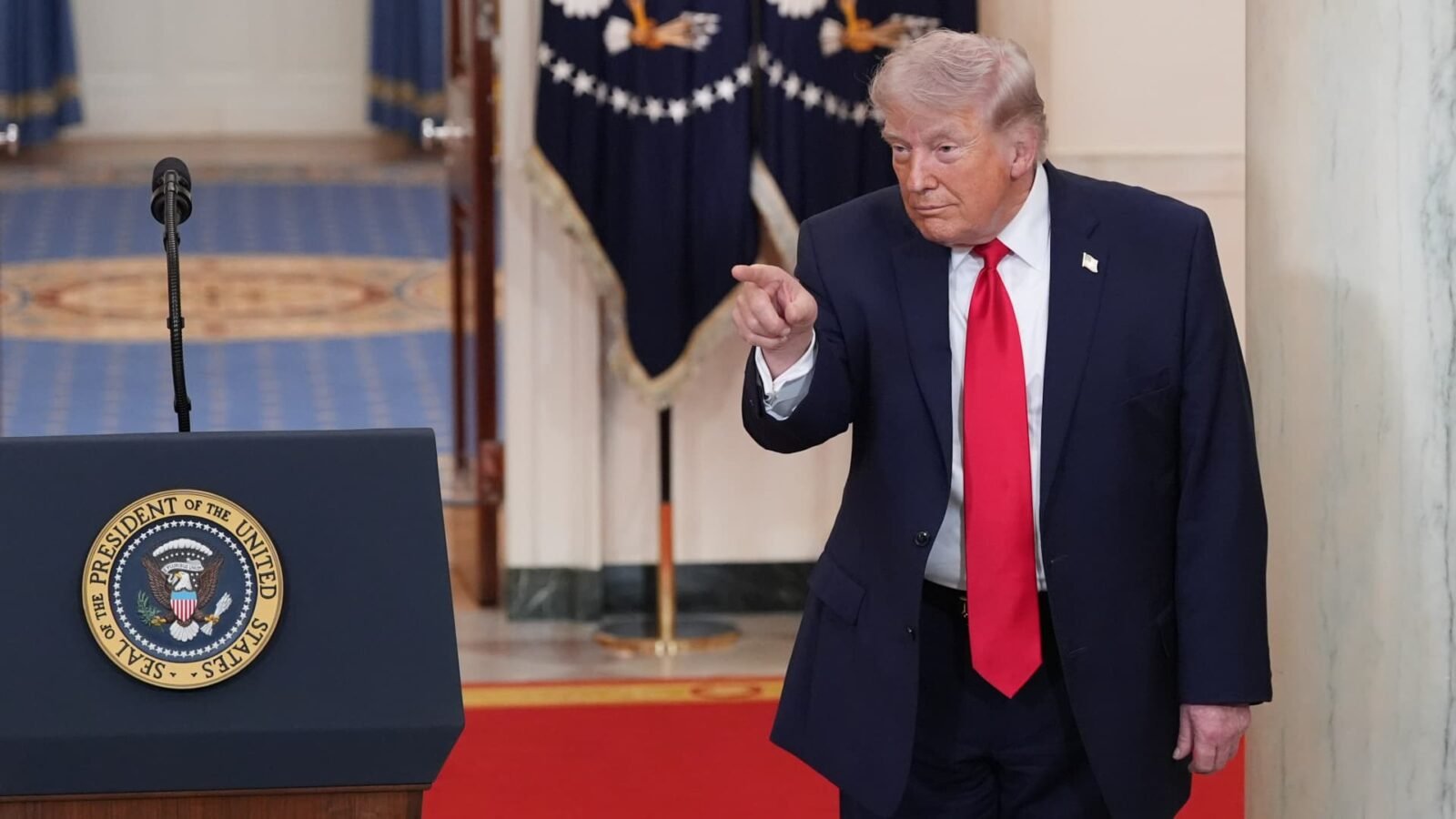
A stark warning from former U.S. President Donald Trump, vowing to hit Iran “extremely hard” in the coming weeks, sent immediate shockwaves through global financial markets. Hopes for a swift de-escalation of tensions in the Middle East evaporated, triggering a sharp downturn in Asian equities, a surge in oil prices, and significant shifts across currency and bond markets.
Asian Markets Plunge Amid Renewed Geopolitical Fears
Following Trump’s national address on Wednesday, where he declared the U.S. would “bring them back to the stone ages, where they belong,” Asian markets quickly reversed earlier gains. Benchmarks across Australia, Japan, and South Korea saw significant declines, with South Korea’s Kospi leading the losses, plunging a dramatic 5.5%. Hong Kong and mainland Chinese markets also opened in negative territory, reflecting widespread investor anxiety.
“Markets reacted negatively because, while Trump says it is nearly over, he is sending the third aircraft carrier and more troops to the region so it is hard to believe his words,” explained Alicia Garcia Herrero, Chief Economist for Asia Pacific at Natixis, highlighting the disconnect between rhetoric and military actions.
U.S. Futures and European Bourses Under Pressure
The market jitters were not confined to Asia. U.S. stock futures for all three major indexes dropped over 1% after trading flat earlier in the session. Similarly, futures tied to major European bourses indicated a broadly lower open, signaling a global reaction to the escalating rhetoric.
Bond Market Sell-Off and Currency Volatility
The flight to safety typically seen in times of geopolitical uncertainty was partially offset by a sell-off in the bond market. U.S. Treasury yields climbed after Trump’s speech, with the benchmark 10-year notes rising 6 basis points to 4.384%. In currency markets, the U.S. dollar index strengthened by 0.5% to 100.162, reversing earlier losses. Conversely, the Japanese yen weakened 0.38% to 159.37 against the greenback, and the South Korean won fell 0.6% to 1,521.80, both having strengthened earlier in the session. The Euro traded at 1.153 against the dollar, while the British pound slipped 0.8% to 1.32.
Oil Prices Surge, Gold Retreats
The most pronounced market reaction was observed in oil prices. Brent crude futures jumped a significant 6.7% to $107.92 a barrel, while U.S. West Texas Intermediate (WTI) rose 6.2% to $106.39. This sharp increase underscores fears of potential disruptions to energy supplies, particularly concerning the vital Strait of Hormuz.
Despite Trump’s assertion that the U.S. had “almost met all its objectives,” analysts warned that further escalation could sustain elevated energy prices. “Trump is declaring mission almost accomplished, but highlighting further escalation in the next few weeks, which increases the risk of more extensive damage to regional energy infrastructure both in Iran but throughout the Gulf,” noted Rachel Ziemba, founder of Ziemba Insights.
Meanwhile, spot gold prices, often a safe-haven asset, surprisingly slipped 3.6% to $4,586.81 per ounce, reflecting a complex interplay of market forces.
Contradictory Signals Fuel Uncertainty
The market’s negative reaction was amplified by seemingly contradictory signals from the U.S. administration. Earlier in the week, Trump had hinted at a potential U.S. withdrawal from Iran, even without the Strait of Hormuz being fully open, sparking a brief market rally. However, his latest threats, coupled with the deployment of a third aircraft carrier, the USS George H.W. Bush, alongside the USS Abraham Lincoln and USS Gerald R. Ford, painted a picture of escalating military presence rather than de-escalation.
Adding to the confusion, Trump claimed on Truth Social that Iran’s “New Regime President” had requested a ceasefire, a claim swiftly denied by Tehran. Trump stated the U.S. would only “consider” such a request once the Strait of Hormuz was “open, free, and clear,” further fueling expectations of a prolonged conflict.
“Remember — the longer this war lasts, the longer the energy disruption from the [Strait of Hormuz] continues and the greater the risk of elevated energy prices,” cautioned Chetan Seth, APAC Equity Strategist at Nomura. “It’s not over until it’s over.” He added that risk markets like equities were “not surprisingly disappointed” after the brief period of optimism.
As geopolitical tensions remain high, global markets brace for continued volatility, with the prospect of further military action in the Middle East casting a long shadow over economic stability.
For more details, visit our website.
Source: Link







Leave a comment