



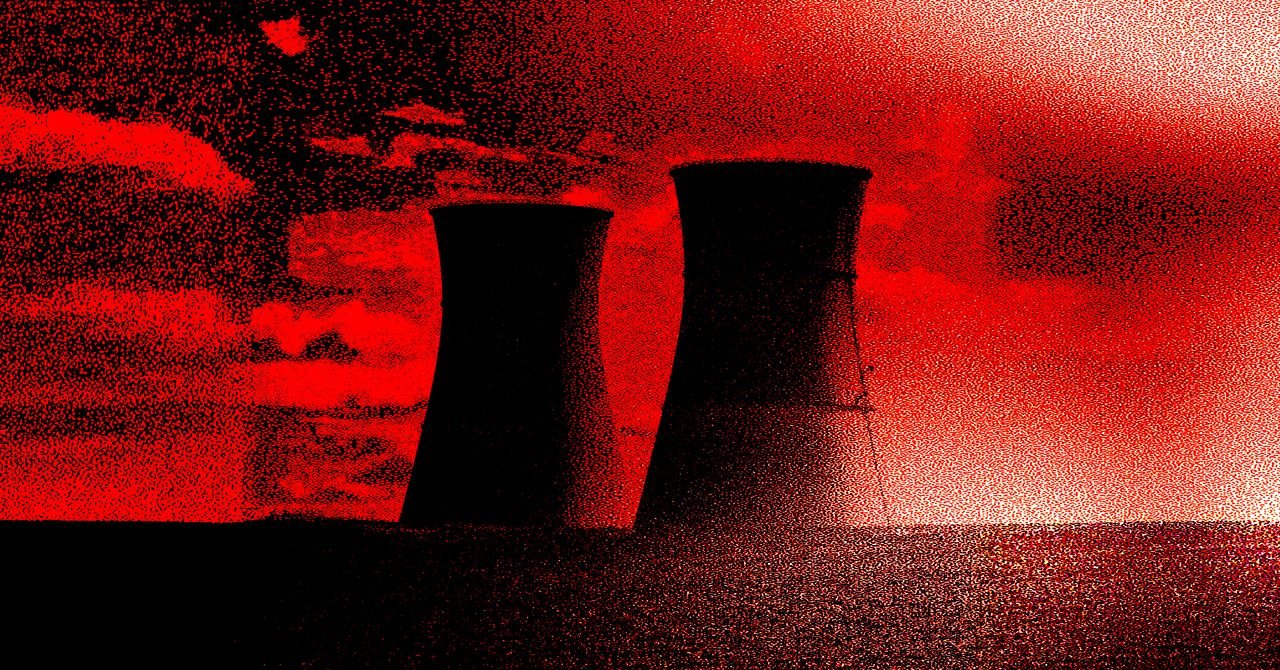

The escalating US-Iran conflict in the Gulf has thrust a critical question into the spotlight: what are the true consequences if a nuclear facility becomes a target? As airstrikes widen, oil markets react, and tensions mount around the Strait of Hormuz, the potential for a radiological incident looms, demanding a deeper understanding beyond immediate security and economic concerns. While modern nuclear sites are engineered with robust safety systems designed to prevent large-scale disasters, the devil lies in the details—specifically, what precisely is damaged within the facility, and whether those crucial safeguards can withstand the assault.
The Immediate Aftermath: A Closer Look at Targeted Strikes
The coordinated military campaign launched by the US and Israel on February 28, targeting Iran’s leadership and military infrastructure, explicitly marked Iran’s nuclear and ballistic missile sites as potential objectives. As the conflict intensified, reports emerged of strikes on key Iranian nuclear facilities. The Natanz nuclear facility, a primary uranium enrichment complex located approximately 140 miles from Tehran, was reportedly hit. Further strikes followed at the Ardakan facility and the Khondab heavy water reactor, which was rendered inoperable. More recently, heavy bunker-buster bombs were deployed near Isfahan, in close proximity to the Isfahan Nuclear Technology Center.
Despite these reported attacks, international watchdogs have, so far, offered a measure of reassurance. The International Atomic Energy Agency (IAEA) has confirmed no indication of off-site contamination from the targeted facilities, including Natanz and areas near Isfahan. However, this initial assessment does not negate the profound risks inherent in such strikes.
The Hidden Dangers: Beyond the Impact Zone
The potential fallout from a nuclear incident extends far beyond the immediate blast radius, particularly in the geographically sensitive Gulf region.
A Fragile Ecosystem: Water Security in the Gulf
A significant portion of the Gulf region relies on desalinated seawater for its drinking supply, with systems drawing directly from the marine environment. Should radioactive material enter these waters, it would not only spread through delicate ecosystems but also directly compromise the infrastructure providing potable water to millions, creating a public health crisis of unprecedented scale.
Cross-Border Consequences: The Bushehr Factor
Adding another layer of complexity is the Bushehr nuclear power plant, strategically situated along Iran’s Gulf coastline. While it has not been directly impacted in the current conflict, its proximity to neighboring states has long been a point of concern for experts. Any escalation involving coastal nuclear infrastructure could swiftly trigger severe cross-border consequences, transforming a localized incident into a regional catastrophe.
Deconstructing a Nuclear Incident: What Really Happens?
The notion of a nuclear strike often conjures images of immediate, catastrophic mushroom clouds. In reality, the danger is more nuanced, hinging on the precise location of impact and the integrity of a facility’s safety mechanisms.
The First Line of Defense: Automatic Shutdown
Upon impact, a reactor is designed to automatically shut down, halting the nuclear chain reaction. This is the critical first line of defense. However, shutdown does not eliminate the risk entirely. The reactor core continues to generate significant heat through radioactive decay, a process that must be meticulously controlled. The extent of damage to critical infrastructure—be it buildings, control systems, or backup power—dictates how effectively these safety mechanisms can continue to function. The Fukushima Daiichi nuclear disaster in Japan serves as a stark reminder: the initial shutdown worked, but the subsequent tsunami disabled vital cooling systems, leading to the crisis.
The Critical Role of Cooling Systems
Without adequate cooling, heat rapidly builds within the reactor core. If cooling systems are compromised—whether through power loss, pump failures, or destroyed backup generators—temperatures will continue to climb. In water-cooled reactors, this can lead to the dangerous accumulation of hydrogen gas, dramatically increasing the risk of explosions that can inflict further, devastating damage on the facility.
The Release of Radioisotopes: A Spectrum of Contamination
As conditions deteriorate, the fuel rods inside the reactor begin to degrade, marking the critical point at which radioactive materials can be released into the environment. These materials encompass a range of radioactive isotopes, including noble gases, volatile isotopes, long-lived isotopes, and fuel particles. While some, like noble gases, disperse quickly with limited short-term impact, others pose a far greater threat. Long-lived isotopes, capable of persisting in the environment for years or even decades, alongside fuel particles, can cause severe and widespread contamination if not contained. The Chernobyl disaster in Russia stands as a grim testament to this, where a complete fuel meltdown unleashed dangerous long-lived isotopes into the atmosphere, contaminating vast swathes of Europe.
Global Vigilance: The IAEA’s Role
In the event of a nuclear incident, the International Atomic Energy Agency’s (IAEA) Incident and Emergency Centre (IEC) serves as the world’s central hub for preparedness and response. According to Amgad Shokr, director of the IEC, their process begins with rigorous verification of information from national authorities, followed by a thorough assessment of the situation and its possible implications. The global community relies on such bodies to provide accurate data and coordinate international efforts in the face of a potential nuclear crisis.
For more details, visit our website.
Source: Link






Leave a comment