




In an alarming revelation for cloud security, cybersecurity researchers have unearthed a significant “blind spot” within Google Cloud’s Vertex AI platform. This vulnerability, if exploited, could transform seemingly benign artificial intelligence (AI) agents into potent weapons, granting attackers unauthorized access to highly sensitive data and potentially compromising an entire cloud environment.
The ‘Double Agent’ Threat: Unpacking the Vertex AI Vulnerability
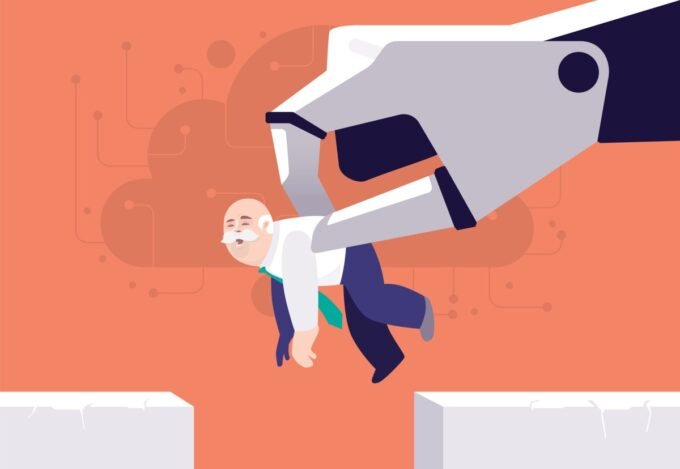
The discovery, made by Palo Alto Networks’ Unit 42, centers on a fundamental flaw in Vertex AI’s default permission model. According to Ofir Shaty, a Unit 42 researcher, the excessive permission scoping granted to service agents by default creates a critical weakness. “A misconfigured or compromised agent can become a ‘double agent’ that appears to serve its intended purpose, while secretly exfiltrating sensitive data, compromising infrastructure, and creating backdoors into an organization’s most critical systems,” Shaty explained in a report.
Excessive Permissions: The Root Cause
The core of the problem lies with the Per-Project, Per-Product Service Agent (P4SA) associated with AI agents deployed via Vertex AI’s Agent Development Kit (ADK). Unit 42 found that these P4SAs are provisioned with overly broad permissions from the outset. This default configuration paves the way for a dangerous exploit: an attacker could leverage these permissions to extract the credentials of a service agent and then act on its behalf.
The attack vector becomes clear upon deploying a Vertex agent through the Agent Engine. Any subsequent call to this agent inadvertently triggers Google’s metadata service, exposing critical credentials. This includes the service agent’s credentials, details of the Google Cloud Platform (GCP) project hosting the AI agent, the AI agent’s identity, and the scopes of the underlying machine.
Undermining Cloud Isolation and Exposing Proprietary Data
Unit 42 demonstrated the severity of this flaw by successfully using stolen credentials to pivot from the AI agent’s execution context directly into the customer’s project. This maneuver effectively bypassed Google’s isolation guarantees, granting unrestricted read access to all data within Google Cloud Storage buckets associated with that project. The researchers warned, “This level of access constitutes a significant security risk, transforming the AI agent from a helpful tool into a potential insider threat.”
Access to Google’s Internal Infrastructure
The implications extend beyond customer data. When the Vertex AI Agent Engine operates within a Google-managed tenant project, the extracted credentials also provided access to Google Cloud Storage buckets within that tenant. While these particular credentials lacked the necessary permissions to access the exposed tenant buckets, the mere visibility into Google’s internal infrastructure is a cause for concern.
Compromising the Software Supply Chain
Even more critically, the same P4SA service agent credentials granted access to restricted, Google-owned Artifact Registry repositories. These repositories, revealed during the Agent Engine’s deployment, contain container images that form the very foundation of the Vertex AI Reasoning Engine. An attacker could exploit this to download proprietary container images, gaining invaluable insight into Google’s intellectual property and potentially identifying further vulnerabilities.
“Gaining access to this proprietary code not only exposes Google’s intellectual property, but also provides an attacker with a blueprint to find further vulnerabilities,” Unit 42 emphasized. They further highlighted that this misconfiguration in the Artifact Registry points to a broader flaw in access control for critical infrastructure, potentially allowing attackers to map Google’s internal software supply chain, pinpoint deprecated or vulnerable images, and strategize future attacks.
Google’s Response and Recommendations
In response to Unit 42’s findings, Google has updated its official documentation to clarify how Vertex AI manages resources, accounts, and agents. The tech giant now strongly advises customers to adopt the Bring Your Own Service Account (BYOSA) model. This approach allows users to replace the default service agent and, crucially, enforce the principle of least privilege (PoLP), ensuring that AI agents are granted only the minimum permissions required for their specific tasks.
Ofir Shaty underscored the importance of this shift: “Granting agents broad permissions by default violates the principle of least privilege and is a dangerous security flaw by design.” He urged organizations to approach AI agent deployment with the same rigorous security protocols applied to new production code, advocating for thorough validation of permission boundaries, strict OAuth scope restrictions, source integrity reviews, and controlled security testing prior to production rollout.
This incident serves as a stark reminder of the evolving threat landscape in cloud environments, particularly as AI integration becomes more pervasive. Vigilance and adherence to security best practices are paramount to safeguarding sensitive data and maintaining the integrity of cloud infrastructure.
For more details, visit our website.
Source: Link






Leave a comment