





The Blurry Line of AI Advertising on TikTok
In an era increasingly shaped by generative artificial intelligence, the line between human-created and AI-generated content is blurring, especially in the fast-paced world of digital advertising. For platforms like TikTok, which prides itself on authenticity and user engagement, the challenge of transparently labeling AI-produced advertisements has become a critical, and often overlooked, issue. Despite clear policies and industry-wide initiatives promoting disclosure, a concerning pattern of unlabeled AI-generated ads is emerging, leaving users in the dark and raising serious questions about accountability.
The Transparency Paradox: When Policies Fall Short
At the heart of this issue lies a fundamental paradox: companies that champion transparency and content authenticity often fail to uphold these very ideals in practice. This disconnect is particularly stark when examining the actions of major players like Samsung and TikTok itself. Both are members of the Content Authenticity Initiative (CAI), a collective dedicated to making content authenticity and transparency “scalable and accessible” through the adoption of C2PA standards. Yet, the real-world application of these principles appears inconsistent at best.
Samsung’s Silent AI: A Case Study in Non-Disclosure
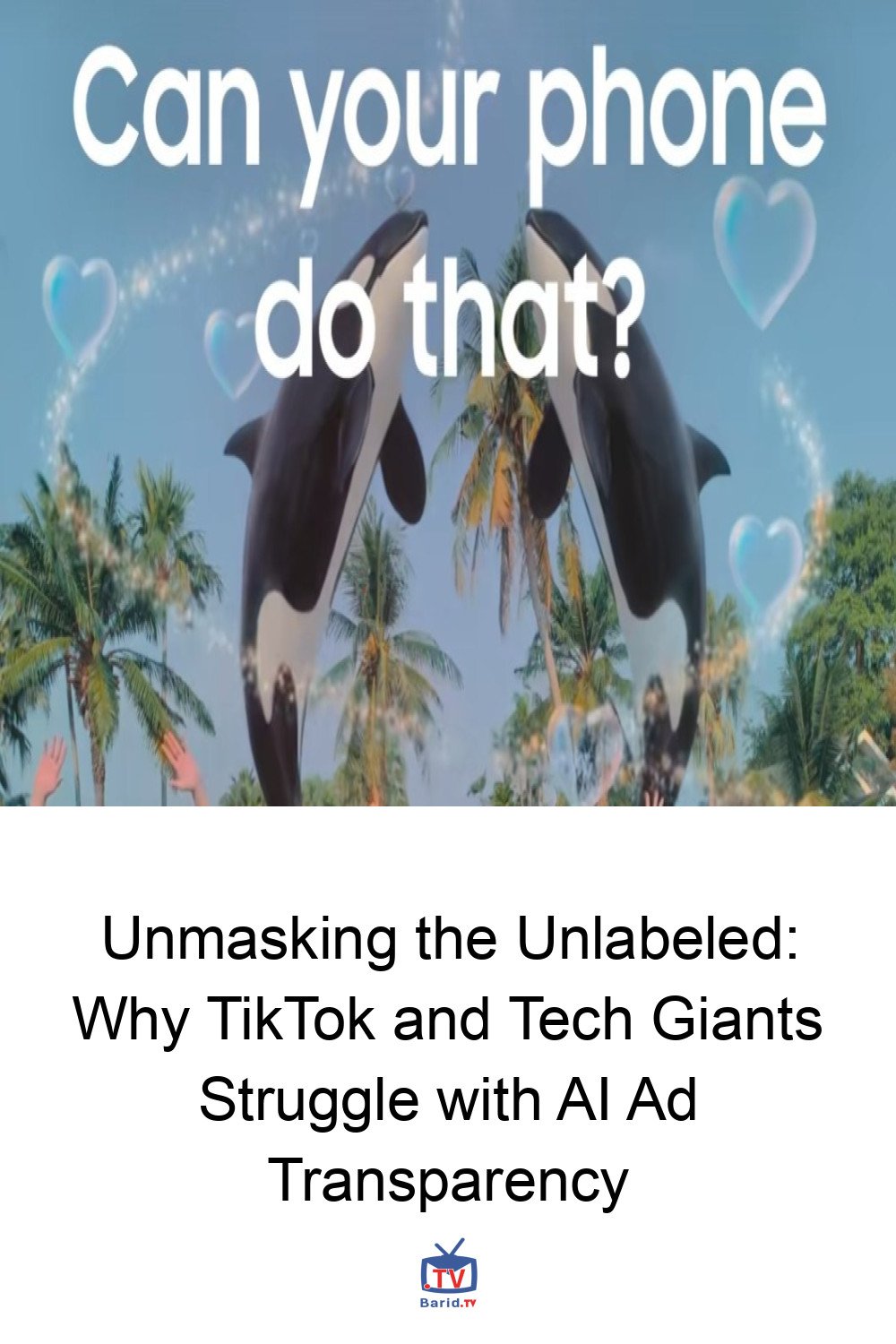
The discrepancy is vividly illustrated by Samsung’s advertising practices. While promoting its Galaxy S26 Ultra’s privacy display, Samsung deployed a series of AI-generated videos across its social media channels. Intriguingly, identical promotional campaigns published on YouTube included explicit disclosures in their collapsed descriptions, acknowledging the use of AI tools. However, the same videos appearing as ads on TikTok, and even regular, unpromoted content on Samsung’s TikTok accounts, offered no such indication. This selective transparency begs the question: if Samsung knowingly used AI, why the silence on TikTok? And if TikTok was informed, why wasn’t this information relayed to its users, in accordance with its own advertising policies?
TikTok’s Own Rules: A Policy in Question
TikTok’s business advertising policy is unambiguous: advertisers are permitted to use content “significantly” edited or generated by AI only if they make this known. This can be achieved through TikTok’s internal AI label, or via a disclaimer, caption, watermark, or sticker. “Significantly modified by AI” is defined broadly, encompassing everything from entirely AI-generated images and videos to content where a primary subject is made to do or say something they didn’t. Despite these clear guidelines, the enforcement appears to be a significant challenge, leaving users, and even seasoned observers, to rely on their own “tells” to spot synthetic content.
A Glimmer of Disclosure? The Cazoo Anomaly
While the broader picture remains murky, there have been isolated instances suggesting a potential shift. Recently, ads from UK-based used car retailer Cazoo, which previously appeared without disclosure, began featuring a “advertiser labeled as AI-generated” message. This development, however, came only after the author’s own suspicions were aroused by “bizarre visual distortions” indicative of AI generation. This reactive labeling, while a step in the right direction, underscores the initial failure of proactive transparency and highlights the burden placed on users to discern artificiality.
The Unanswered Questions: Who is Accountable?
Attempts to seek clarity from both Samsung and TikTok have largely been met with silence or redirection. Samsung did not respond to requests for comment, while TikTok, though pointing to its policies and C2PA partnership, declined to provide an on-record statement regarding the unlabeled Samsung ads. This lack of direct accountability leaves a critical void in the transparency process, making it impossible to determine where the breakdown occurred – was it with the advertiser, the platform, or both?
The Imperative of Authenticity in the AI Era
As generative AI becomes more sophisticated and ubiquitous, the need for robust transparency mechanisms is paramount. When platforms and brands, particularly those committed to authenticity initiatives, fail to consistently label AI-generated content, they erode trust and undermine the very principles they claim to uphold. The ability of an ordinary user, or even a journalist, to identify AI-generated ads more readily than the platform itself or the advertiser, signals a systemic failure that demands urgent attention. True transparency requires not just policies, but unwavering commitment and rigorous enforcement from all stakeholders in the digital advertising ecosystem.
For more details, visit our website.
Source: Link






Leave a comment