





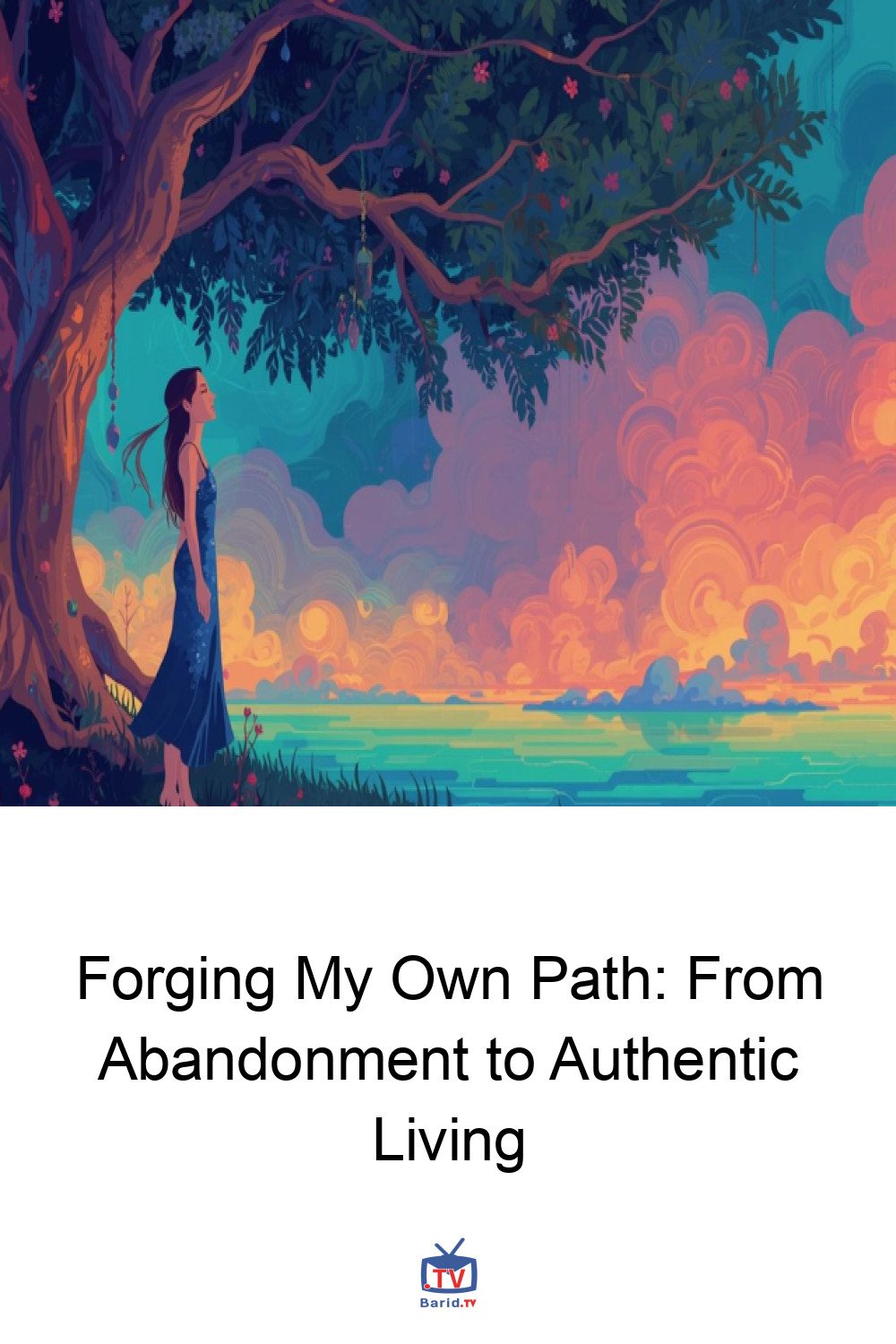
“You can’t go back and change the beginning, but you can start where you are and change the ending.” ~C. S. Lewis
Life began for me not with the embrace of a loving family, but in the stark reality of a household devoid of warmth and support. One parent vanished early on, a ghost never to be seen or heard from again. The other remained, yet their presence was a constant reminder that my existence was an unwelcome burden, a life-ruining imposition. Grandparents and extended family were distant, non-existent figures, leaving me utterly alone, without a practical or emotional safety net. From a tender age, I understood that survival depended solely on my own two feet.
A Childhood Forged in Solitude
The Burden of Early Independence
As an abandoned and scapegoated child, resilience became my default setting, independence my only companion. My driving force was a singular goal: to escape and carve out a life of my own. Yet, this fierce independence came with a heavy price. Without a safety net, risks were luxuries I couldn’t afford, and academic focus often took a backseat to the immediate demands of survival. During school holidays, I worked full-time; during term, part-time. Exhaustion was a constant companion, revision a distant dream. Throughout my undergraduate degree, I often worked near full-time just to keep a roof over my head, perpetually teetering on the edge of an overdraft.
Silent Struggles and Hidden Scars
The turmoil at home remained a closely guarded secret. I never spoke of it, and no one ever asked. My peers, with their seemingly stable, two-parent households, couldn’t fathom my reality, nor could they offer the support I desperately needed. In an era less attuned to the complexities of home life, teachers and adults remained oblivious. There was no emotional safety net, just a profound silence. Ironically, this early financial self-reliance became an unexpected asset. When I entered my career in my twenties, I outpaced my peers, who were just beginning to navigate the professional world I had already been immersed in for years.
Navigating a World That Assumes Family
The Unspoken Divide
As I ascended into a professional-class world, my new friends often assumed my background mirrored theirs. Conversations would casually dismiss individuals from single-parent families or ‘broken homes’ as destined for failure. My own story remained untold. It’s not a narrative that naturally surfaces, and the truth about difficult family situations often elicits awkward, well-meaning but ultimately hurtful responses. I’ve heard everything from disbelief to self-centered comparisons, like, “My father would never leave me!” Society, it seemed, lacked a common language or toolkit for supporting those who have experienced family abuse or abandonment – a topic only recently gaining traction in public discourse.
Seeking Belonging, Finding Misunderstanding
This lack of understanding meant I struggled to articulate my authentic self when it came to family. Daily interactions, whether at work, social gatherings, or during holidays like Christmas, Mother’s Day, or Father’s Day, revolved around families of origin. It’s the norm, and most people genuinely struggle to comprehend, let alone support, someone whose reality deviates so profoundly. I eventually realized many of my closest friends had no idea of my circumstances, leaving me feeling profoundly misunderstood, as if a core part of my identity remained unseen.
From Filling Voids to Embracing Grief
The Illusion of a Chosen Family
In my early adulthood, a powerful urge to belong led me to construct a ‘friends’ family’ or ‘chosen family’ from people I met through study and work. I craved connection. Years later, I understood that the deep-seated feeling of being unwanted and unloved had profoundly shaped all my relationships. I lacked discernment, failing to recognize my own needs. If someone offered time, who was I to refuse? This led to friendships and romantic relationships that were, at best, superficial and mismatched, and at worst, outright abusive. The illusion shattered during holidays when my ‘chosen family’ dispersed to be with their ‘real’ families, leaving the void in my life as stark as ever. My energetic efforts to build connections had merely been a distraction from the profound pain of not having a family.
The Path to Healing: Acknowledging Loss
Therapy became my turning point. I realized the true key wasn’t to fill the void, but to learn to live with it – to process, confront, and truly feel the pain of what I never had. Reconnecting with my inner child was paramount. I had to redirect the energy I’d spent pleasing others inward, to cope with my loss, heal, and make healthier choices. An insightful therapist helped me understand that I was experiencing a form of grief. “Grief,” she explained, “is being attached to something that isn’t there.”
I now live with this void and its accompanying pain, actively grieving the feeling of loss and abandonment instead of trying to escape it. My journey is no longer about fixing or filling, but about acknowledging this as an integral part of my story. While the pain may never fully dissipate, I now make choices from a place of self-awareness and acceptance, moving beyond mere survival to truly thriving.
For more details, visit our website.
Source: Link






Leave a comment