





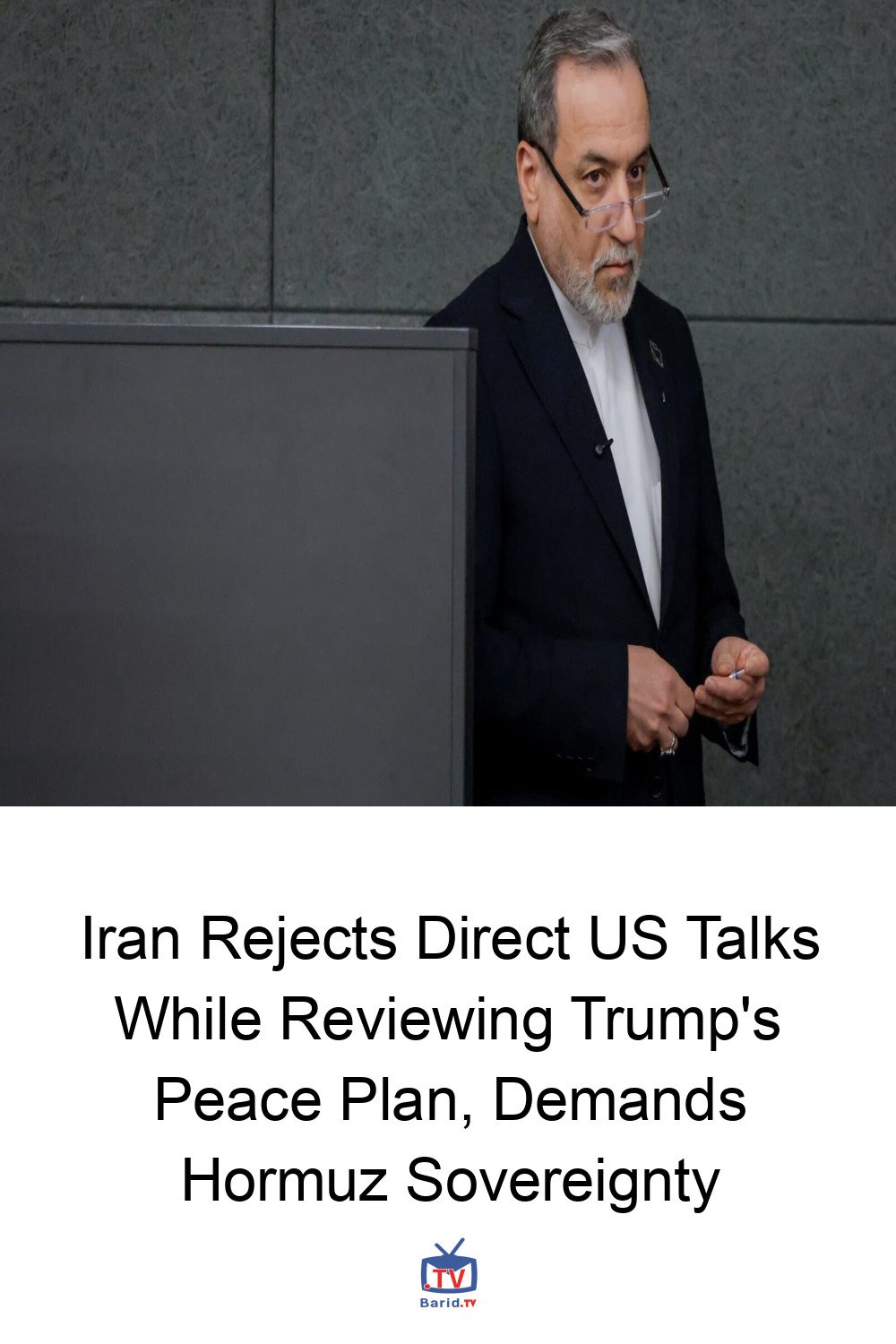
Despite reviewing a 15-point peace proposal from President Donald Trump, Iran has firmly stated it has no intention of engaging in direct negotiations with the United States to end the ongoing conflict. This declaration comes amidst heightened diplomatic efforts and a complex exchange of messages via intermediaries, as Tehran outlines its own stringent conditions for de-escalation, prominently featuring a demand for full sovereignty over the strategic Strait of Hormuz.
Tehran’s Stance: No Direct Talks, But a Counteroffer
Iranian Foreign Minister Abbas Araghchi conveyed to state media on Wednesday that while an American proposal to end the conflict is under review by top authorities, direct talks with Washington remain off the table. This sentiment was echoed by the Fars News Agency, which reported increased U.S. efforts for a ceasefire and indirect talks, only to be met with Iran’s categorical rejection of a ceasefire offer.
Araghchi clarified that any exchange of messages between the two nations through mediators “does not mean negotiations with the U.S.” This underscores a deep-seated mistrust and a preference for indirect channels, even as the possibility of a diplomatic resolution hangs in the balance.
Iran’s Five Conditions for Peace
State broadcaster Press TV, citing a senior political-security official, detailed Iran’s five-point counteroffer, which lays out Tehran’s prerequisites for ending the conflict. These conditions are:
Cessation of Hostilities
A complete halt to “aggression and assassinations” by what Iran terms “the enemy.”
Guarantees Against Re-Imposition
The establishment of concrete mechanisms to ensure that the war cannot be reimposed on the Islamic Republic.
War Damages and Reparations
Guaranteed and clearly defined payment of war damages and reparations.
Comprehensive End to Conflict
The conclusion of the war across all fronts and for all resistance groups involved throughout the region.
Sovereignty Over Strait of Hormuz
Iran’s exercise of sovereignty over the Strait of Hormuz is and will remain Iran’s natural and legal right. This is presented as a guarantee for the implementation of the other party’s commitments and must be formally recognized.
The demand for sovereignty over the Strait of Hormuz, a critical global oil shipping route, stands out as a potential “nonstarter” for the United States. President Trump had previously suggested joint control of the strait, a notion starkly at odds with Tehran’s insistence on exclusive rights.
The Diplomatic Chessboard
The conflict, which reportedly commenced on February 28 with strikes by the U.S. and Israel against the Islamic Republic, has seen both sides issue warnings and counter-warnings. While the Associated Press confirmed Iran’s receipt of Trump’s 15-point plan, the Iranian foreign minister’s statements firmly deny any direct negotiations, contradicting earlier remarks from President Trump.
An unnamed source quoted by Fars News Agency articulated Iran’s strategic resolve: “Iran does not accept a ceasefire… Basically, it is not logical to enter into such a process with those who violate the agreement.” The source further indicated that Iran intends to achieve its strategic objectives in the war, and only then will an end to the conflict be possible.
This complex interplay of proposals, rejections, and conditions highlights a deeply entrenched diplomatic impasse, with both major powers seemingly far from a direct resolution, yet engaged in a high-stakes review of each other’s terms for peace.
For more details, visit our website.
Source: Link







Leave a comment