



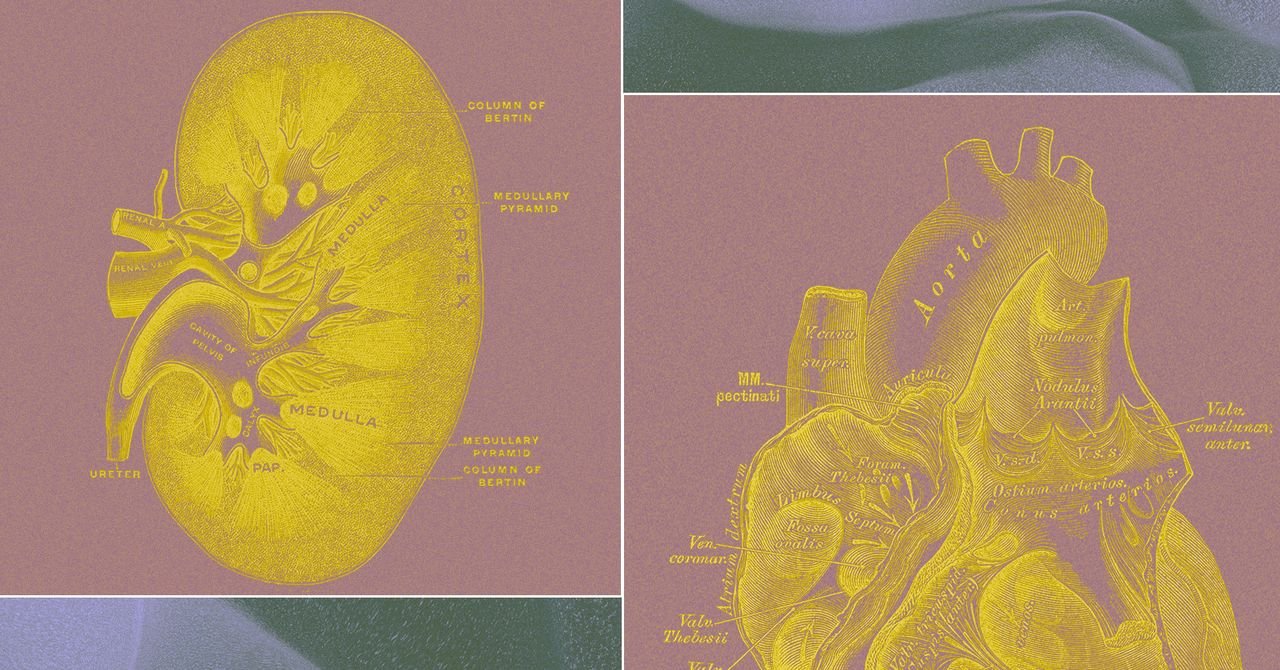

In a groundbreaking move that could redefine the landscape of biomedical research, a Bay Area biotech startup, R3 Bio, is proposing a radical alternative to traditional animal testing: nonsentient “organ sacks.” Backed by significant investment, including from a Singapore-based longevity fund, this innovative approach aims to address the ethical dilemmas and practical challenges associated with using living organisms in scientific experimentation.
The Ethical Imperative: A Shift from Animal Testing
The scientific community is at a crossroads regarding animal experimentation. With the Trump administration initiating a phase-out of animal testing across federal agencies and the CDC winding down primate research, the pressure to find humane and scalable alternatives is mounting. Animal rights activists have long championed an end to research on monkeys, a stance gaining traction as resources dwindle, particularly after China’s 2020 ban on nonhuman primate exports.
As R3 Bio cofounder Alice Gilman highlights, the current shortage of research monkeys in the US poses a significant threat to our ability to respond to future pandemic threats. This critical need for ethical, scalable testing models forms the bedrock of R3 Bio’s ambitious vision.
Introducing ‘Organ Sacks’: A New Paradigm for Research
R3 Bio’s core innovation lies in creating “organ sacks” – intricate biological structures comprising all typical organs, crucially,
without a brain. This design renders them incapable of thought or feeling pain, thereby circumventing the profound ethical concerns inherent in animal testing. Gilman emphasizes that these are not “brainless” but rather “designed to only have the things we want,” reflecting a precise and intentional approach to biological engineering.
Initially, R3 Bio plans to develop monkey organ sacks for drug toxicity testing. This offers a distinct advantage over existing “organs-on-chips” or tissue models, which often lack the comprehensive complexity, including vital blood vessels, found in whole organ systems.
The Science of Creation: Stem Cells and Gene Editing
While R3 Bio remains tight-lipped about the exact methodologies, cofounders Alice Gilman and John Schloendorn confirm they are exploring a combination of advanced stem-cell technology and gene editing. Paul Knoepfler, a stem cell biologist at the University of California, Davis, corroborates the plausibility of this approach. He explains that induced pluripotent stem cells (iPSCs), reprogrammed from adult skin cells, can be gene-edited to disable brain development genes. These modified embryonic-like structures could then be incubated to grow into organized, functional organ systems.
Beyond the Lab: A Vision for Human Longevity
R3 Bio’s aspirations extend far beyond replacing animal testing. The company, and its investor Immortal Dragons, envision a future where nonsentient human organ sacks could serve as a vital source of tissues and organs for people in need. Boyang Wang, CEO of Immortal Dragons, articulates this philosophy: “We think replacement is probably better than repair when it comes to treating diseases or regulating the aging process in the human body.”
This bold long-term goal positions R3 Bio at the forefront of the burgeoning longevity field, promising a future where “designer organs” could offer unprecedented solutions for human health and extended lifespans.
Ethical Foundations: The Three R’s Reimagined
R3 Bio’s very name is a nod to the “three R’s” of animal research—replacement, reduction, and refinement—a philosophy established by British scientists William Russell and Rex Burch in 1959. By developing organ sacks, the startup directly embodies the principle of “replacement,” aiming to eliminate the need for sentient beings in research. This commitment is particularly poignant given that, in fiscal year 2024, over 1,200 nonhuman primates in US research facilities experienced pain that could not be minimized due to experimental necessity.
The development of organ sacks represents a profound step towards a more humane and scalable future for scientific discovery, potentially ushering in an era where critical medical advancements no longer come at the cost of animal suffering.
For more details, visit our website.
Source: Link






Leave a comment