



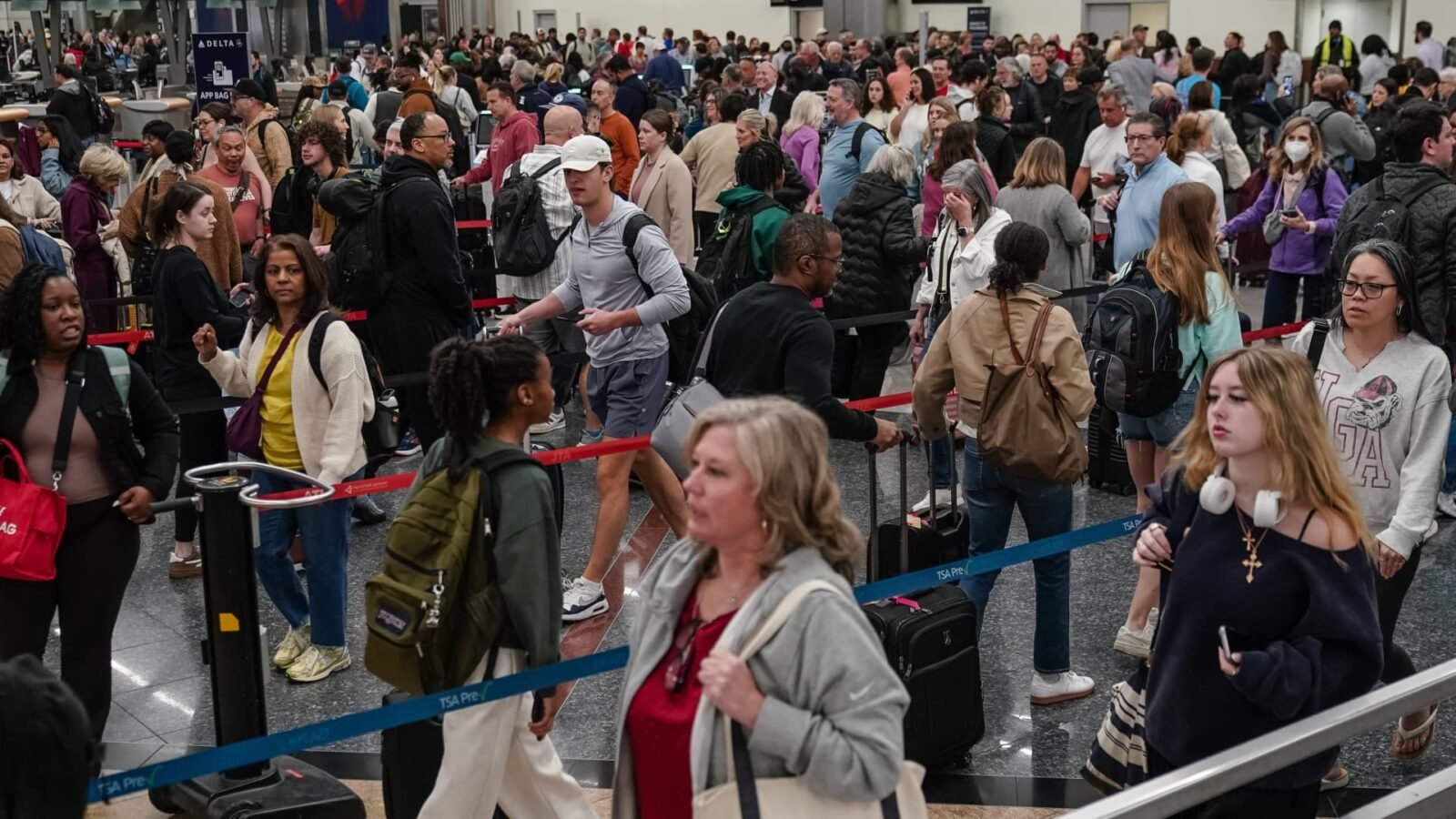

As a prolonged government shutdown plunged U.S. airports into chaos with unprecedented security line delays, a controversial directive has seen Immigration and Customs Enforcement (ICE) agents deployed to assist the beleaguered Transportation Security Administration (TSA). This move, confirmed by White House border czar Tom Homan, has ignited a fierce debate over aviation security, agent training, and the broader implications of leveraging immigration enforcement personnel in a civilian security role.
Airport Security Under Strain: The Shutdown’s Ripple Effect
The Department of Homeland Security (DHS) shutdown, which commenced on February 14th, severely impacted airport operations nationwide. With thousands of TSA employees forced to work without pay, a significant number opted to call out or, more drastically, resign. Reports indicated over 400 TSA officers had left their posts since the shutdown began, leading to a critical staffing shortage. This exodus translated into agonizingly long security lines at major hubs like Hartsfield-Jackson Atlanta International Airport, leaving travelers frustrated and raising serious concerns about national security vulnerabilities.
ICE Deploys: A Stopgap or a Risk?
Responding to President Donald Trump’s earlier threat to deploy ICE agents if the shutdown persisted, Tom Homan confirmed on CNN’s “State of the Union” that the deployment would begin immediately. Homan stated, “We will be at the airports tomorrow, helping TSA move those lines along,” clarifying that ICE agents would assist in non-specialized areas, such as guarding exit doors, thereby freeing up trained TSA officers for critical screening duties. He emphasized, “We’re simply there to help TSA do their jobs in areas that don’t need their specialized expertise.” While the specifics of the plan were still being finalized, the intent was clear: to alleviate the mounting pressure on airport security infrastructure.
A Storm of Criticism: Training, Safety, and Politics
The decision to deploy ICE agents was met with immediate and vocal opposition from various quarters. Everett Kelley, President of the American Federation of Government Employees, vehemently condemned the move, asserting, “ICE agents are not trained or certified in aviation security.” Kelley highlighted the extensive, specialized training TSA officers undergo to detect explosives, weapons, and other threats, arguing that “putting untrained personnel at security checkpoints does not fill a gap. It creates one.” He urged Congress to resolve the funding impasse and adequately support the TSA.
Democratic leaders echoed these concerns, with House Democratic Leader Hakeem Jeffries of New York expressing grave apprehension. “The last thing that the American people need are for untrained ICE agents to be deployed at airports all across the country, potentially to brutalize or, in some instances, kill them,” Jeffries stated on CNN, referencing previous incidents involving ICE. Democrats also linked DHS funding to demands for statutory changes to immigration enforcement practices, further complicating the political stalemate.
The Path Forward Remains Unclear
As ICE agents integrated into airport security operations, the long-term efficacy and safety implications of this unprecedented measure remained hotly debated. While the Port Authority of New York and New Jersey indicated it expected any assisting personnel to be “appropriately trained and focused on supporting screening operations,” the core issue of the DHS shutdown and its impact on essential government services continued to loom large. The deployment of ICE agents, while intended to mitigate immediate travel disruptions, instead underscored the deep divisions and critical challenges facing the nation’s security and political landscape.
For more details, visit our website.
Source: Link







Leave a comment