



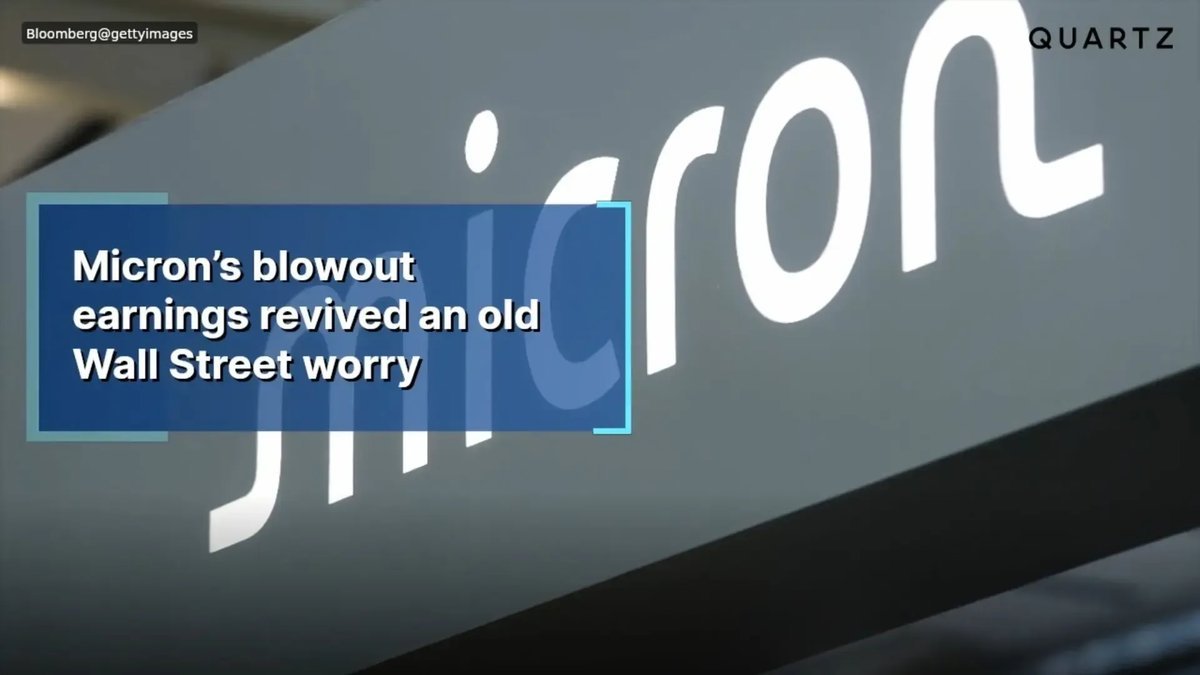


Micron Technology recently delivered a blockbuster earnings report, showcasing record revenue and impressive margins that would typically send investor sentiment soaring. However, beneath the surface of these stellar figures, a familiar apprehension has resurfaced on Wall Street: the age-old fear of oversupply in the notoriously cyclical semiconductor industry. Investors, rather than solely celebrating Micron’s current success, fixated on the company’s announced increase in capital expenditure (capex), interpreting it as a potential harbinger of future market saturation.
The Double-Edged Sword of Success
Micron’s financial performance was undoubtedly strong, reflecting robust demand for memory chips, particularly in the burgeoning AI and data center sectors. Record revenue and healthy profit margins painted a picture of a company thriving in a high-demand environment. This success, however, comes with a historical caveat for the chip industry.
Why Capex Raises Eyebrows
Capital expenditure, or capex, refers to the money companies spend to acquire or upgrade physical assets such as buildings, property, or industrial machinery. For semiconductor manufacturers like Micron, increased capex typically signals plans for expanding production capacity, building new fabrication plants (fabs), or upgrading existing ones. While this is a natural response to strong demand and a strategy for future growth, the memory chip market has a notorious history of boom-and-bust cycles.
In past cycles, periods of high demand led companies to aggressively expand capacity. Eventually, this collective expansion would outpace actual demand, leading to an oversupply of chips. The result? Plummeting prices, squeezed margins, and significant financial headwinds for manufacturers. This “overbuild” scenario is precisely what Wall Street analysts and seasoned investors are now wary of, despite Micron’s current strong position.
Lessons from History: The Semiconductor Cycle
The semiconductor industry is characterized by its inherent cyclicality. Demand for chips can surge with technological advancements (like the current AI boom), prompting manufacturers to invest heavily. However, the lead time for building new fabs and bringing them online is substantial, often taking years. By the time new capacity comes online, market dynamics might have shifted, or demand might have normalized, creating an imbalance.
Investors are keenly watching whether the current wave of investment, driven by AI and other high-growth areas, will lead to a sustainable expansion or if it will once again trigger a familiar pattern of oversupply. Micron’s decision to increase capex, while logical from a growth perspective, has thus inadvertently reignited these historical anxieties.
Looking Ahead: Navigating the Future of Chips
The challenge for Micron and the broader semiconductor industry lies in balancing aggressive growth strategies with prudent capacity management. While the long-term demand for chips, fueled by digitalization, AI, and IoT, appears robust, the short-to-medium term market equilibrium remains a critical concern. Investors will be closely monitoring not just earnings reports, but also industry-wide capacity utilization rates and inventory levels to gauge whether the industry is heading towards another period of overbuild or if it has learned to navigate its inherent cycles more effectively.
For more details, visit our website.
Source: Link







Leave a comment