




Gaming’s New Frontier or ‘AI Slop’? The Battle Over Nvidia’s DLSS 5
Nvidia, a titan in the graphics card industry, recently unveiled the latest iteration of its Deep Learning Super Sampling (DLSS) technology, DLSS 5, at its much-touted GPU Technology Conference (GTC). While previous versions of DLSS focused on boosting frame rates through AI-powered upscaling, DLSS 5 charts a more ambitious, and as it turns out, highly controversial course: leveraging generative AI to imbue in-game character faces with unprecedented realism and detail.
The demonstration, intended to showcase a leap forward in visual fidelity, instead triggered a torrent of negative reactions across social media. Gamers, often quick to voice their opinions, found the effects “off-putting,” reacted with “outright disgust,” and swiftly branded it “AI slop.” But the discontent isn’t confined to the player base; a significant number of game developers are also expressing profound reservations, raising questions about artistic integrity and the future of game design.
DLSS: A Brief History and Its Controversial Evolution
Introduced in 2018, Nvidia’s DLSS technology revolutionized gaming performance by using AI to upscale games rendered at lower resolutions, thereby improving frame rates without demanding more from PC hardware. Subsequent versions further refined this, even inserting AI-generated frames between traditionally rendered ones to maintain visual quality while enhancing performance. This feature has always been an optional toggle, giving players control over its application.
However, DLSS 5 represents a fundamental shift. Instead of merely being a performance-enhancing tool, it actively alters the visual aesthetics of a game, often without the explicit creative input or consent of the developers. This “generative-AI rubicon,” as some describe it, is where the core of the controversy lies.
The Unsettling Aesthetics of ‘Enhanced’ Realism
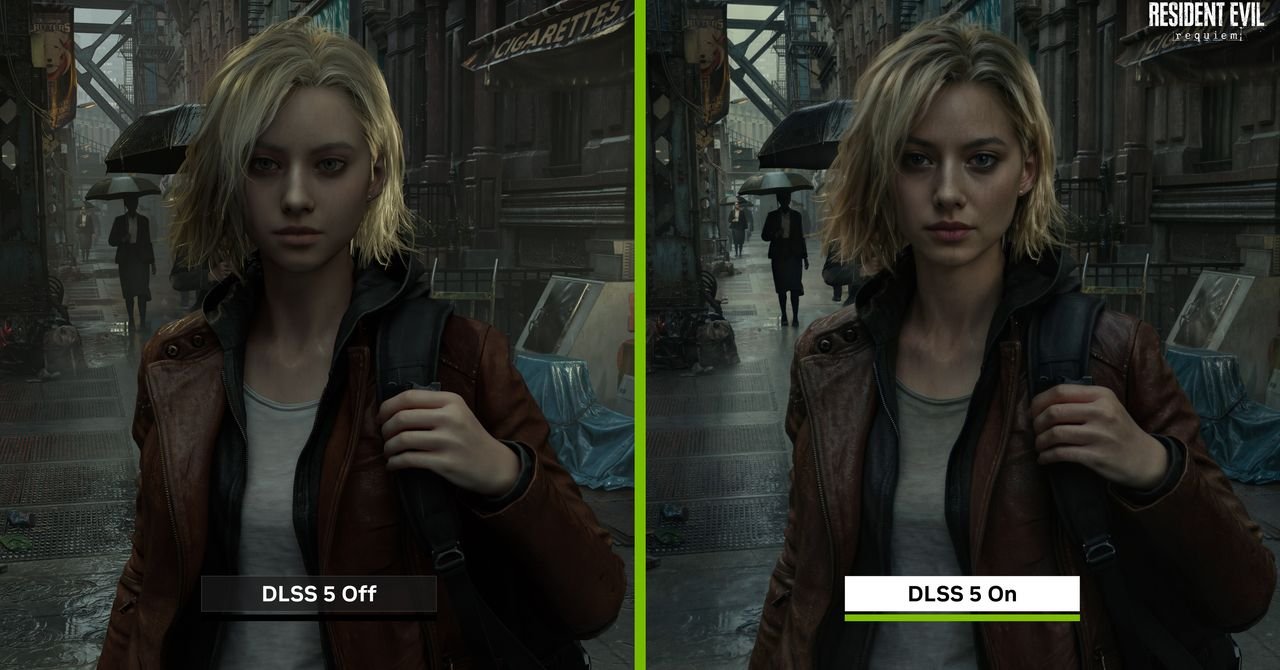
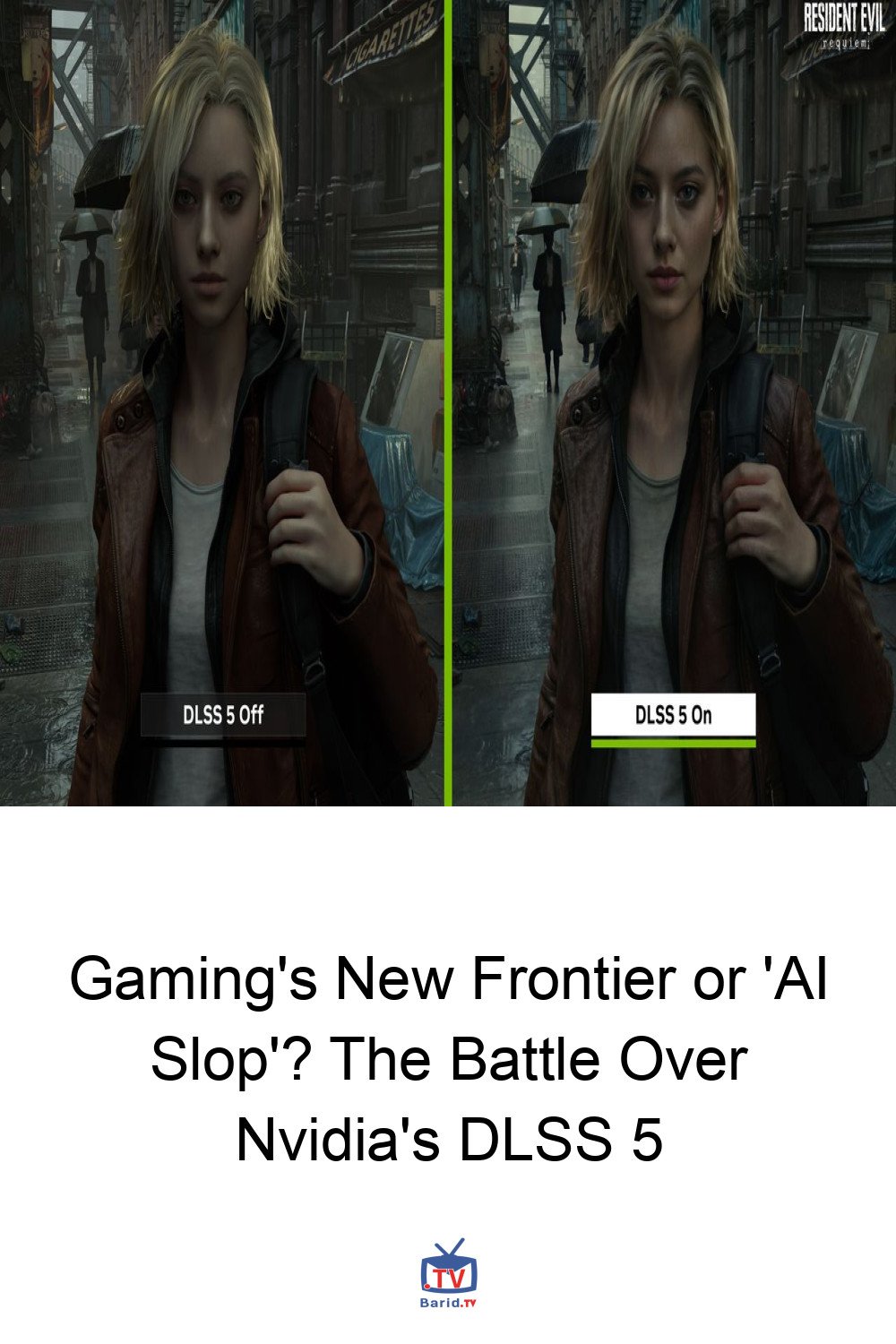
Nvidia’s demo showcased DLSS 5 on titles like Capcom’s Resident Evil Requiem, Ubisoft’s Assassin’s Creed, and Bethesda’s Starfield, promising improved graphics, photorealistic details, and enhanced lighting. While the lighting improvements were noted, detractors likened them to the artificial glow of a “ring light.” More critically, character faces became significantly more detailed, sometimes introducing entirely new facial features. Social media users were particularly vocal, criticizing the effect for “over sexualizing characters,” coining terms like “yassified” or “porn faces,” and drawing parallels to “Instagram or Snapchat’s glamour filters” that smooth imperfections.
The Verge bluntly called it “motion smoothing, but worse.” Beyond aesthetic concerns, the technology also exhibited technical glitches, introducing “unexpected artifacts” in real-time. A notable example from the official demo video showed a soccer ball in a FIFA game with strange artifacts, appearing as if a piece of the net was superimposed on the ball before it even reached the goal. Furthermore, character facial features, such as those of the female character in
Resident Evil Requiem, displayed subtly but noticeably different attributes: larger eyes, fuller lips, and a completely altered nose.
Developers Weigh In: A Threat to Artistic Vision?
The backlash from gamers was swift and overwhelming, yet Nvidia CEO Jensen Huang controversially asserted that gamers were “completely wrong” about DLSS. This stance, predictably, did little to quell the outrage. More surprisingly, developers from major studios like Capcom and Ubisoft reportedly learned about the demo’s visual implications at the same time as the public, expressing their own astonishment.
For many in the industry, DLSS 5’s approach directly conflicts with artistic intent. James Brady, a video game artist and designer who has worked on titles like Call of Duty: Modern Warfare 3
, articulated this concern to WIRED: “It devalues an artist’s creativity and intent on a basic level… All this takes away from the artist’s original design intent on the character and its shape language, with what pretty much functions on a surface level as a ‘Snapchat filter.'”
Marwan Mahmoud, a game developer at Incrypt, acknowledged the gamer reaction as “understandable,” noting that “Some games started relying too heavily on these technologies instead of focusing on proper optimization.” He added, “From a developer perspective, it feels a bit different because you see DLSS as a tool that helps rather than a core solution.”
The core issue, for both developers and players, appears to be the “one-size-fits-all approach” of a technology that can unilaterally alter visuals across diverse game types. Raúl Izquierdo, an indie game developer in Mexico, emphasized the importance of artistic style: “The artist has a style, the artist has an art direction that you’re going to give him, and that’s something that AI kind of doesn’t respect all the time… Maybe I don’t want my characters to be yassified.”
Kevin Bates, CEO of Arduboy, echoed this sentiment, stating that not every game requires photorealism. Sterling Reames, a developer who has worked at Striking Distance Studios and Zynga, succinctly summarized the broader desire: “People just want better games.”
The Road Ahead: Innovation vs. Integrity
Nvidia’s DLSS 5 undoubtedly represents a significant technical achievement in generative AI. However, its implementation has inadvertently ignited a critical debate within the gaming community and industry about the boundaries of AI enhancement, artistic control, and player agency. As AI continues to integrate deeper into creative fields, the challenge will be to harness its power as a tool for artists and developers, rather than a force that overrides their vision. The controversy surrounding DLSS 5 serves as a potent reminder that innovation, especially in a creative medium like gaming, must always consider the human element at its core.
For more details, visit our website.
Source: Link







Leave a comment