



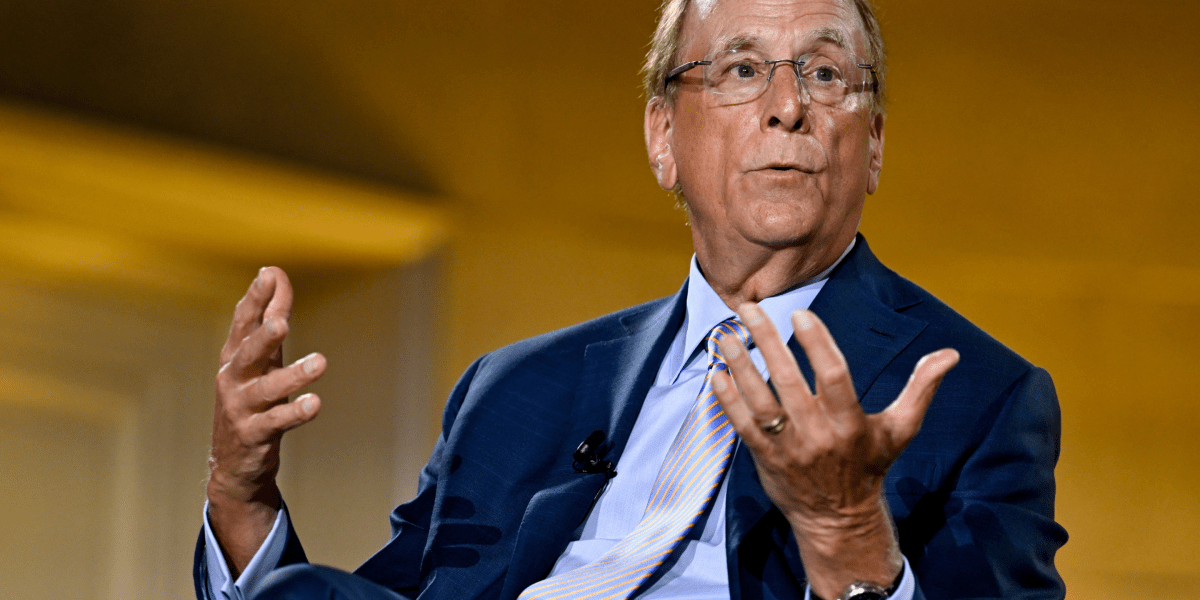

As graduation caps prepare to fly, a sobering forecast casts a shadow over the Class of 2026. BlackRock CEO Larry Fink, a titan of global finance, has issued a stark warning: Artificial Intelligence is rapidly reshaping the employment landscape, potentially ushering in an era of unprecedented unemployment for new graduates, even without a recession.
The AI Tsunami and Gen Z’s Job Market
Fink’s concerns, voiced at BlackRock’s 2026 Infrastructure Summit, paint a challenging picture for millions of college seniors. He fears that the traditional four-year degree, long considered a golden ticket to a stable career, is losing its universal power. The culprit? The breakneck speed of AI development.
Fink’s Stark Warning for the Class of 2026
“I’m worried that when this year’s college graduates enter the workforce, we could see the highest unemployment rate among them in years—even without a recession,” Fink stated. His apprehension stems from AI’s profound impact on entry-level white-collar positions, roles that have historically served as the foundational rung for university graduates. “The speed at which AI is changing, we’re not adapting our society fast enough,” the 73-year-old executive emphasized. “Really post World War II, the pathway to a white-collar job was a college education, and AI is going to disrupt many of those types of jobs.”
Current data underscores Fink’s alarm. The unemployment rate for recent college graduates (ages 22-27) stands at 5.6%, a level not seen since 2013, excluding the pandemic’s immediate aftermath. The demand for early-career roles is visibly contracting: job postings on Handshake, a popular platform for students and recent grads, plummeted over 16% between August 2024 and August 2025, while applications per role surged by 26%. For Gen Z, these figures signal a fundamental shift in the career ladder’s very structure.
Beyond the Bachelor’s: The Rise of Skilled Trades
Despite his cautionary tone, Fink is not dismissing the value of higher education entirely. Drawing from his own journey—a political science degree from UCLA followed by an MBA before building BlackRock—he argues that the college-to-career pipeline is no longer the sole, universal path to success. “The key for life for everyone is to find their purpose,” Fink advised. “For some people, their purpose will remain to get a four-year or advanced degree… but that’s not going to be the pathway for everybody.”
BlackRock’s Investment in Future Skills
Where Fink sees immense opportunity, and a critical societal gap, is in the skilled trades. The burgeoning infrastructure required for AI, such as vast data centers, is creating a surging demand for electricians, HVAC technicians, plumbers, and ironworkers—roles for which the current workforce is woefully unprepared. “[AI] is going to create many jobs and we’re not prepared as a society to fulfill those jobs,” Fink declared, labeling this disparity a “crisis.”
In response, BlackRock recently pledged $100 million to invest in skilled-trade programs, aiming to train 50,000 workers over the next five years. This initiative highlights a proactive approach to addressing the “biggest issue confronting our country today and other countries is the speed at which this change is occurring,” as Fink articulated.
Navigating Uncertainty: Optimism Amidst Disruption
Fink’s concerns are echoed by more than half of employers, who rate the job market for the Class of 2026 as “poor” or “fair,” according to a National Association of Colleges and Employers survey—the most pessimistic outlook since the pandemic’s onset. However, not all industry leaders share Fink’s degree of alarm, with some framing the AI revolution as a catalyst for unprecedented opportunity.
Embracing Innovation: A New Era for Graduates
AMD CEO Lisa Su, for instance, offers a more optimistic perspective. As MIT’s 2026 commencement speaker, she noted, “The Class of 2026 will be graduating at an exciting time, as AI transforms our world and expands what is possible. And I look forward to celebrating them as they prepare to share their skills and ideas with the world.”
Bank of America CEO Brian Moynihan also encourages Gen Z to harness their anxieties. “If you ask them if they’re scared, they say they are. And I understand that,” Moynihan told CBS News. “But I say, harness it… It’ll be your world ahead of you.”
The Evolving Landscape of Work
The discourse surrounding AI’s impact on employment underscores a critical juncture for society. While the disruption to traditional white-collar entry points is undeniable, the emergence of new, high-demand skilled trades and the potential for AI to augment human capabilities present a complex, multifaceted future. For Gen Z, adapting to this rapidly evolving landscape—whether through traditional degrees, vocational training, or innovative entrepreneurial ventures—will be paramount to forging successful careers in the AI age.
For more details, visit our website.
Source: Link







Leave a comment