




The Looming ‘Final Battle’ for Global Dominance
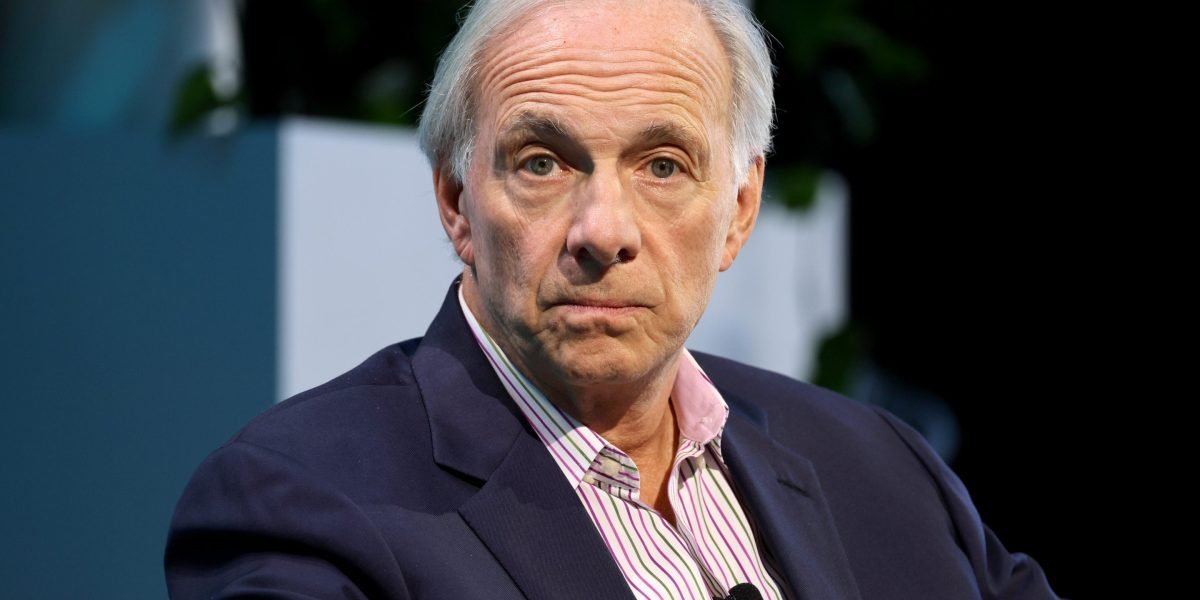
Billionaire investor and founder of Bridgewater Associates, Ray Dalio, has issued a stark and unsettling prognosis: the escalating tensions between the United States, Israel, and Iran are hurtling towards a decisive confrontation over the Strait of Hormuz. This isn’t merely about oil prices, Dalio warns; it’s a pivotal moment that could determine the very survival of the American-led global order.
In a recent, widely discussed post on X, Dalio articulated his conviction: “It all comes down to who controls the Strait of Hormuz.” This narrow waterway, through which a staggering fifth of the world’s daily oil supply flows, represents more than just a strategic choke point. For Dalio, if Iran manages to assert control or even negotiate terms of passage, the U.S. will be perceived as having suffered a profound defeat, irrespective of other conflict outcomes.
Echoes of Empires Past: A Historical Precedent
Dalio draws a chilling parallel between a potential U.S. setback at Hormuz and Britain’s humiliation during the 1956 Suez Canal Crisis. That event is widely regarded by historians as the definitive end of the British Empire’s global imperial reach. He highlights a recurring pattern observed over five centuries: a rising power challenges the dominant empire over a crucial trade route, and the world watches as alliances and capital rapidly shift towards the victor.
The Peril of Financial Overextension
When a dominant power, particularly one holding the world’s reserve currency, is “overextended financially” – a point Dalio has frequently emphasized – and then “reveals its weakness” by losing control in such a critical conflict, the consequences are severe. Dalio cautions, “Watch out for allies and creditors losing confidence, the loss of its reserve currency status, the selling of its debt assets, and the weakening of its currency, especially relative to gold.”
The Current Volatility: A Strait in Limbo
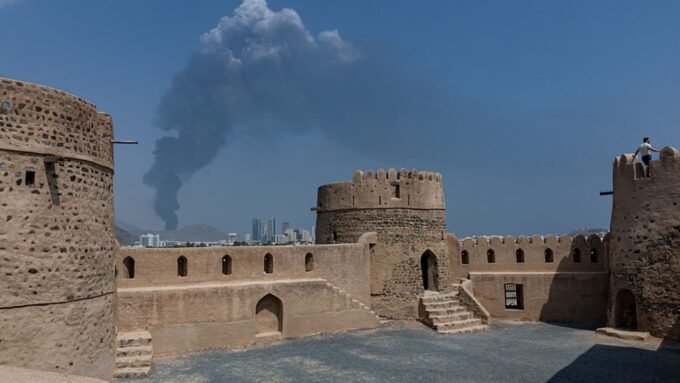
The Strait of Hormuz has been effectively closed for weeks, with only a sporadic trickle of vessels reportedly passing through. This uncertainty is compounded by conflicting narratives. President Trump’s initial criticism of allies for their lack of military support, followed by a swift reversal asserting U.S. self-sufficiency, underscores the confusion. Meanwhile, Iranian Foreign Minister Abbas Araghchi declared the Strait “is open and only closed to enemies,” leaving unanswered the critical question of whether Iran has mined the waterway – an act that would represent an irreversible escalation.
Motivational Asymmetry: The Core of the Conflict
Dalio sees both sides trapped in a conflict with no diplomatic off-ramp. “While there is talk of ending this war with an agreement, everyone knows that no agreement will resolve this war because agreements are worthless,” he wrote. He believes the next phase, whether the U.S. reclaims control or cedes it to Iran, “is likely to be the worst phase of the conflict.”
The fundamental issue, according to Dalio, is “motivational asymmetry.” For Iran’s leadership, this is an “existential” struggle, rooted in regime survival, national pride, and religious conviction. For many Americans, the war is primarily about gas prices, and for U.S. politicians, it’s often framed by midterm election cycles. Dalio is unequivocal about which side this calculus favors in a prolonged engagement: “In war, one’s ability to withstand pain is even more important than one’s ability to inflict pain.” Iran’s strategy, he suggests, is to endure and inflict pain until the U.S. withdraws, mirroring past engagements in Vietnam, Afghanistan, and Iraq.
The Petrodollar Under Threat
Compounding the geopolitical stakes, Tehran has reportedly moved to undermine the dominance of the petrodollar by agreeing to allow a limited number of oil tankers to trade in yuan rather than dollars for passage through the Strait. This move directly challenges a pillar of American economic power.
While President Trump has called for a multinational escort operation, allied nations have largely remained hesitant. Dalio notes that the success of this effort in reopening the waterway will be a critical test. “If President Trump demonstrates his and the U.S.’s power to do what he said he would do, which is win this war by having free passage through the Strait of Hormuz and eliminating Iran as a threat to its neighbors and the world, it will greatly bolster confidence in his and the U.S.’s power.” However, failure could unleash devastating ripple effects across global trade, capital markets, and the dollar’s reserve currency status, potentially inflicting irreparable damage on American hegemony.
As Dalio concludes, “Both sides know that the final battle, which will make clear which side won and which side lost, still lies ahead.” The world watches, holding its breath, as the fate of a global order hangs precariously in the balance over the waters of the Strait of Hormuz.
For more details, visit our website.
Source: Link



Leave a comment