



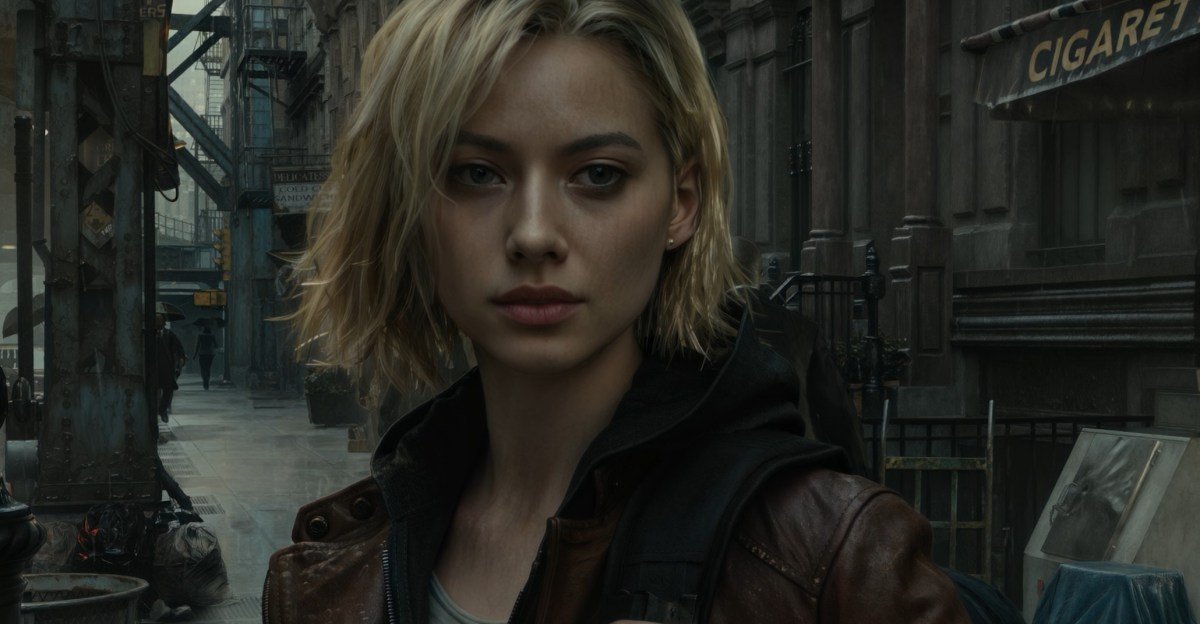

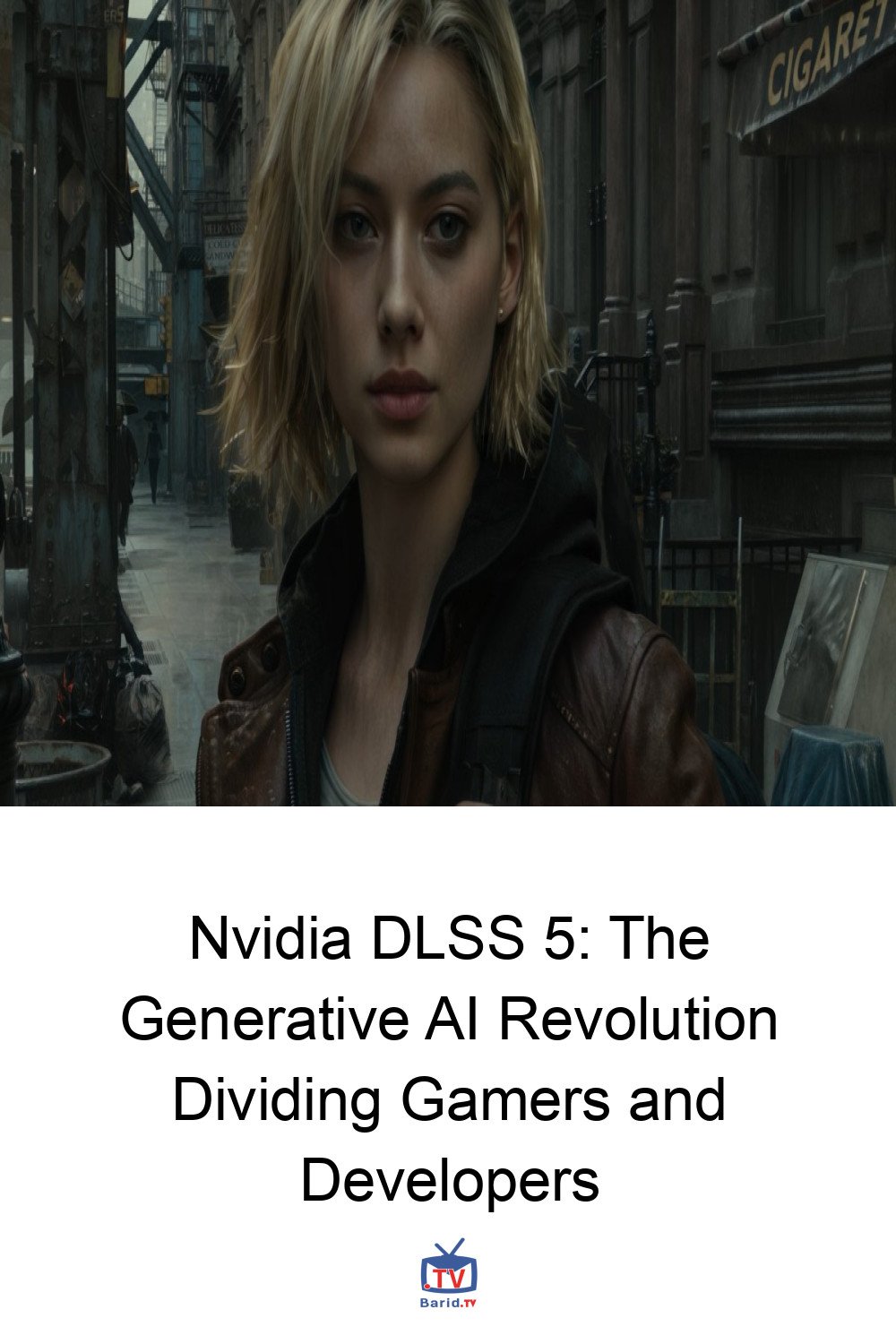
Nvidia’s latest innovation, DLSS 5, has emerged from the GTC conference as a groundbreaking, yet highly contentious, advancement in video game graphics. Heralded by Nvidia CEO Jensen Huang as the “GPT moment for graphics,” this new iteration of Deep Learning Super Sampling promises to blend traditional rendering with generative AI, aiming for an unprecedented leap in visual realism.
DLSS 5: Beyond Traditional Upscaling
Unlike its predecessors, which primarily leveraged machine learning to bridge the visual gap between lower and higher graphic settings, DLSS 5 introduces a radical shift. It employs generative AI to actively
rework a game’s lighting and materials, adding details that feel entirely new rather than merely enhanced. Nvidia claims this “end-to-end” AI model can comprehend complex scene semantics—from character features like hair and translucent skin to environmental lighting conditions—all from a single frame.
This deep understanding allows DLSS 5 to generate visually precise images, adept at rendering intricate elements such as subsurface scattering on skin, the delicate sheen of fabric, and realistic light-material interactions on hair, all while supposedly preserving the original scene’s structure and semantics.
The Double-Edged Sword of Generative Realism
Uncanny Transformations and “AI Slop” Concerns
Early demonstrations of DLSS 5 across titles like Resident Evil Requiem, Starfield, Hogwarts Legacy, and EA Sports FC
reveal a striking, often more lifelike, aesthetic. However, these enhancements have sparked a heated debate. Critics are quick to label some of the changes as “AI slop,” drawing comparisons to the often-unsettling alterations seen in AI-generated photography and video.
A particularly noticeable impact is on character models. In Resident Evil Requiem, the generative AI appears to have significantly altered protagonist Grace Ashcroft, giving her fuller lips and intense eyeshadow, akin to an aggressive social media filter. Similarly, Starfield‘s application of DLSS 5 has resulted in an “uncanny” sharpness and bright highlights that make characters look “stage lit,” even in environments where such lighting is incongruous.
Despite these concerns, Bethesda Game Studios head Todd Howard expressed enthusiasm, stating, “When NVIDIA showed us DLSS 5 and we got it running in Starfield, it was amazing how it brought it to life. We’ve played it. We can’t wait for all of you to do so as well.”
The Artistic Intent Dilemma
The potential for DLSS 5 to fundamentally alter a game’s visual identity has raised alarms among some in the development community. Game developer Mike Bithell voiced strong opposition, remarking, “For when you absolutely, positively, don’t want any art direction in your gaming experience. Disappointing to see anyone take this nonsense seriously. Such a mess.” This sentiment underscores a core tension: how much creative control should be ceded to an AI?
Nvidia’s Assurance: Preserving Creative Expression
Nvidia acknowledges these concerns and asserts that DLSS 5 is designed to honor artistic intent through two primary mechanisms:
- Anchoring in Source Content: The AI model integrates the game’s color and motion vectors for each frame, ensuring the output remains rooted in the original 3D content.
- Developer Controls: Nvidia provides developers with granular controls, including intensity, color grading, blending, contrast, saturation, and gamma. Artists can use these tools to fine-tune enhancements and even mask specific objects or areas to exclude them from AI processing, thus maintaining the game’s unique aesthetic.
These controls suggest that the final in-game effects upon DLSS 5’s release this fall could differ significantly from the early previews, allowing developers to temper the AI’s influence.
The Road Ahead for DLSS 5
Capable of running in real-time at up to 4K resolution, DLSS 5 is poised to satisfy a segment of gamers and developers eager for heightened photorealism. Confirmed compatible titles for its fall release include anticipated blockbusters like The Elder Scrolls VI: Oblivion remake and Assassin’s Creed Shadows. As the technology rolls out, the gaming world will undoubtedly be watching closely to see if Nvidia’s generative AI truly ushers in a new era of graphics or if the “AI slop” concerns prevail.
For more details, visit our website.
Source: Link







Leave a comment