



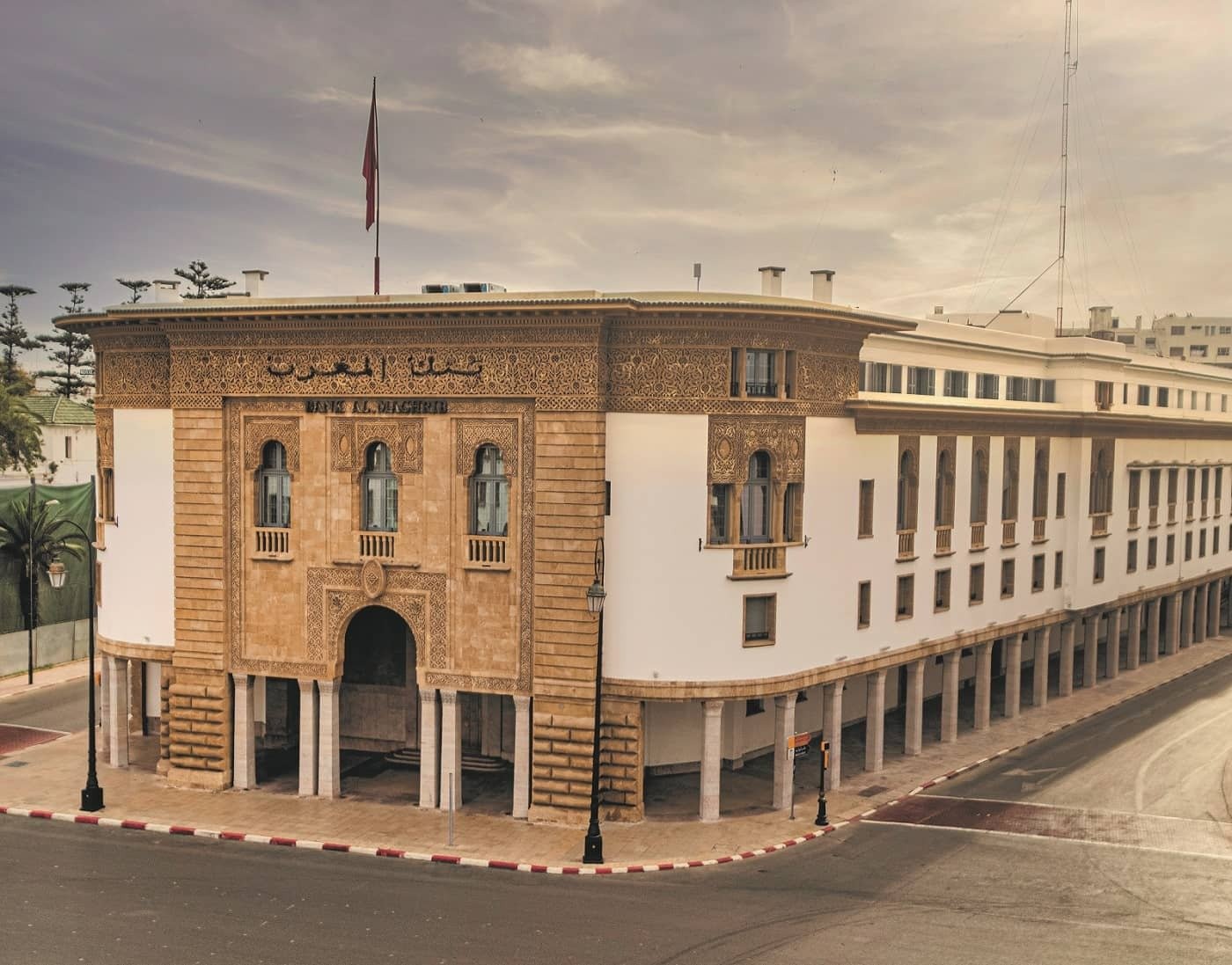

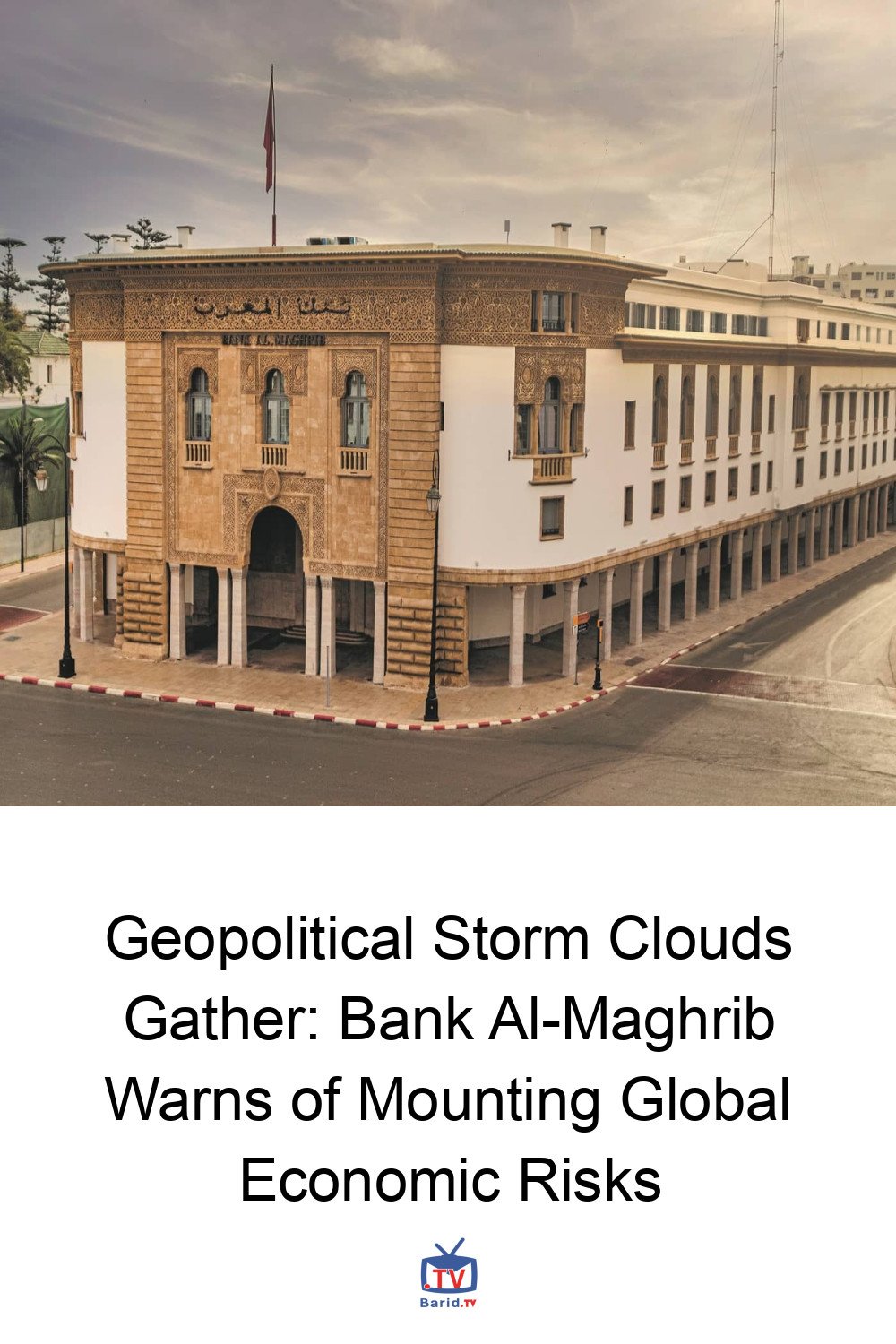
The global economy stands at a precarious crossroads, grappling with an escalating wave of uncertainty fueled by geopolitical tensions. Morocco’s central bank, Bank Al-Maghrib (BAM), recently convened its first quarterly meeting for 2026, issuing a stark warning about the deepening risks facing the world market.
A Shifting Global Economic Landscape
BAM’s latest assessment underscores a significant increase in global uncertainty, primarily attributing this to heightened geopolitical tensions and pronounced fluctuations in commodity markets. The ongoing conflict in the Middle East, particularly the US-Israel-Iran war, emerges as a critical new variable, compounding existing global stressors such as the Russia-Ukraine War and evolving US trade policies.
These interconnected risks are rigorously testing the global economy’s resilience. Financial markets and commodity prices, especially within the vital energy sector, are already experiencing the ripple effects. The full extent of the Middle East conflict’s impact remains uncertain, however, with BAM noting its ultimate consequences will hinge on its “length, scope, and intensity.”
Commodity Markets Under Pressure
The central bank anticipates sustained pressure on commodity markets, with specific projections for key resources:
Oil Price Volatility
Brent crude oil prices are expected to climb from an average of $68.1 per barrel in 2025 to $78.9 per barrel in 2026.
- A subsequent retreat is projected for 2027, with prices falling back to $64.5 per barrel.
Food Price Dynamics
- After a 4.3% rise in 2025, food prices are likely to see a 2.3% decrease in 2026, according to the Food and Agricultural Organization’s food price index.
- This trend is then expected to reverse, with prices rising by 3.4% in 2027.
Global Growth Deceleration and Regional Outlooks
Overall, global economic growth is forecast to decelerate from 3.3% in 2025 to 2.9% in 2026, before a modest rebound to 3.1% in 2027.
Advanced Economies: Navigating Headwinds
- United States: BAM projects robust growth of 2.3% in 2026, slowing to 1.9% in 2027. This moderation is attributed to geopolitical tensions, fiscal policy adjustments, and uncertainty surrounding midterm elections.
- Euro Area: Growth is expected to dip from 1.5% in 2025 to 1.1% in 2026, before recovering to 1.5% in 2027, notably aided by anticipated fiscal easing in Germany.
Emerging Markets: Mixed Fortunes
- China: The Chinese economy is set for moderate growth, projected at 4.5% in the medium term after reaching 5% in 2025.
- India: India’s growth is anticipated to decelerate from 7.7% in 2025 to 6.4% in 2026, primarily due to an expected weakening of external demand, before rebounding to 6.7% in 2027.
The Inflationary Horizon
BAM’s analysis indicates an uptick in global inflation in the near term, reaching 3.3% in 2026. This upward trajectory is expected to be followed by a decrease to 2.9% in 2027. In advanced economies, inflation is forecast to remain slightly above central banks’ target levels in the immediate future, posing ongoing challenges for monetary policy.
As the world navigates these complex economic currents, the insights from institutions like Bank Al-Maghrib become crucial for understanding and preparing for the evolving global financial landscape.
For more details, visit our website.
Source: Link







Leave a comment