





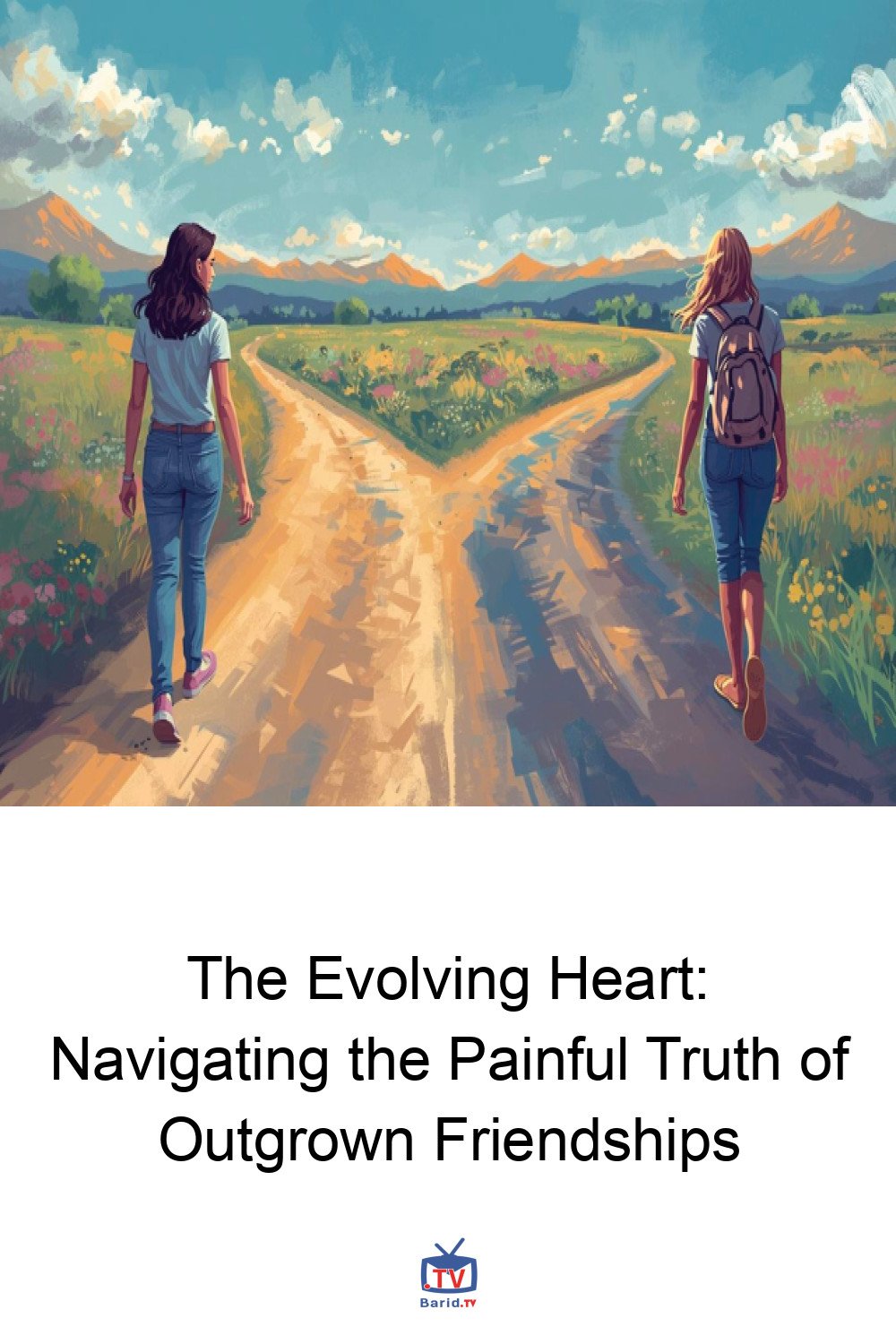
“Sometimes growth doesn’t look like becoming more—it looks like leaving behind what no longer fits.” This profound truth often resonates most deeply when we confront the delicate, yet often painful, reality of outgrowing a friendship. For many, the notion of a friendship fading feels like a personal failure, a testament to something broken. This sentiment, deeply rooted in formative experiences, can make navigating such transitions incredibly challenging.
When Friendship is Forged in Fire: The Illusion of Indestructibility
The author’s experience at boarding school perfectly illustrates how intense, shared environments can create bonds that feel unbreakable. Friendships born from constant proximity—sharing rooms, routines, and whispered secrets after lights out—aren’t merely social connections; they become lifelines. In such a crucible, where daily life offers no escape or reset, friendship isn’t optional; it’s the very fabric of existence. Consequently, when these foundational relationships begin to shift, the change is often perceived not as natural evolution, but as a profound personal failing.
The Silent Drift: Noticing the Cracks
Years later, as life progresses and daily closeness gives way to distance, there’s an inherent assumption that these deep bonds will simply adapt. On the surface, everything appears normal: conversations still flow, old memories evoke laughter, and check-ins continue. Yet, a subtle, almost imperceptible shift occurs, often becoming apparent only after the interaction concludes. The author recounts a poignant example: sharing a struggle, hoping for understanding, only to find the conversation swiftly redirected to the other person’s life. The act of listening, reassuring, and nodding along, while quietly sidelining one’s own feelings, leaves a lingering sense of exhaustion and an inexplicable heaviness.
The Internal Battle: Discomfort and Self-Editing
Questioning a friendship forged in such intensity can feel akin to disloyalty. The shared history, the formative years spent side-by-side, create a powerful internal resistance to acknowledging any discord. This leads to an inward turning of discomfort, a self-interrogation: “Why is this difficult? Why can’t I just relax into what’s familiar? Why do I feel like I’m editing myself?”
The subtle art of self-editing begins: carefully chosen words, softened reactions, a constant striving for agreeableness. It’s not outright dishonesty, but a profound absence of full presence. A moment of disagreement is laughed off, a subject changed, all to avoid the perceived disloyalty of admitting that something no longer aligns. The weight of shared vulnerability makes it incredibly hard to confess that a once-perfect fit now feels constricting.
The Quiet Arrival of Resentment
Over time, this unaddressed discomfort morphs into something more insidious: resentment. Small irritations surface—a quiet sigh during a call, impatience over previously innocuous habits. The most confusing aspect is the resentment itself, a feeling one never wishes to harbor towards someone who once felt like family. Yet, as the author wisely observes, resentment often emerges when we consistently override our inner “no” with an external “yes.” Without a dramatic rupture—no argument, no betrayal—there’s no tangible external cause to point to, amplifying the internal guilt.
The Unavoidable Question: A Path to Clarity
Clarity rarely arrives with a bang; it often whispers. For the author, it came after another draining conversation, prompting a pivotal question: “If nothing changed, could I keep showing up to this friendship in the same way five years from now?” The answer, immediate and calm, was a resounding “No.” This wasn’t born of anger or elaborate justification, but a quiet, undeniable knowing. It challenged a long-held belief that maturity equated to endurance and relentless effort, instead revealing the profound strength in choosing honesty.
Embracing Evolution: Letting Go Without Blame
One of the most challenging aspects of outgrowing a friendship, especially one rooted in shared living, is the absence of a villain. There’s no “wrongdoing” to pinpoint. Instead, it’s a natural divergence, a realization that two individuals are simply no longer growing in the same direction, their needs from connection having evolved differently. Accepting this means releasing the rigid notion that meaningful friendships must remain static to be valid. It also necessitates allowing space for grief, for even when a bond no longer fits, its significance can remain profound.
The Quiet Power of Self-Trust
The journey of outgrowing a friendship, particularly one deeply ingrained, offers invaluable lessons in self-trust. The powerful imprint of shared living can make later distance feel like abandonment, even when it’s merely a natural evolution of individual paths. Ultimately, self-trust isn’t a loud declaration; it’s a quiet, unwavering willingness to listen to the subtle internal signals that guide us toward what truly serves our growth and well-being. It’s the courage to honor our evolving selves, even when it means gently releasing what once was.
For more details, visit our website.
Source: Link







Leave a comment