





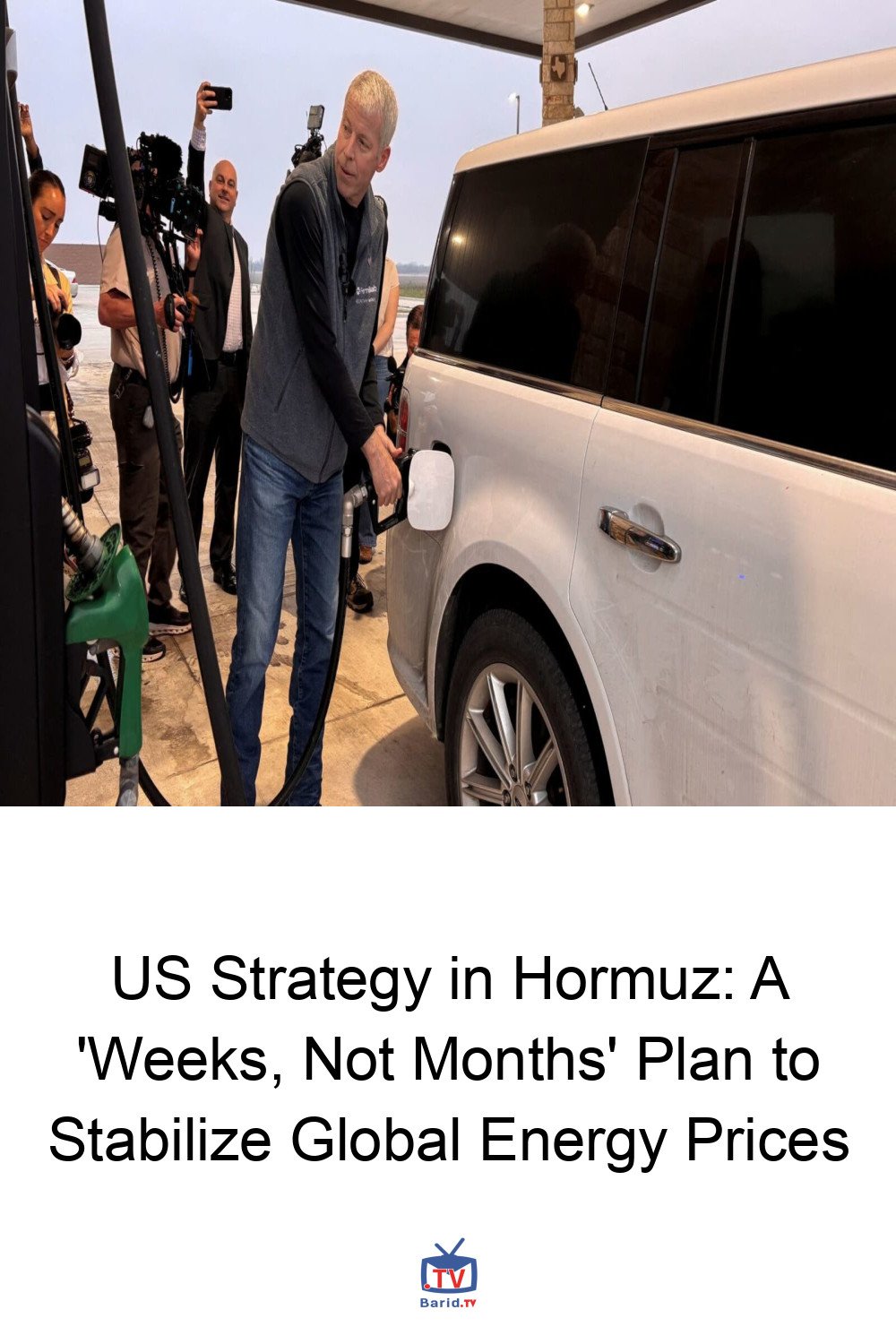
US Vows Swift Action to Reopen Vital Energy Artery, Stabilize Markets
Global energy markets, reeling from recent geopolitical tensions, could see a significant reprieve if the United States’ latest strategy unfolds as planned. Energy Secretary Chris Wright has articulated a bold vision, asserting that a decisive U.S. intervention to neutralize Iran’s capacity to disrupt tanker traffic in the Strait of Hormuz will swiftly lead to a drop in soaring oil and gas prices.
The critical waterway, through which approximately 20% of the world’s energy supply flows, has become a flashpoint, causing bottlenecks and driving crude oil prices past $90 a barrel, with U.S. gasoline averages exceeding $3.46 per gallon. Wright’s pronouncement offers a glimmer of hope amidst the economic uncertainty.
The ‘Weeks, Not Months’ Timeline for Hormuz
Speaking on Fox News Sunday, Secretary Wright detailed the administration’s aggressive timeline. “The plan is to get oil and natural gas and fertilizer and all the products from the Gulf flowing through the straits before too long,” he stated. He emphasized that the U.S. is “massively attriting their ability to strike with missiles and drones,” a process he expects to intensify in the coming days. Crucially, Wright assured that this disruption would be short-lived, lasting “weeks, certainly not months.”
His confidence was underscored by the recent successful passage of a large tanker through the strait without incident, a positive sign given that around 100 tankers and cargo ships typically navigate the route daily. Wright framed the current efforts as a “small price to pay to get to a world where energy prices will return back to where they were,” envisioning a future where Iran is “defanged,” fostering greater investment and unhindered trade.
Political Stakes and Economic Realities
The energy crisis casts a long shadow over the political landscape, particularly for President Donald Trump, who secured a second term partly on pledges to curb inflation and lower gas prices. With midterm elections looming, the administration is under pressure to deliver on these promises. The recent spikes in Brent crude to over $92 per barrel and U.S. crude to more than $91 per barrel highlight the urgency of the situation.
Strategic Petroleum Reserve: A Last Resort?
Amid calls to tap the U.S. Strategic Petroleum Reserve (SPR) to alleviate consumer pain at the pump, both Secretary Wright and President Trump have downplayed its immediate necessity. Wright, on CBS’s “Face the Nation,” clarified that the issue is primarily one of logistics, noting that the demand for oil is concentrated in refineries in Europe and Asia. “We’re more than happy to use [the SPR] if needed,” he affirmed, but suggested it’s not the primary solution for the current bottleneck.
President Trump echoed this sentiment, stating, “We’ve got a lot of oil. Our country has a tremendous amount… That’ll get healed very quickly.” The administration appears to be banking on its direct intervention in the Strait of Hormuz as the most effective and timely solution to restore stability to global energy flows.
The Road Ahead
As the U.S. intensifies its efforts in the Strait of Hormuz, the world watches closely. The success of this strategy hinges on the rapid neutralization of threats and the swift resumption of unimpeded tanker traffic. Should Wright’s predictions hold true, consumers could soon see relief at the gas pump, and global markets could regain a much-needed sense of stability.
For more details, visit our website.
Source: Link








Leave a comment