



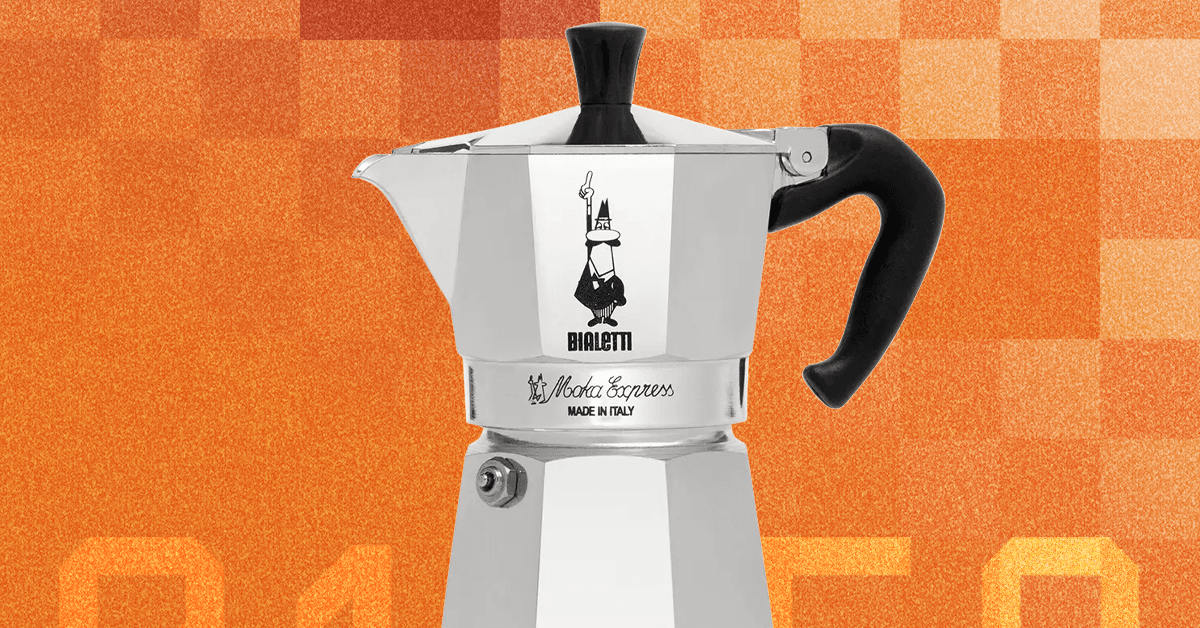

In the relentless pursuit of productivity, coffee stands as the undisputed champion, the original office “biohack” fueling nations. As we navigate the groggy aftermath of daylight saving, the caffeine-fueled experts at WIRED Reviews delve into the rituals and devices that keep us sharp and smiling. Today, we spotlight the elegant simplicity of the moka pot, championed by operations manager Scott Gilbertson, with more brewing insights from other WIRED writers to follow.
The Enduring Appeal of Simplicity
Years of globetrotting and a deep appreciation for enduring craftsmanship have instilled in me a profound respect for devices that master the art of simplicity. A pen and paper remain the purest form of written expression. A cast-iron pan, the most straightforward culinary tool. And for brewing coffee, the moka pot reigns supreme in its unpretentious efficiency.
My affection for the moka pot extends beyond the rich, satisfying results it consistently delivers. While I relish the deep, chocolatey, and smoky notes it extracts from a dark roast, the moka pot’s true allure lies in its ingenious design and a legacy that has spanned nearly a century.
A Legacy Forged in Aluminum
The precise genesis of the moka pot is a subject of gentle debate, but its widespread manufacturing and popularity are unequivocally credited to Alfonso Bialetti, an aluminum manufacturer, and his son Renato. They began mass-producing this iconic brewer in 1933, a tradition proudly continued by Bialetti Industries today with their Moka Express. The instantly recognizable logo, depicting a squat, heavily mustached figure, is a caricature of Alfonso Bialetti himself.
Renato Bialetti’s devotion to the device that brought him fame was so profound that upon his passing in 2022, his ashes were interred within a large moka pot – a testament to its cultural significance. This reverence is shared globally; the moka pot graces the collections of prestigious institutions like the Museum of Modern Art. Its distinctive octagonal silhouette has cemented its status as one of the world’s most iconic coffee brewers.
Understanding the Moka Pot’s Ingenious Mechanics
Often mislabeled as a “stovetop espresso” maker, the moka pot is, in essence, a pressure-driven stovetop (or even campfire-top, with careful supervision) coffee brewer that operates on principles akin to a percolator. The classic Moka Express comprises four distinct parts, forming two chambers.
- The lower chamber serves as the water reservoir, heating directly on the stove.
- Nestled within this is the brewing basket, designed to hold your coffee grounds.
- The upper section features a central tube extending into a collection chamber.
- Beneath the top piece, a metal filter, sealed by a rubber (or silicone) gasket, ensures a tight fit.
These two primary sections screw together securely. As the water in the lower chamber heats, pressure forces it upwards, through the bed of coffee grounds, and finally out of the central tube into the upper collection chamber. The extracted coffee rests above the grounds, with the metal filter diligently keeping everything in place. It is, by all accounts, a marvel of simple engineering.
Moka Pot vs. Espresso: A Nuanced Distinction
While moka pots generate pressure, typically ranging from 2 to 3 bars, this is considerably less than the 9+ bars required for true espresso machines. Hence, the “stovetop espresso” moniker is technically a misnomer. However, there’s no denying that the dark, rich, and almost syrupy results of a moka pot extraction come remarkably close to espresso without the need for a dedicated machine. In my extensive experience, the flavor profile of moka pot coffee often rivals, if not surpasses, that of many home espresso machines, delivering a taste closer to authentic coffeehouse espresso – even if it lacks the same texture and crema. Given the choice, I consistently opt for a moka pot over any other home brewing method I’ve encountered.
Mastering the Brew: My Personal Moka Pot Ritual
Like any long-standing practice, my moka pot brewing has evolved into a personal ritual. The conventional approach involves filling the lower chamber with room-temperature water, loading the basket with grounds (coarser than espresso, finer than drip), screwing the two halves together, and placing it on the stove. This method yields a perfectly respectable cup and is likely how most enthusiasts begin their journey.
Debunking Brewing Myths: Temperature and Tamping
World barista champion James Hoffman advocates for a slightly different technique: using boiling or very hot water in the bottom chamber before placing it on the stove. His theory posits that the extended heating time with cold water can overheat the grounds, leading to a more bitter taste. While I respect Hoffman’s expertise, I find this distinction subtle. The water ultimately reaches the same temperature regardless of its starting point. Call me a philistine, but a blind taste test between the two methods consistently led me back to the traditional cold-water approach.
Having brewed exclusively with a moka pot for over a decade, my personal method remains largely traditional, with one minor, self-endorsed deviation: a gentle tamp of the grounds. Not an espresso-style tamp, mind you, but a light press to remove any air pockets and slightly slow the water’s passage. This, I’ve found, contributes to a more consistent extraction.
Far more impactful than initial water temperature, in my experience, is the precise control of the heat source. I confess a reluctance to brew on a conventional stove, as achieving the ideal low flame is often a challenge. In fact, peculiar as it may sound, the most effective method I’ve discovered for brewing a moka pot involves using a portable butane stove, which offers unparalleled control over heat intensity.
For more details, visit our website.
Source: Link







Leave a comment