




Mastering the Mid-Layer: Your Essential Guide to Warmth on the Trail
When venturing into the great outdoors, whether for a challenging hike, an extended backpacking trip, or simply exploring new destinations, a well-chosen mid-layer is paramount to your comfort and safety. This essential garment sits atop your base layer, acting as the primary insulator by efficiently trapping your body heat. While options abound—from classic fleece to sophisticated merino wool, lightweight down, and advanced synthetics—the key is finding the perfect balance of warmth, breathability, and packability for your specific adventure.
Our comprehensive layering philosophy advocates for a robust four-layer system: a moisture-wicking base layer, a heat-retaining mid-layer, a protective puffer jacket, and a weather-resistant outer shell like a rain jacket. This dynamic combination ensures you stay warm, dry, and agile, adapting seamlessly to changing conditions without unnecessary bulk. Dive into our expert guide to discover the top mid-layer selections for every outdoor enthusiast, ensuring you’re prepared for whatever nature throws your way. For a complete system, be sure to explore our dedicated guides on the Best Base Layers, Best Puffer Jackets, and essential Rain Jackets.
The Enduring Appeal of the Basic Fleece
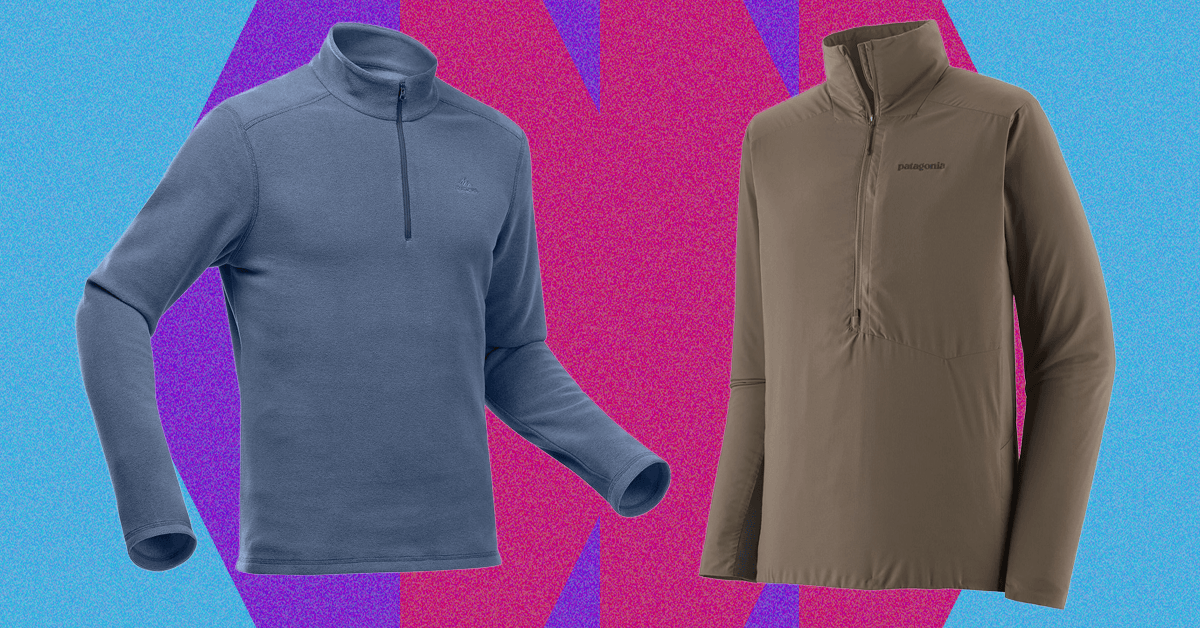
Decathlon Quechua Men’s MH100 Hiking Fleece
Price: $25 (Men’s), $17 (Women’s) at Decathlon
While often overlooked in the era of ultralight gear, the traditional pile fleece remains a formidable and budget-friendly contender for your mid-layer needs. It might not win the warmth-to-weight ratio battle on an ultralighter’s spreadsheet, but its unbeatable price point and minimal weight difference compared to newer grid or Alpha fleeces make it an ideal entry point for budding hikers and backpackers. This classic “100-weight” fleece is renowned for its incredible longevity; I’ve personally relied on various half-zip pullover fleeces for three decades, with a Marmot version from 1995 still in active rotation – a testament to its enduring functionality.
The Decathlon MH100 Hiking Fleece excels at trapping body heat, delivering reliable warmth. A significant advantage over down is its ability to retain insulating properties even when damp or fully wet (though we’d always recommend staying dry!). Its inherent breathability facilitates moisture transfer away from your base layer, and it surprisingly dries quickly even while worn. This jacket embodies minimalist design: no thumb loops, no pockets, no hood, not even elasticated cuffs. For many, this simplicity is its greatest strength, reducing weight and potential failure points. However, if you prefer more features, Decathlon offers the MH120 Hiking Jacket, which includes a full zip and pockets, albeit at a slightly higher weight of 12 oz for a men’s medium (compared to the MH100’s svelte 7.9 oz).
Pair this dependable fleece with a quality base layer, a robust puffer jacket, and a reliable rain jacket, and you’ll be well-equipped for most three-season hiking conditions.
Advanced Warmth: The Grid Fleece Advantage
Patagonia R1 Air Zip-Neck Pullover
Price: $139 at REI (Men’s & Women’s)
For those seeking a more technical edge, the Patagonia R1 Air Zip-Neck Pullover stands out as a prime example of grid fleece innovation. This particular model represents the most streamlined offering within Patagonia’s acclaimed R1 Air series. Similar to the Decathlon option, it features a minimalist half-zip pullover design, devoid of pockets or a hood. This pared-down approach is ideal for active pursuits like hiking and backpacking, where movement is constant and external pockets are often unnecessary. For casual wear or enhanced utility, the R1 full-zip hoody provides added pockets and a hood, though it comes with a 5 oz weight increase in a men’s large.
Grid fleece, characterized by its distinctive waffle-like texture created by elastane stitching, offers compelling benefits over traditional pile fleece. Its primary advantage is significantly enhanced breathability, allowing for superior moisture management. Additionally, grid fleece is less bulky and compresses more efficiently, making it a favorite for space-conscious adventurers. While it may not offer the same wind-blocking prowess as traditional fleece and can take slightly longer to dry, its performance in cooler conditions, especially when paired with a wind shell, is exceptional. This combination effectively retains warmth while actively wicking away sweat, ensuring you remain drier and better thermoregulated than with a standard fleece in similar environments.
The Pinnacle of Lightweight Performance: Durable Ultralight Mid-Layers
Patagonia Nano-Air Ultralight Pullover
Price: From $129 (35% off) at REI & Backcountry (Men’s & Women’s)
For the ultimate in lightweight insulation and robust performance, the Patagonia Nano-Air Ultralight Pullover stands unrivaled. Available in three insulation weights (20g, 40g, and 60g per square meter), the 20g version represents the zenith of minimalist warmth, with a men’s medium tipping the scales at a mere 7.7 ounces. As an extra-small women’s tester, I can attest to its almost imperceptible presence – it’s the ideal choice when you need just a touch more insulation than a base layer provides, especially under a rain shell.
Having rigorously tested the 20g Nano-Air pullover across a year of trail running, hiking, biking, climbing, and camping, it has cemented its place as my go-to insulating mid-layer. Patagonia’s proprietary FullRange fabric forms the shell, boasting impressive water and abrasion resistance, making it significantly more durable than the delicate, high-loft Alpha Direct fleeces I previously favored. Crafted from 100% recycled polyester synthetic insulation, its extremely slim cut ensures it layers effortlessly beneath jackets, backpacks, and climbing harnesses. I’ve worn this pullover in numerous 30- to 40-degree trail races beneath my race vest, experiencing consistent warmth and comfort without overheating, proving its exceptional versatility and performance in demanding conditions.
Choosing Your Ideal Mid-Layer
Selecting the right mid-layer hinges on understanding your activity level, expected weather conditions, and personal preferences for features and weight. Whether you prioritize the timeless reliability and value of a basic fleece, the enhanced breathability and packability of a grid fleece, or the cutting-edge lightweight durability of an ultralight synthetic, there’s a perfect mid-layer to elevate your outdoor experience. Invest wisely, and stay warm and comfortable on all your adventures!
For more details, visit our website.
Source: Link








Leave a comment