




Joseph Stiglitz’s Dual AI Prophecy: Navigating the Bubble and Embracing the Future Co-worker
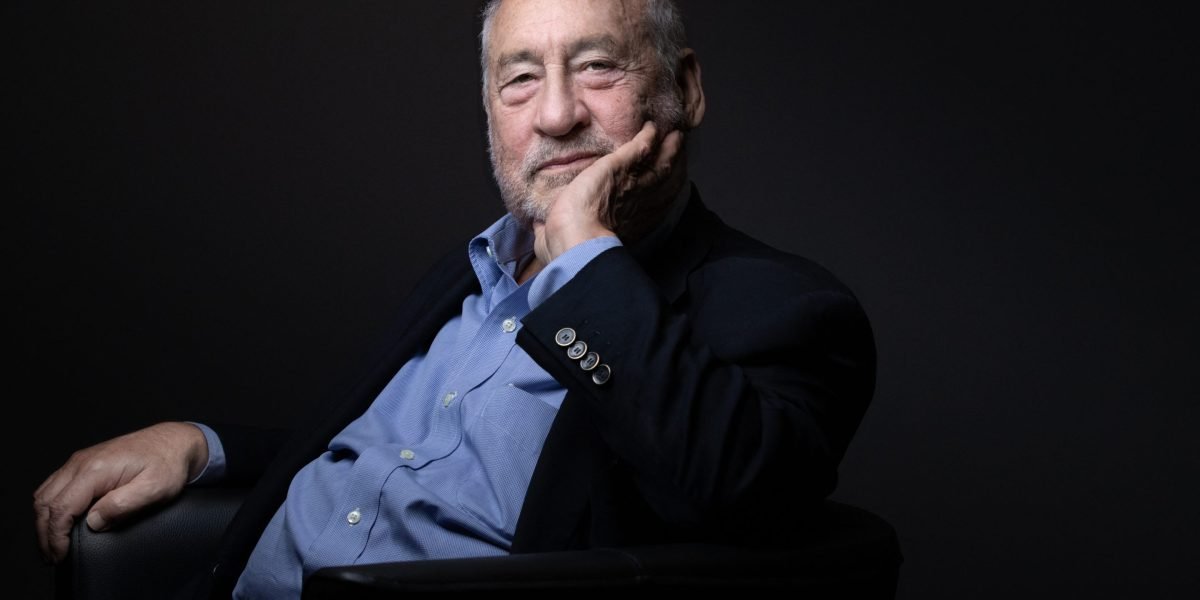
Nobel laureate Joseph Stiglitz, a towering figure in economics, presents a compelling, albeit unsettling, dual perspective on the rise of Artificial Intelligence. He urges us to simultaneously grasp two profound ideas: an AI bubble is inflating, poised to burst with significant macroeconomic repercussions and widespread worker displacement, yet beyond this turbulent transition lies a future where AI could become our most indispensable professional ally.
The Looming AI Bubble and its Inevitable Burst
Stiglitz, known for his incisive critiques of modern capitalism, asserts that the current surge in AI investment is propping up the economy, contributing significantly to recent growth figures. However, he warns that this growth is built on a precarious foundation – a bubble he believes is inflating in two critical ways.
“Our economy is right now being supported by AI investment—the AI bubble,” Stiglitz revealed in a recent interview with Fortune. “Like a third of the growth, or the non-growth, that we had last year was based on AI. So this AI bubble is having positive macroeconomic effects in the short run. I believe that it is a bubble in two ways.”
The market’s fervent belief in high returns from AI investments, Stiglitz argues, rests on two flawed assumptions: guaranteed technological success and limited competition. The reality, however, is a fiercely competitive global landscape, where tech giants from the U.S. to China are vying for dominance. Intense competition, even with technological breakthroughs, will inevitably drive down profits, failing to deliver the expected returns. When this realization dawns, the economic fallout will be severe.
“If I’m right and there is this bubble,” Stiglitz cautioned, “then the breaking of any bubble is really bad in the short term for the macroeconomy.”
The Unpreparedness for Mass Displacement
This potential economic collapse, Stiglitz warns, could coincide with widespread job displacement driven by AI automation – a “worst-of-both-worlds scenario” that he considers far from far-fetched. The core issue? A glaring absence of institutional frameworks to manage such a profound shift.
“We do not have the macro or micro framework for managing that kind of displacement,” he stated. The necessary infrastructure for active labor-market policies, large-scale retraining programs, or an industrial strategy to cultivate new, high-quality jobs simply doesn’t exist at the required scale. Stiglitz draws a sobering parallel to the Great Depression, where agricultural productivity soared, displacing farmers, but society lacked the mechanisms to reallocate that labor until the exigencies of World War II forced government intervention.
If AI successfully automates vast swathes of routine cognitive work – the research, drafting, analysis, and administrative tasks that define millions of white-collar jobs – without a societal mechanism to redirect this labor, the consequences extend far beyond mere productivity gains. It becomes a deeply human crisis. The perceived safety of many knowledge workers, often insulated from past industrial disruptions, may be a dangerous illusion.
Act Two: AI as the Ultimate Co-worker
Yet, Stiglitz’s narrative pivots dramatically beyond the immediate storm. Looking past the bubble and the initial shock of displacement, he envisions AI transforming from a replacement for human workers into an invaluable tool that amplifies their capabilities.
Consider education, a sector representing roughly 14% of the labor force. Stiglitz is adamant: “It’s not going to replace teachers. It may help them do better lesson plans. It may help them tailor education better, but it’s not going to replace the teachers. We know enough about how students learn that the human interaction still seems to be very important.”
Healthcare, a sector accounting for nearly 20% of U.S. GDP and notoriously inefficient, tells a similar story. While AI boosters tout its potential to revolutionize healthcare, Stiglitz remains grounded. “Is AI going to solve that problem? No. We know precisely why our healthcare system is inefficient, and it has to do with rent seeking, with lack of competition, with the failures of the system…”
His point is clear: AI can optimize, assist, and enhance, but it cannot fundamentally alter systemic issues rooted in human and political structures. Instead, its true power lies in augmenting human professionals, freeing them from mundane tasks to focus on higher-value, more human-centric work.
Stiglitz’s message is a call to action: prepare for the inevitable economic turbulence and societal disruption AI will bring in the short term, but simultaneously lay the groundwork for a future where this technology serves as a powerful co-worker, enriching human potential rather than diminishing it. The challenge lies in navigating the chasm between these two realities with foresight and proactive policy.
For more details, visit our website.
Source: Link








Leave a comment