




In a dramatic escalation of Middle East tensions, Iran reportedly struck a U.S. air base in the United Arab Emirates just hours after its president, Masoud Pezeshkian, issued a public apology to Gulf neighbors and vowed to cease attacks. This contradictory move unfolds as the week-old conflict between Iran, the U.S., and Israel intensifies, marked by relentless airstrikes on Tehran, Iranian missile barrages across the Gulf, and a near-halt to critical shipping in the Strait of Hormuz, sending global oil prices soaring.
A War of Words and Missiles Escalates
The weekend saw a fierce continuation of hostilities, with Iranian missiles raining down on Gulf states while Israel targeted vital infrastructure in Tehran. U.S. President Donald Trump issued a stern warning, “Today Iran will be hit very hard!”, a sentiment echoed by Israel’s Benjamin Netanyahu, who promised “many surprises” in the conflict’s next phase. A top Iranian official, Ali Larijani, countered with defiance: “We do not welcome the war, but aggressors should be punished.”
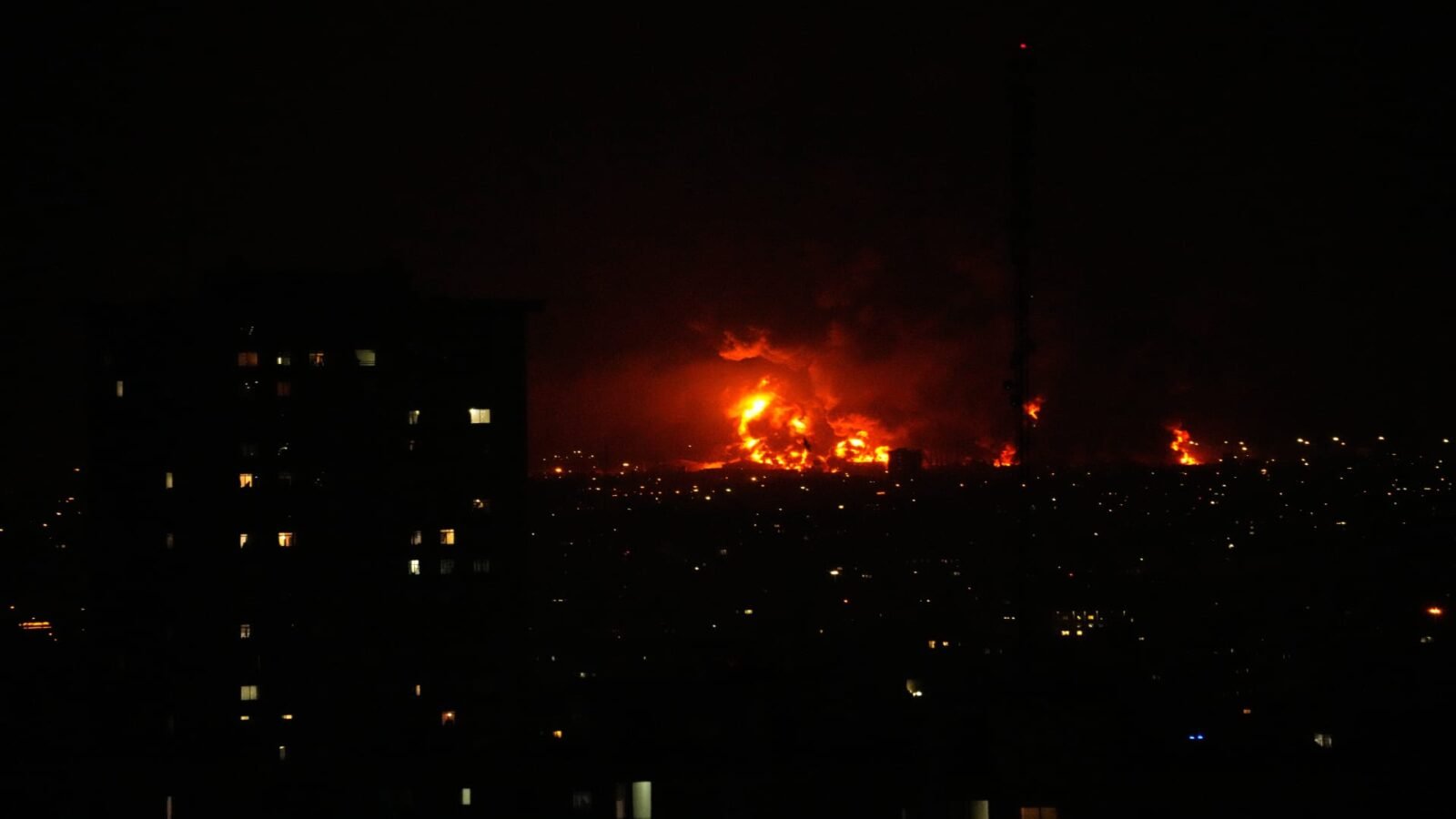
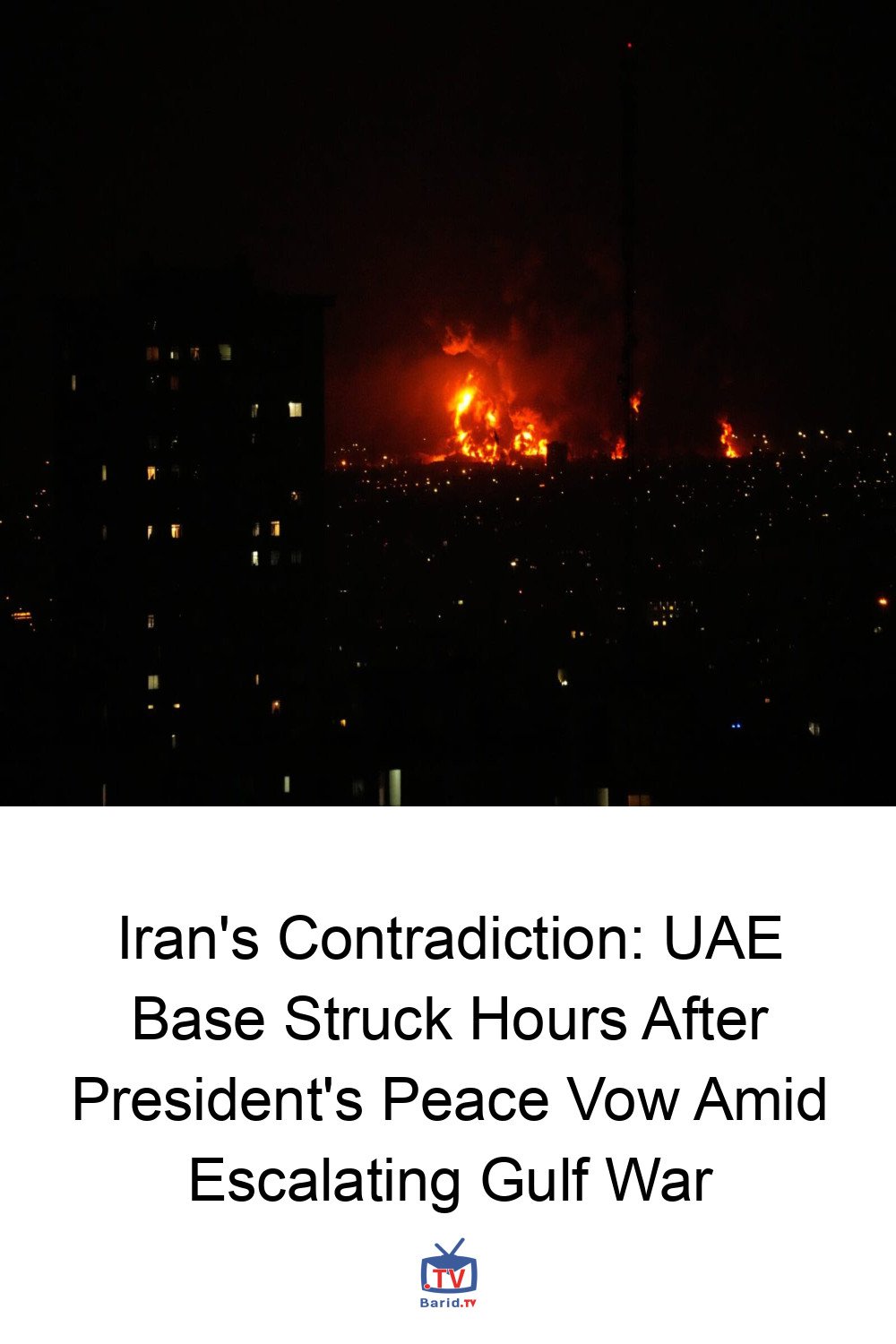
Airstrikes on Iran have been ongoing for a week, part of a joint U.S.-Israel campaign aimed at dismantling Tehran’s nuclear and ballistic missile capabilities and fostering regime change. The U.S. Central Command reported over 3,000 targets hit in the first week of “Operation Epic Fury.” The Israel Defense Forces confirmed “another wave of attacks in Tehran,” with fighter jets launching approximately 230 munitions at military sites. Notably, an oil storage facility in southern Tehran was struck, marking what appears to be the first targeting of a civilian industrial facility in the war, according to the Associated Press. Iranian state media attributed the attack to “the U.S. and the Zionist regime.”
Pezeshkian’s Apology Undermined by Action
The most striking development came Saturday when Iran announced it had struck a U.S. air base in the United Arab Emirates. Iran’s Tasnim News agency claimed the Islamic Revolutionary Guard Corps’ navy drone unit attacked the Al Dhafra air base near Abu Dhabi. The UAE Ministry of Defence reported detecting 121 unmanned aerial vehicles, intercepting 119, with two falling within its territory. This alleged strike directly contradicted President Pezeshkian’s earlier conciliatory remarks.
Just prior to the reported attack, Pezeshkian had expressed regret, stating, “I apologize to the neighboring countries. We do not intend to invade other countries. Let us set aside all the disagreements, concerns, and resentments we have toward each other. Today, let us defend our own soil to bring Iran out of this crisis with dignity.” Despite this olive branch, he also defiantly rejected U.S. demands for “unconditional surrender,” asserting via Telegram that the U.S. could “take their dreams to the grave.”
President Trump, meanwhile, had publicly taunted Iran on Truth Social, claiming Iran had “apologized and surrendered” and would “be hit very hard!”
Internal Dissent and Hardline Pushback
Pezeshkian’s apology did not sit well with all factions within Iran. Hardliners in the Revolutionary Guards and clerical elite swiftly criticized his stance. Hardline cleric and lawmaker Hamid Rasai publicly denounced the president’s statement as “unprofessional, weak and unacceptable.” Amidst the escalating crisis, Iranian state media also reported calls from two influential clerics for the swift selection of a new supreme leader, hinting at deeper political instability within the regime.
Gulf Region Gripped by Iranian Retaliation
As the conflict rages, Tehran’s energy-rich Gulf neighbors remain on high alert, intercepting numerous Iranian missiles and drones. States including Qatar, the U.A.E., Jordan, Bahrain, Kuwait, and Saudi Arabia have reportedly been targeted by Iranian one-way drones, such as the low-cost Shaheds, in retaliation for U.S. and Israeli attacks. Saudi Arabia’s Ministry of Defense confirmed intercepting ballistic missiles, though the full extent of the damage from the truncated input is unclear.
The Strait of Hormuz, a vital global shipping lane, has seen vessel traffic grind to a near-halt, directly impacting global oil markets and sending prices skyrocketing, underscoring the far-reaching economic consequences of this volatile regional conflict.
For more details, visit our website.
Source: Link







Leave a comment