




The Spectre I: A New Weapon in the Fight for Digital Privacy, But Can it Deliver?
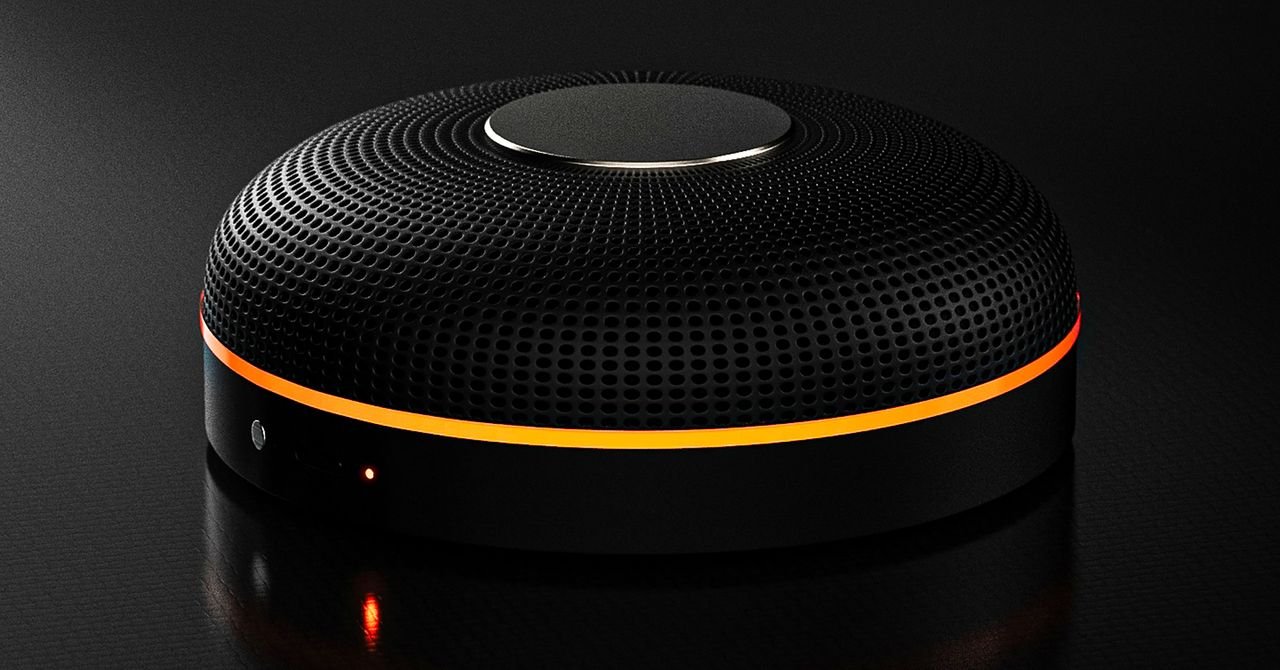
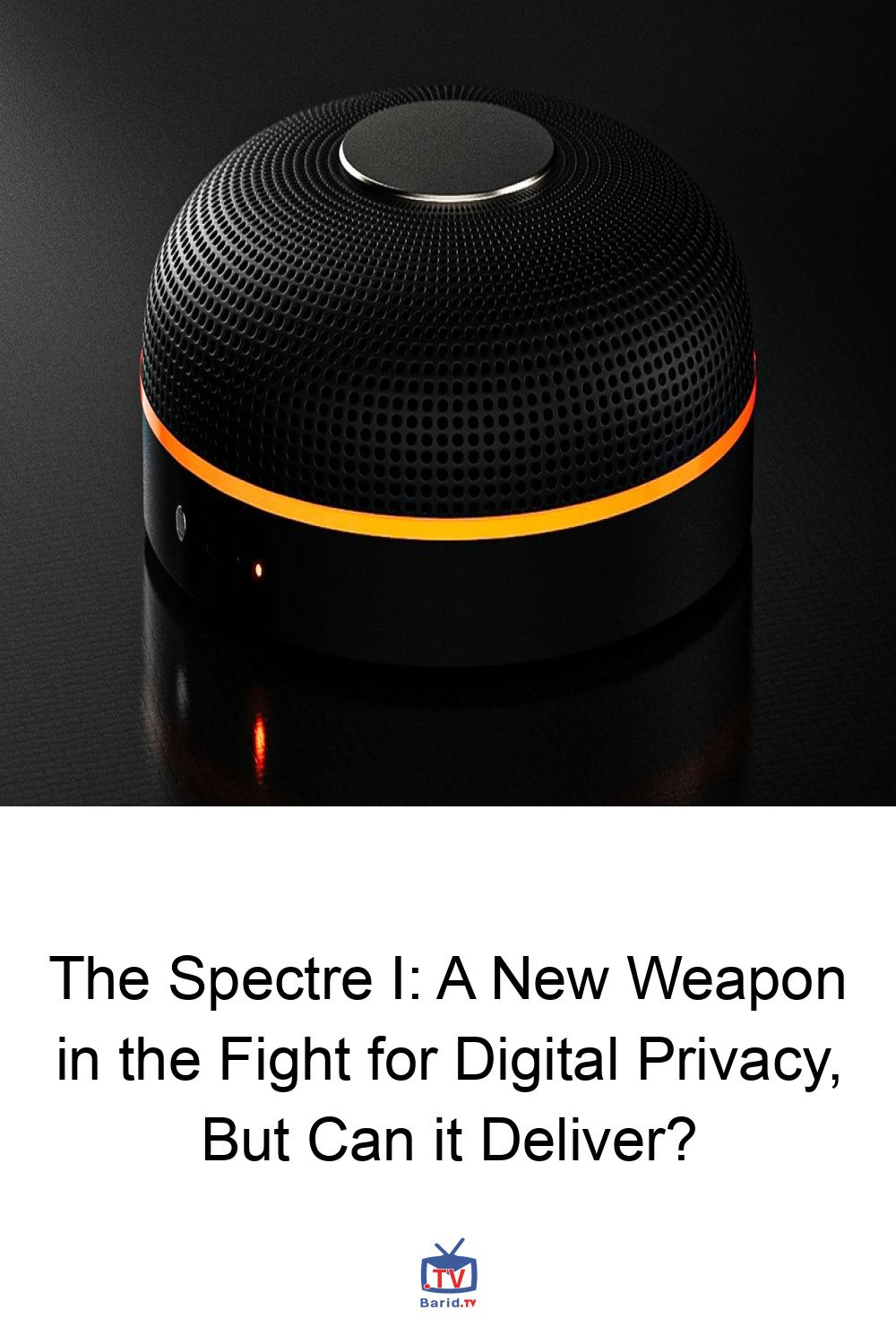
In an era increasingly dominated by always-listening AI devices, a new startup named Deveillance (pronounced dee-veil-ance) has unveiled a bold countermeasure: the Spectre I. This sleek, portable tabletop orb promises to jam nearby recording devices, offering a potential shield against pervasive digital surveillance. But as quickly as it captured attention, the Spectre I also ignited a firestorm of skepticism, leaving many to wonder if its ambitious claims can truly stand up to scrutiny.
Introducing the Spectre I: A Guardian Against Eavesdropping
Deveillance’s inaugural gadget, the Spectre I, is no ordinary device. Envisioned as a personal privacy guardian, it combines ultrasonic frequency emitters with AI intelligence. Its primary mission? To not only block devices from capturing human speech but also to detect and log nearby microphones. All of this is packed into a form factor small enough for portability. While still in active development, Deveillance aims for a second-half 2026 release, with a projected price tag of $1,199.
From Viral Sensation to Skeptical Scrutiny
The announcement of the Spectre I sent ripples across social media. Hailed by some as a cyberpunk-esque tool for resistance against the encroaching tide of always-listening AI wearables—such as Amazon-owned Bee AI’s bracelet or the Friend pendant—it simultaneously became a lightning rod for criticism. Blue-check commentators on X were quick to label its promises as too good to be true, fueling a debate about the feasibility of such technology.
Aida Baradari, a recent Harvard graduate and the founder of Deveillance, expressed surprise at the device’s viral reception. “I didn’t expect it to go this viral,” Baradari stated. “I’m grateful that I’ve been given the opportunity to work on this. I’m also really grateful, honestly, that people care.” Her motivation stems from a deep-seated belief in individual choice regarding shared conversations. “If we can’t converse anymore without feeling scared of saying something that’s potentially taken out of context or wrong, then how are we going to build human connection in this new age?” she posits.
The Growing Anxiety Over Privacy in a Surveillance Society
Baradari’s concerns resonate deeply with a public increasingly wary of privacy infringements. Government surveillance, exemplified by ICE’s expanding systems across social media, phones, and even employee rosters, is a stark reminder of this trend. The private sector, too, plays a significant role, with tech giants both fueling government initiatives and voraciously collecting personal data.
Public backlash against perceived overreach is becoming more common. February saw home security camera company Ring face widespread condemnation for a Super Bowl commercial that highlighted the privacy implications of a neighborhood panopticon. The swift negative response forced Ring to backtrack, subsequently canceling a planned partnership with the controversial security firm Flock Safety.
Musician and YouTuber Benn Jordan, known for his deep dives into security and privacy issues, observes this shift: “People are kind of waking up to the idea that they may not have privacy at any given time.” The Spectre I, much like a hobbyist app designed to warn users about nearby smart glasses, represents another attempt to empower individuals to reclaim their privacy. However, for a device that leverages AI and speakers to counter other AI and microphones, its efficacy remains the ultimate test.
The Physics of Jamming: A Formidable Challenge
Microphone jammers, particularly those utilizing ultrasonic frequencies, are not new. Their history stretches back to the Cold War, with development by intelligence agencies and DIY enthusiasts alike. A niche industry has emerged, offering jammers on platforms like AliBaba or open-source software for self-assembly.
The core challenge lies in physics. Traditional audio jammers tend to be bulky due to the space required for powerful frequency emitters and power sources. A device potent enough to be effective is often too large for discretion, while a smaller unit typically lacks the necessary power to properly disrupt a microphone. “We’re aiming for a device that’s light and small, though this might end up being hard to do due to constraints in physics,” Baradari acknowledged in a text to WIRED.
AI’s Role in the Spectre I’s Ambitions
To overcome these physical limitations, Baradari explains that the Spectre I will employ AI to garble speech, moving beyond mere sound obfuscation. The device is designed to emit AI-generated cancellation signals specifically engineered to deceive Automatic Speech Recognition (ASR) technology. While the ultimate goal is a silent operation, the current working prototype of the Spectre I produces an audible hum.
The AI targets a range of ultrasonic frequencies tailored to average human voices, aiming for a “muddled recording overall—so environmental noises are also muddled,” Baradari explained. She asserts that this method prevents voice reconstruction or ASR system bypasses, issues common with traditional jammers. However, Melissa Baese-Berk, a linguistics professor at the University of Chicago, raises a critical point: “There’s so much variation in people’s voices. It’s not the case that there’s a specific signal that’s like the ‘voice signal.’”
Deveillance maintains that Spectre I does not track voices or individuals, focusing solely on disrupting recording. The ambitious vision of the Spectre I offers a tantalizing glimpse into a future where personal privacy might be actively defended against ubiquitous surveillance. Yet, as the debate rages and development continues, the central question remains: can this innovative orb truly deliver on its promise to silence the always-listening world?
For more details, visit our website.
Source: Link





Leave a comment