




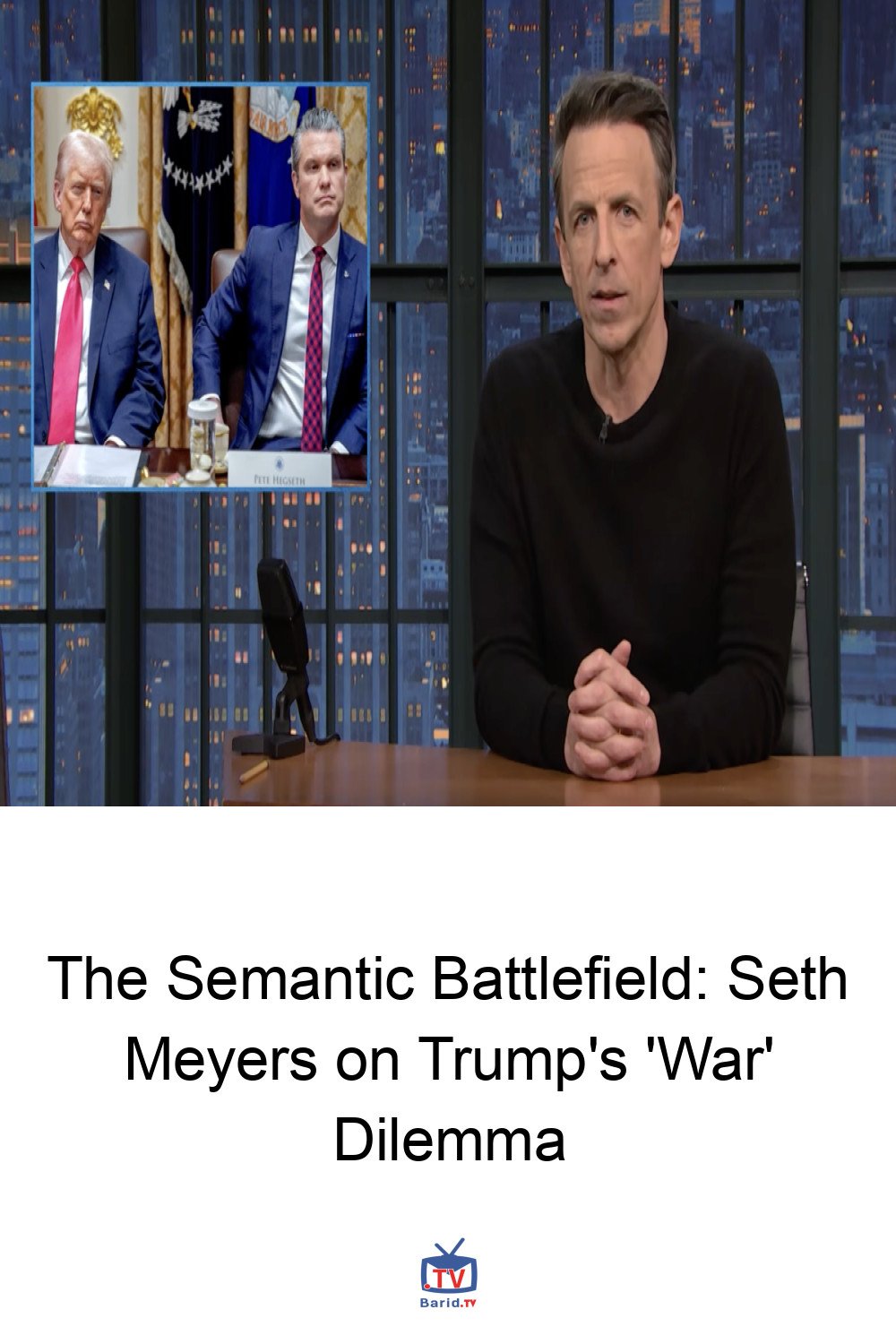
The Semantic Battlefield: Seth Meyers on Trump’s ‘War’ Dilemma
In the high-stakes world of international relations, words carry immense weight. Yet, when it comes to defining military engagements, the language used by political leaders can often become a battleground in itself. This week, late-night host Seth Meyers delved into the perplexing linguistic tightrope walked by former President Donald Trump and his Republican allies regarding the U.S.-Israel strikes on Iran and the subsequent retaliation.
The Lingering Question: Is It War?
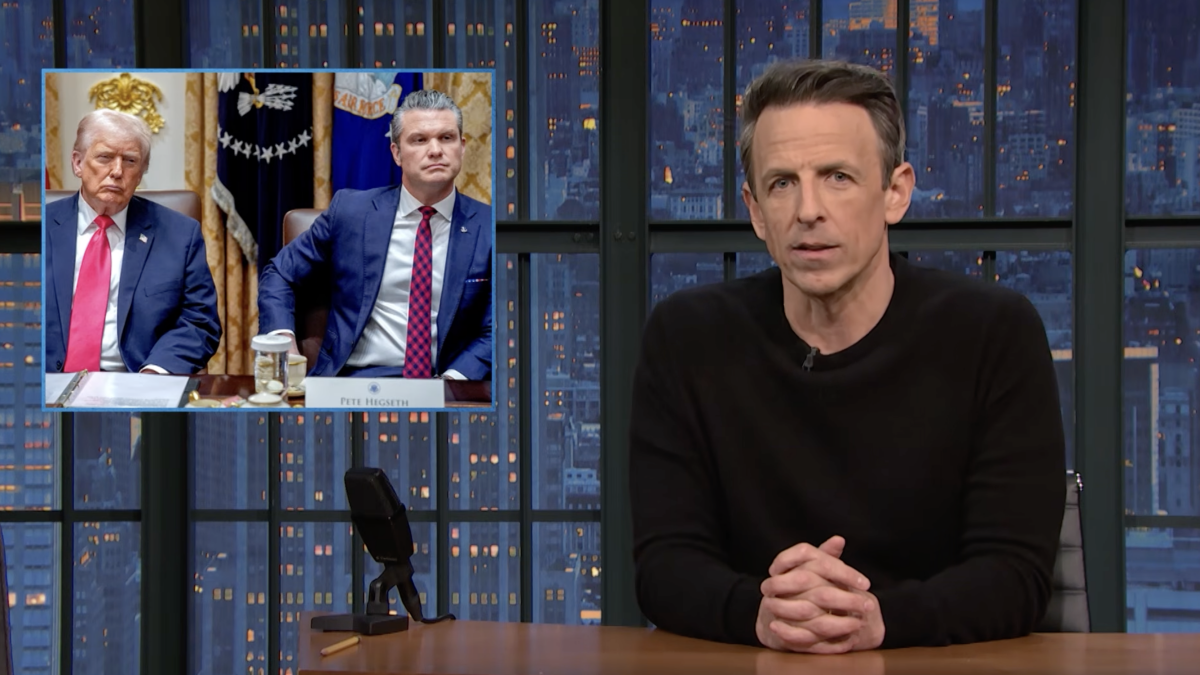
During his incisive “A Closer Look” segment on Wednesday’s Late Night, Meyers meticulously laid bare the stark contradictions in how the Trump administration and its supporters have chosen to describe the escalating tensions. While figures like Trump and former-defense-now-war secretary Pete Hegseth have openly used the term “war,” many Republican proponents have opted for softer euphemisms, such as “major combat operation” or other less definitive phrases. This semantic gymnastics, Meyers argued, is far from accidental.
Meyers’ “A Closer Look”: Unpacking the Contradictions
Meyers pinpointed two critical reasons behind this deliberate ambiguity, painting a picture of political maneuvering designed to sidestep accountability and maintain a carefully constructed narrative:
The Constitutional Conundrum: Congress and the Declaration of War
Firstly, acknowledging the situation as a “war” would force an uncomfortable confrontation with constitutional law. As Meyers highlighted, the power to declare war rests solely with Congress. By avoiding the term, the administration and its allies could potentially bypass legal challenges and maintain executive control over military actions without formal congressional approval, thereby operating in a legally ambiguous zone.
The Political Predicament: Trump’s Promise of Peace
Secondly, and perhaps more damaging politically, admitting to a “war” would expose a glaring hypocrisy in Trump’s own rhetoric. Throughout his presidency, Trump frequently campaigned on a platform of disengagement from “open-ended wars” and specifically vowed to end “forever wars.” To now be seen initiating or escalating a conflict that could be labeled a “war” would directly contradict these core promises, undermining his image as a working-class savior committed to bringing troops home.
The Orwellian Echoes of Political Discourse
Meyers concluded his segment with a biting observation on what he termed “the absurdity of life inside the Trump cult.” He articulated the bewildering requirement for supporters to simultaneously uphold two conflicting realities: one where Trump is a peace-loving leader who avoids foreign entanglements, and another where a conflict he initiated—and even called a “war” himself—is vehemently denied that very label when politically inconvenient. This linguistic contortion, Meyers suggested, reveals a deeper struggle within the Republican ranks to reconcile presidential actions with campaign pledges and legal definitions.
The debate over a single word underscores the complex interplay of politics, law, and public perception in modern governance. As Seth Meyers brilliantly illustrated, sometimes, the most revealing battles are fought not on the ground, but in the lexicon of political discourse.
For more details, visit our website.
Source: Link





Leave a comment