





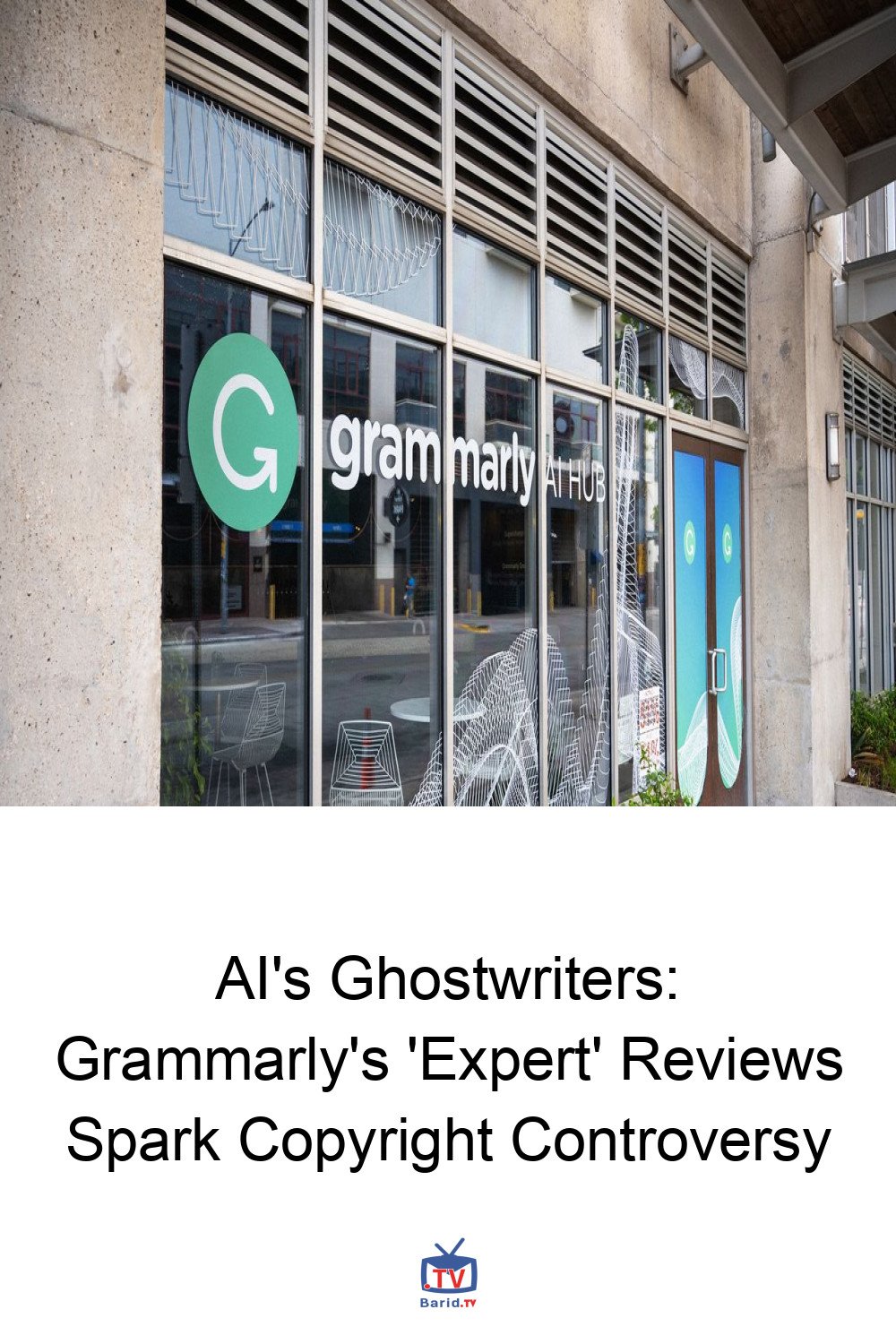
Grammarly’s ‘Expert’ AI Reviews: A Digital Séance for Writers?
Imagine receiving personalized writing feedback not just from a seasoned editor, but from the likes of Stephen King, Carl Sagan, or even the revered William Zinsser. Sounds like a writer’s dream, doesn’t it? Grammarly, the ubiquitous writing assistant, is now making this a virtual reality with its new “Expert Review” AI feature. However, this innovative leap comes with a significant ethical and legal shadow, as the company appears to be simulating the critical voices of renowned authors and academics—many long deceased—without explicit permission or affiliation.
The Evolution of Grammarly: From Proofreader to ‘Superhuman’ AI Partner
Once a straightforward tool for grammar and spell-checking, Grammarly has undergone a profound transformation, embracing the burgeoning field of generative AI. In a strategic move last October, CEO Shishir Mehrotra announced a rebranding of the parent company to “Superhuman,” signaling a broader ambition for its AI-powered product suite. While the core writing assistant retains the Grammarly name, Mehrotra’s press release hinted at the extraordinary advancements beneath the surface: “When technology works everywhere, it starts to feel ordinary. And that usually means something extraordinary is happening under the hood.”
The expanded Grammarly platform now boasts an impressive array of AI functionalities. Beyond basic proofreading, users can engage with an AI chatbot for specific questions, utilize a “paraphraser” for style adjustments, employ a “humanizer” to tailor tone, and even leverage an AI grader to predict academic scores. There are even tools designed to detect and refine phrases commonly generated by large language models, ensuring that while users benefit from AI, their writing doesn’t sound overtly artificial.
The Controversial ‘Expert Review’ Feature
Among these new offerings, the “Expert Review” option stands out for its audacious premise. Instead of generic AI feedback, it presents users with a list of real academics and authors, implying a personalized critique informed by their distinct styles and expertise. The list includes living luminaries like Stephen King and Neil deGrasse Tyson, alongside deceased giants such as William Zinsser and Carl Sagan. Yet, a crucial disclaimer accompanies this feature: “References to experts in this product are for informational purposes only and do not indicate any affiliation with Grammarly or endorsement by those individuals or entities.”
This disclaimer, however, does little to quell the growing unease. The implication is clear: Grammarly’s AI agents are trained on the vast bodies of work (oeuvres) of these individuals to mimic their critical perspectives. The legality of this “content-harvesting” remains deeply contentious, fueling numerous copyright lawsuits across the industry.
Ethical Quandaries and Copyright Concerns
Jen Dakin, Senior Communications Manager at Superhuman, clarifies the company’s stance: “Our Expert Review agent examines the writing a user is working on… and leverages our underlying LLM to surface expert content that can help the document’s author shape their work.” Dakin emphasizes that the agent “doesn’t claim endorsement or direct participation from those experts; it provides suggestions inspired by works of experts and points users toward influential voices whose scholarship they can then explore more deeply.”
Despite this explanation, the ethical implications are profound. Vanessa Heggie, an associate professor at the University of Birmingham, publicly condemned the feature on LinkedIn, calling it “obscene.” She accused Superhuman of “creating little LLMs” from the “scraped work” of both living and deceased individuals, effectively “trading on their names and reputations.” Heggie highlighted a particularly stark example: the availability of an AI agent modeled on David Abulafia, a distinguished English historian who passed away in January, just prior to the feature’s widespread rollout.
A WIRED review further illustrated the feature’s capabilities, reproducing feedback from the Abulafia bot and models based on living cognitive scientists Steven Pinker and Gary Marcus. The software openly stated it was drawing “inspiration” from authors like William Strunk Jr. and Pierre Bourdieu, applying “ideas” from Margaret Mitchell, and using “concepts” from Virginia Tufte—all deceased. Tufte’s AI agent, for instance, suggested: “Replace repetition with vivid, varied sentence patterns.”
The Future of Intellectual Property in the Age of AI
The debate surrounding Grammarly’s Expert Review feature underscores a critical challenge facing the creative and academic worlds: how to navigate intellectual property rights in an era of advanced generative AI. While some, like Stephen King, might view AI’s advance as inevitable, the question remains whether the legacies and works of countless other luminaries should be freely compressed into algorithms without consent or compensation. The controversy ignited by Grammarly’s bold move serves as a potent reminder of the urgent need for clear legal frameworks and ethical guidelines to govern the use of copyrighted material in AI training and application.
For more details, visit our website.
Source: Link







Leave a comment