



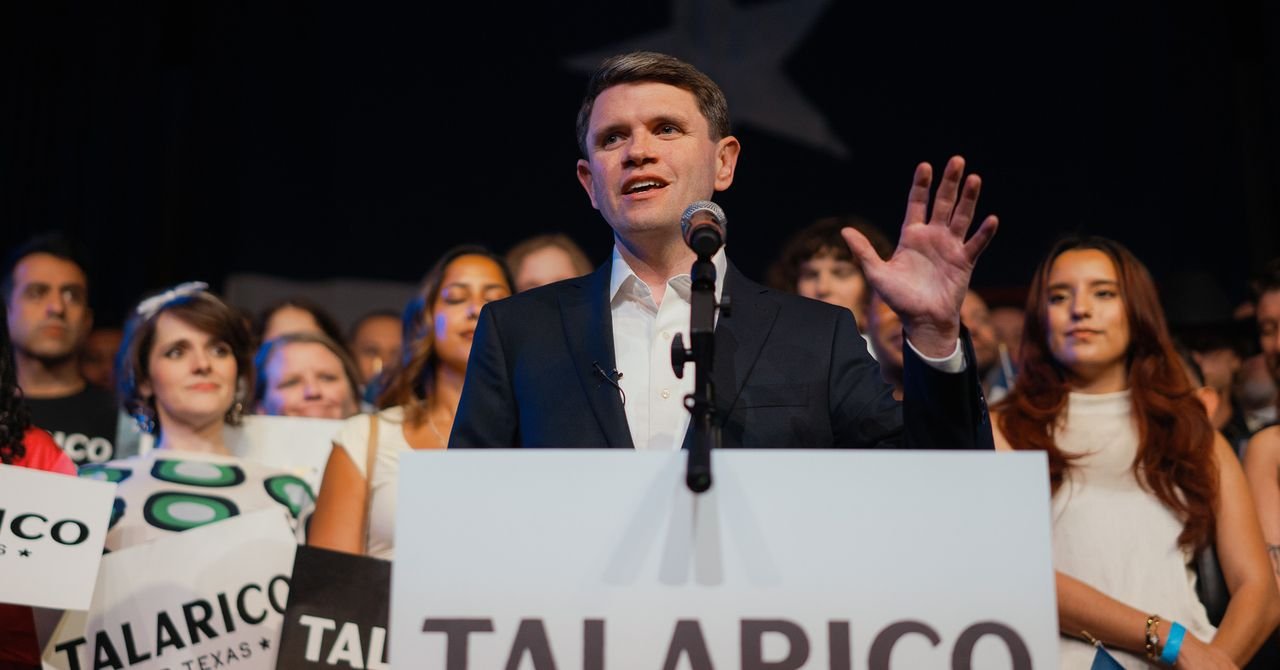

The recent Texas Senate primary, a closely watched contest that saw James Talarico, a 36-year-old Presbyterian seminarian and state representative, defeat congresswoman Jasmine Crockett, was more than just a local political battle. It was a vivid, high-stakes preview of the burgeoning “creator wars” set to define the digital landscape of future elections, from the upcoming midterms to the 2028 presidential race.
A New Breed of Campaigning: Candidates as Creators
Both Talarico and Crockett arrived with formidable social media presences – Talarico boasting 1.6 million followers and Crockett an impressive 2.6 million on TikTok. Yet, their digital strategies converged and diverged sharply. Crockett has cultivated a brand rooted in confrontational virality, famously challenging Marjorie Taylor Greene with a memorable quip and telling Elon Musk to “fuck off.” Talarico, conversely, projects a populist, sermon-like persona across his platforms, extending his reach to unconventional spaces like the Joe Rogan Experience, which generated numerous viral clips.
The Unpredictable Power of Third-Party Creators
While the candidates themselves were adept digital communicators, much of the campaign’s most incendiary moments and widespread discussions were ignited by external creators, highlighting a new, less controllable dimension of political engagement.
The ‘Las Culturistas’ Controversy
An early flashpoint occurred in January when the hosts of the popular pop-culture and comedy podcast, “Las Culturistas,” sparked a firestorm. Their on-air discouragement of listeners supporting Crockett – “Don’t waste your money sending to Jasmine Crockett, do not do it,” advised co-host Matt Rogers – drew immediate and fierce backlash from their audience and Crockett supporters, necessitating a public apology.
The ‘Mediocre Black Man’ Allegation
The online spats escalated in February with a viral video from Dallas-based creator Morgan Thompson, who alleged that Talarico had referred to former House representative Colin Allred as a “mediocre Black man.” Shared with her nearly 200,000 TikTok followers, the video quickly transcended pro-Crockett online communities, permeating mainstream press. Talarico’s campaign swiftly responded, clarifying the comment as a “mischaracterization” of an off-the-record conversation. Talarico himself issued a nuanced statement: “I would never attack him [Allred] on the basis of race. As a Black man in America, Congressman Allred has had to work twice as hard to get where he is. I understand how my critiques of the Congressman’s campaign could be interpreted given this country’s painful legacy of racism, and I care deeply about the impact my words have on others.” This incident underscored the treacherous terrain of informal interactions between politicians and creators.
Navigating the Creator Landscape: A Campaigner’s Conundrum
These episodes have brought a critical question to the forefront for strategists preparing for the 2026 midterms and the next presidential race: What is the appropriate role for creators in campaigns, and crucially, how can they be effectively managed? While creator collaborations are increasingly common across the political spectrum, these relationships often lack clear definitions and are notoriously difficult to control.
Kyle Tharp, author of the digital politics newsletter Chaotic Era, articulates the multifaceted challenges: “There are so many factors that the campaign staff themselves have to deal with and think about. Do I put them in the press risers at the rally, or do I give them upfront VIP access? Do I give them a couple minutes with the candidate? Am I going to be screening their questions? Or do I just let them riff and hope for the best?”
The unpredictability extends even to high-profile endorsements. Donald Trump’s 2024 reelection campaign, for instance, heavily leveraged creators and podcasters to engage young, predominantly male voters. Yet, some of these very same creators have since become vocal critics. Comedian Andrew Schulz, who hosted Trump on his popular “Flagrant” podcast, initially supported him but later turned critical, particularly over the administration’s handling of Jeffrey Epstein-related files. Schulz has since used his platform to repeatedly criticize the former president.
Trust vs. Professional Norms: The Creator-Politician Dynamic
A fundamental distinction lies in the allegiance of creators. Unlike traditional journalists, who adhere to formal rules and professional norms (such as respecting off-the-record conversations), creators’ primary loyalty is to their audience and the engagement their content generates. Their relationships with politicians are often built on trust rather than established protocols. When that trust is perceived to be broken, there’s little to prevent a creator from publishing a hostile, viral post that can quickly spiral out of a campaign’s control. What begins as an asset can rapidly become a liability.
As Tharp notes, “A lot of these creators are looking for access and being able to engage either on the record or off the record with the candidates on a more personal level, and get to know them so then they can then communicate that to their own audiences.” This quest for authentic, personal access, while valuable for audience connection, simultaneously introduces significant risks for campaigns.
The Future of Digital Politics
The Texas primary serves as a potent harbinger. As the 2026 midterms and 2028 presidential race loom, understanding and navigating the complex, often volatile, world of political creators will be paramount for any campaign seeking digital dominance. The line between campaign asset and unpredictable adversary is increasingly thin, demanding a new level of strategic foresight and risk management in the evolving landscape of political communication.
For more details, visit our website.
Source: Link






Leave a comment