



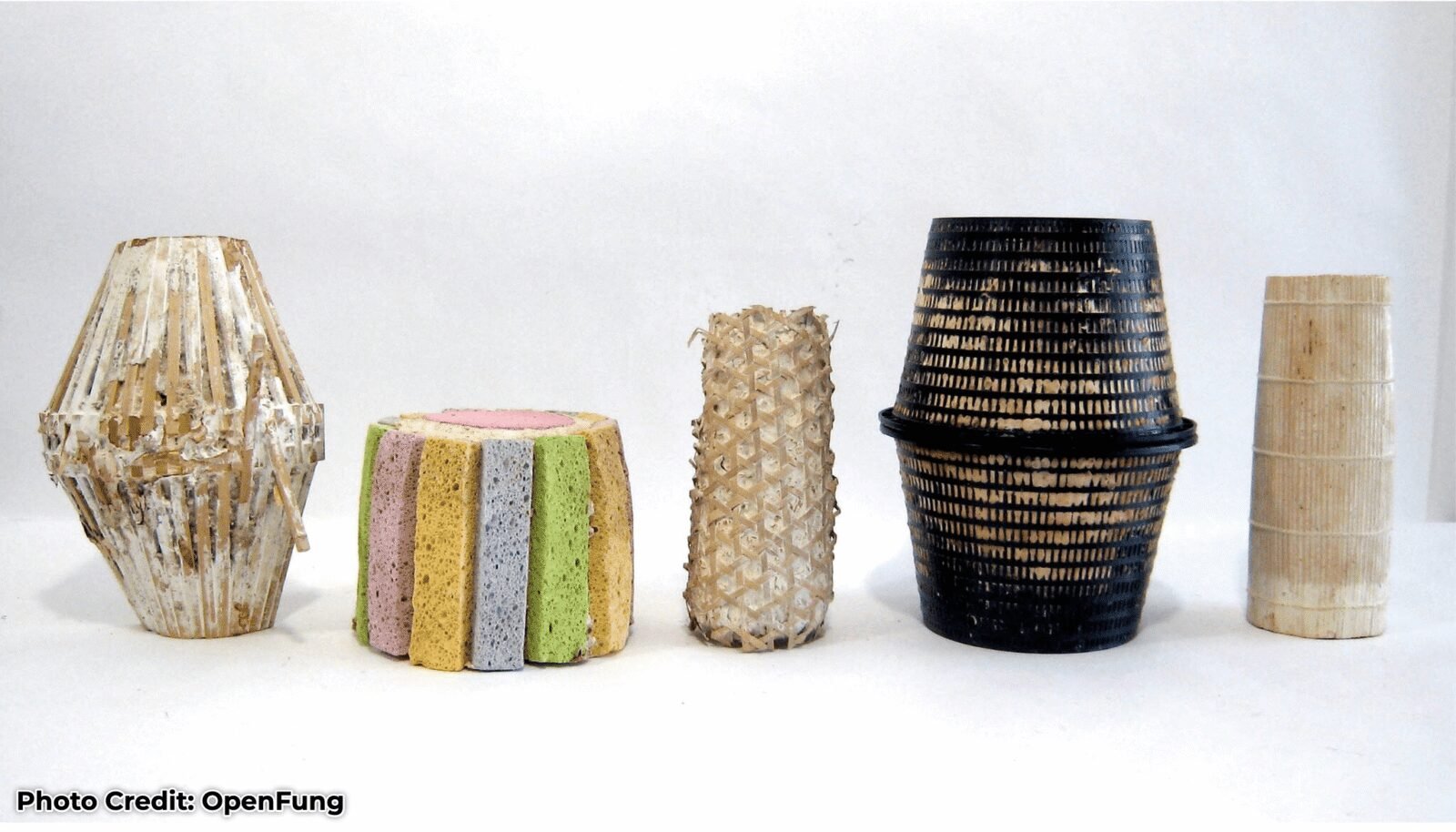

What if the answer to some of humanity’s most pressing challenges—from sustainable fashion to building resilient homes—has been quietly thriving beneath our feet all along? This intriguing question took center stage at a recent Maker Faire Bay Area talk, where Rachel Linzer and Rolando Perez of OpenFung unveiled the transformative potential of fungal materials.
OpenFung: Democratizing the Magic of Mushrooms
OpenFung isn’t your typical biotech startup. This unique nonprofit, a collaboration between a scientist and an artist, is on a mission to make applied mycology accessible to everyone. Their vision is clear: to democratize the magic of mushrooms, empowering individuals and communities to harness the incredible capabilities of fungi.
Linzer and Perez highlighted a burgeoning global interest in utilizing fungi to cultivate a new generation of materials. Unlike many cutting-edge biotechnologies that demand specialized equipment and extensive training, working with fungi is remarkably approachable, opening doors for innovators across various fields.
Earthly Innovations: Fungi’s Versatile Applications
The applications for fungal materials are as diverse as they are revolutionary. Imagine a world where your clothes are grown, not manufactured, or where packaging naturally decomposes without a trace. Fungi are making these visions a reality:
Sustainable Textiles and Fashion
From luxurious, leather-like fabrics that offer a cruelty-free alternative to traditional animal hides, to breathable, durable textiles, fungi are poised to revolutionize the fashion industry. These materials require significantly less water and land than conventional options, drastically reducing environmental impact.
Eco-Friendly Building and Insulation
The construction sector stands to benefit immensely. Fungal composites can be grown into robust, lightweight, and even fire-resistant insulation panels, offering superior performance to synthetic alternatives. Beyond insulation, researchers are exploring fungi for structural components, envisioning homes that literally grow themselves.
Packaging and Environmental Remediation
The fight against plastic pollution finds a powerful ally in fungi. Mycelium-based packaging offers a biodegradable, compostable alternative to Styrofoam, breaking down harmlessly after use. Furthermore, certain fungi possess remarkable bioremediation capabilities, able to break down pollutants and toxins in contaminated environments, effectively healing the Earth.
Beyond Our Planet: Fungi in Space
The ambition of OpenFung extends far beyond terrestrial solutions. Linzer and Perez also delved into the truly futuristic prospect of leveraging fungal materials for extraterrestrial habitats. Imagine astronauts cultivating their own building materials on the Moon or Mars, growing structures that are self-assembling and sustainable in harsh alien environments. Fungi’s ability to thrive in diverse conditions and its potential for in-situ resource utilization make it an ideal candidate for off-world construction, paving the way for humanity’s expansion into the cosmos.
A Sustainable Future, Rooted in Mycelium
The work of OpenFung, as presented by Rachel Linzer and Rolando Perez, underscores a profound shift in our approach to material science. By embracing the accessible and versatile power of fungi, we can cultivate innovative solutions for a sustainable future, both on our home planet and among the stars. The magic of mushrooms, it seems, is only just beginning to unfold.
For more details, visit our website.
Source: Link







Leave a comment