





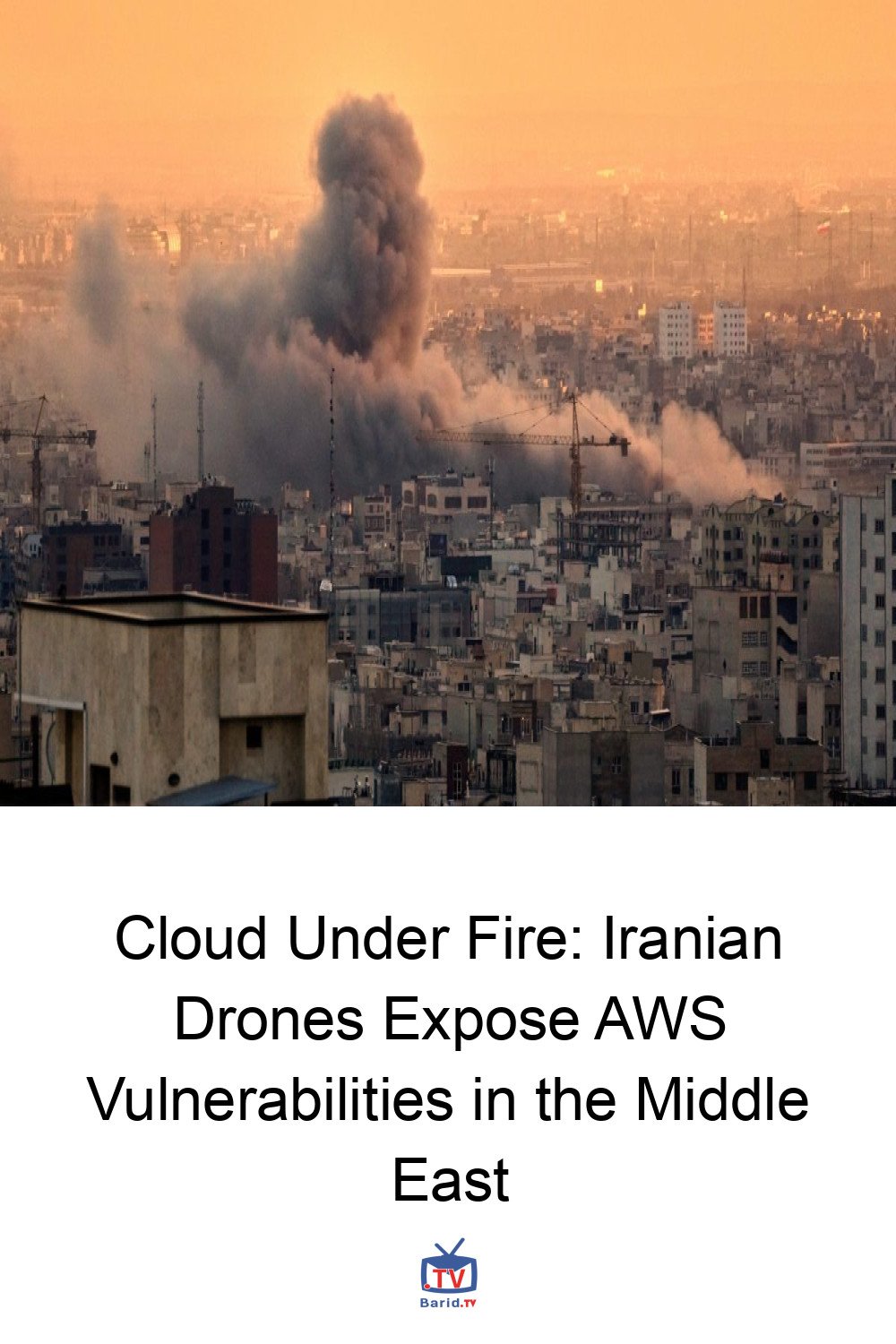
Recent Iranian drone strikes targeting Amazon Web Services (AWS) facilities in the Middle East have cast a stark light on the burgeoning data center industry in the region, simultaneously exposing a critical vulnerability within the very fabric of global cloud computing infrastructure. These incidents underscore that even the most advanced digital services remain tethered to physical realities, making them susceptible to geopolitical conflict.
The Digital Frontline: AWS Data Centers Under Attack
Late Monday, Amazon Web Services confirmed that two of its data centers in the United Arab Emirates suffered direct hits, while another facility in Bahrain sustained damage from a nearby drone impact. The company detailed the immediate aftermath: “These strikes have caused structural damage, disrupted power delivery to our infrastructure, and in some cases required fire suppression activities that resulted in additional water damage.” By Tuesday evening, AWS reported progress in recovery efforts at the UAE sites, indicating a swift response to the physical breaches.
Unmasking Cloud Computing’s Physical Achilles’ Heel
Unlike previous AWS disruptions, which typically stemmed from software glitches leading to widespread outages, these attacks represent a more insidious threat: physical destruction. While the immediate impact was localized and limited, the implications are far-reaching. AWS, the backbone for countless government departments, universities, and businesses worldwide, relies on a sophisticated network of data centers. The company promptly advised customers utilizing Middle Eastern servers to migrate their operations to other regions, rerouting online traffic away from the affected UAE and Bahrain zones.
Mike Chapple, an IT professor at the University of Notre Dame’s Mendoza College of Business, offered crucial perspective. He noted, “Amazon has generally configured its services so that the loss of a single data center would be relatively unimportant to its operations.” AWS’s architecture is designed for redundancy, with workloads seamlessly shifting between data centers within an availability zone to maintain continuous service. However, Chapple cautioned, “That said, the loss of multiple data centers within an availability zone could cause serious issues, as things could reach a point where there simply isn’t enough remaining capacity to handle all the work.”
Rethinking Resilience: Expert Insights and Customer Directives
AWS operates its global network across 39 geographic regions, with three located in the Middle East (UAE, Bahrain, and Israel). Each region comprises at least three physically separated “availability zones,” connected by ultra-low-latency networks. These zones are engineered with redundant power, water, telecom, and internet connections to ensure operational continuity during emergencies. Yet, as Chapple succinctly put it, the attacks serve as a stark reminder that cloud computing isn’t “magical.” He added, “It still requires physical facilities on the ground, which are vulnerable to all sorts of disaster scenarios.”
The physical security measures in place—guards, fences, surveillance—are primarily designed to deter intruders, not to withstand missile or drone assaults. Data centers, by their very nature, are massive, identifiable structures, making them difficult to conceal from aerial threats. This new reality necessitates a re-evaluation of security paradigms for critical digital infrastructure.
The Broader Implications for Global Digital Infrastructure
The attacks on AWS facilities are a wake-up call for organizations globally, particularly those operating in or near conflict-prone regions. Chapple’s advice is unequivocal: “Organizations using services from any cloud provider in the Middle East should immediately take steps to shift their computing to other regions.” This incident forces a critical assessment of disaster recovery plans, geographical diversification of data, and the inherent risks of relying on physical infrastructure in volatile areas. As the digital and geopolitical landscapes increasingly intertwine, the resilience of our cloud-based world will depend not just on software sophistication, but on robust physical defenses against evolving threats.
For more details, visit our website.
Source: Link







Leave a comment