




Apple’s Bold New Vision: A First Look at the Colorful MacBook Neo
Apple has once again captured the tech world’s attention with the unveiling of the MacBook Neo, a vibrant and intriguing addition to its laptop lineup. Breaking away from the familiar silver and space gray, the Neo introduces a splash of color and a compelling set of design choices, all starting at an accessible $599. Our initial hands-on experience reveals a device that’s both familiar and strikingly different, poised to redefine what an entry-level Mac can be.
A Spectrum of Style: Design That Dares to Be Different
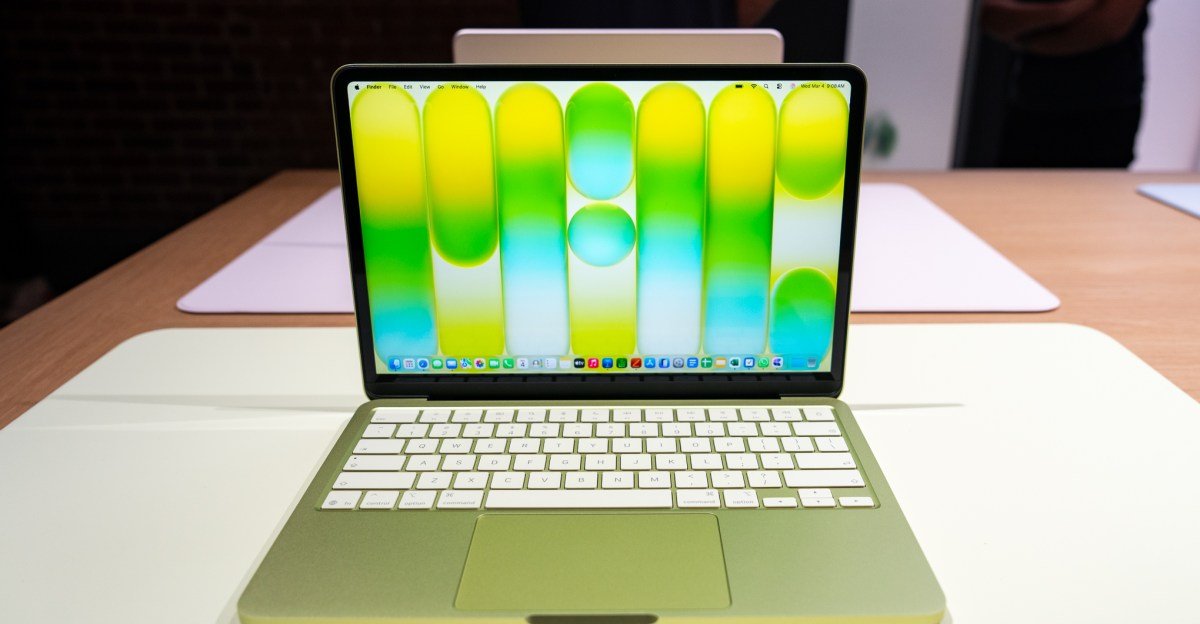
The Neo immediately distinguishes itself with its array of colorful chassis options, a stark contrast to the understated elegance of the MacBook Air and Pro. While perhaps not as intensely vibrant as the iPhone 17 Pro’s orange, the “blush” (pink-ish) and “citrus” (chartreuse-ish) hues offer a refreshing aesthetic. Even the “indigo” blue keyboard provides a subtle, yet noticeable, color-matched effect.
Beyond the visual, the Neo presents a unique tactile experience. Despite matching the latest MacBook Air in weight, its slightly smaller footprint gives it a denser, more substantial feel – akin to a solid slab of metal.
The keyboard, though lacking backlighting, offers a familiar Air-like typing experience. However, it’s the trackpad that truly stands out. Eschewing the haptic feedback of its premium siblings, the Neo’s trackpad physically clicks, and remarkably, it clicks consistently from corner to corner. This departure from the “piano key” style found in many Windows laptops, which often struggle with top-corner clicks, is a fascinating engineering feat that promises a satisfying user experience.
Inside the Neo: An iPhone Heart with Mac Ambitions
Perhaps the most significant departure for the MacBook Neo lies beneath its colorful exterior: an A18 Pro iPhone chip powers the device, rather than Apple’s customary M-series processors. While the A18 Pro won’t rival the raw power of the latest M5 chip, early impressions suggest it capably handles everyday tasks, making it suitable for its intended entry-level audience.
The 13-inch display, while not as expansive or vibrant as the Air’s, delivers a “good enough” visual experience for general use. The webcam, a standard 1080p, performs its function without the advanced features like Center Stage, but remains a solid offering for a MacBook.
Thoughtful Tradeoffs and Key Specifications
The Neo embraces a philosophy of considered tradeoffs. It features a uniform bezel around its 13-inch screen, opting out of the camera notch seen on other MacBooks.
Connectivity is streamlined, with two USB-C ports and a headphone jack neatly positioned on the left side. One USB-C port (USB3) supports a single external display, while the other (USB2) is primarily for charging. macOS intelligently guides users to the correct port if a display is misconnected. Notably, MagSafe charging is absent, a feature often appreciated in other MacBook lines.
Audio is delivered via slim speakers on each side, reminiscent of SD card slots in their design.
The Value Proposition: Price, Performance, and Ponderables
The MacBook Neo enters the market with two configurations: a $599 model offering 256GB of storage, and a $699 variant with 512GB and a TouchID sensor. Students can access these at an even more attractive $499 and $599, respectively.
However, a significant limitation emerges in the RAM department: both models are capped at 8GB. This decision, even for the higher-tier storage option, raises questions about the device’s longevity and multitasking capabilities, potentially being its most notable drawback.
The ultimate success of the Neo hinges on whether these carefully chosen tradeoffs resonate with consumers, positioning it as a compelling alternative rather than merely a stepping stone to a MacBook Air. Our full review, eagerly anticipated, will delve deeper into its day-to-day performance and overall user experience.
For more details, visit our website.
Source: Link







Leave a comment