



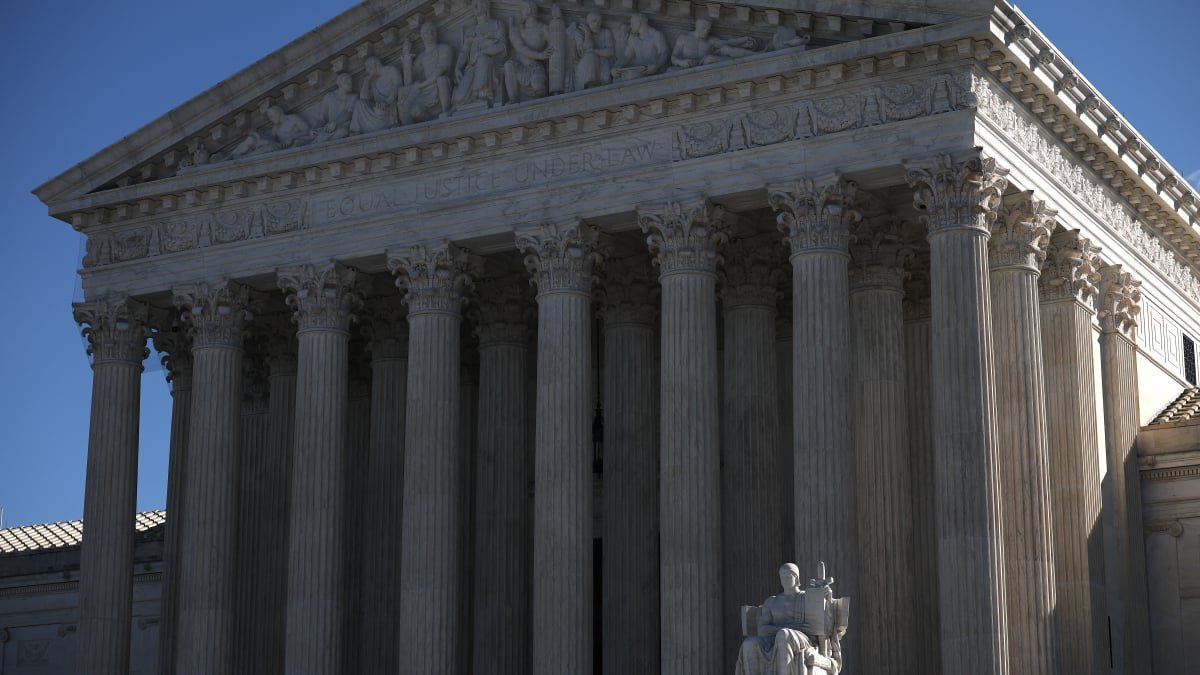

In a move that reverberates through the burgeoning world of artificial intelligence and creative industries, the U.S. Supreme Court has opted not to hear a landmark case concerning the copyright eligibility of AI-generated art. This decision leaves in place lower court rulings that affirm a human creator is essential for copyright protection under U.S. law, intensifying the debate over digital authorship.
The Unanswered Appeal: Stephen Thaler’s Quest for AI Art Copyright
The nation’s highest judicial body on Monday declined to review an appeal brought by computer scientist Stephen Thaler. Thaler had sought copyright for a piece of “moving digital art” he claimed was created by his proprietary AI software, “Creativity Machine,” back in 2018. His application was subsequently rejected by the U.S. Copyright Office in 2022, which firmly stated that the artwork did not qualify for protection because it lacked human authorship.
This rejection aligns with the Copyright Office’s consistent interpretation that copyright law is designed to protect “the fruits of intellectual labor” that “are founded in the creative powers of the mind.” Essentially, if a human didn’t conceive it, it can’t be copyrighted.
Human Creativity at the Core: The Copyright Office’s Guidelines
The Supreme Court’s refusal to intervene effectively reinforces the U.S. Copyright Office’s existing guidelines, which were further clarified in a 2025 report. This report explicitly states that “unedited outputs of generative AI tools” are ineligible for copyright protection. However, it carves out an important distinction: art “facilitated by AI” that “retained the centrality of human creativity” could be eligible. This means a human artist using AI as a tool, much like a paintbrush or a camera, might still secure copyright, provided the expressive elements are primarily determined by human input, not solely by a machine.
The ongoing legal skirmish isn’t confined to art alone. Thaler has also challenged the U.S. Patent and Trademark Office’s rejections of his applications for AI-generated inventions, pushing the courts to define the boundaries of intellectual property in an age of increasingly autonomous AI systems.
Industry Concerns and the Path Forward
The Supreme Court’s decision, which notably came after the Trump administration had urged its denial, has been met with disappointment by Thaler’s legal team. They argue that this inaction could have profound and detrimental effects on the development and adoption of AI within creative industries.
“Even if it later overturns the Copyright Office’s test in another case, it will be too late,” Thaler’s lawyers expressed. “The Copyright Office will have irreversibly and negatively impacted AI development and use in the creative industry during critically important years.”
As AI continues to evolve at an unprecedented pace, the legal framework surrounding its creative outputs remains a complex and hotly contested frontier. This ruling underscores the current judicial reluctance to extend traditional intellectual property rights to creations born solely from artificial intelligence, placing a firm emphasis on the irreplaceable role of human ingenuity.
For more details, visit our website.
Source: Link






Leave a comment