



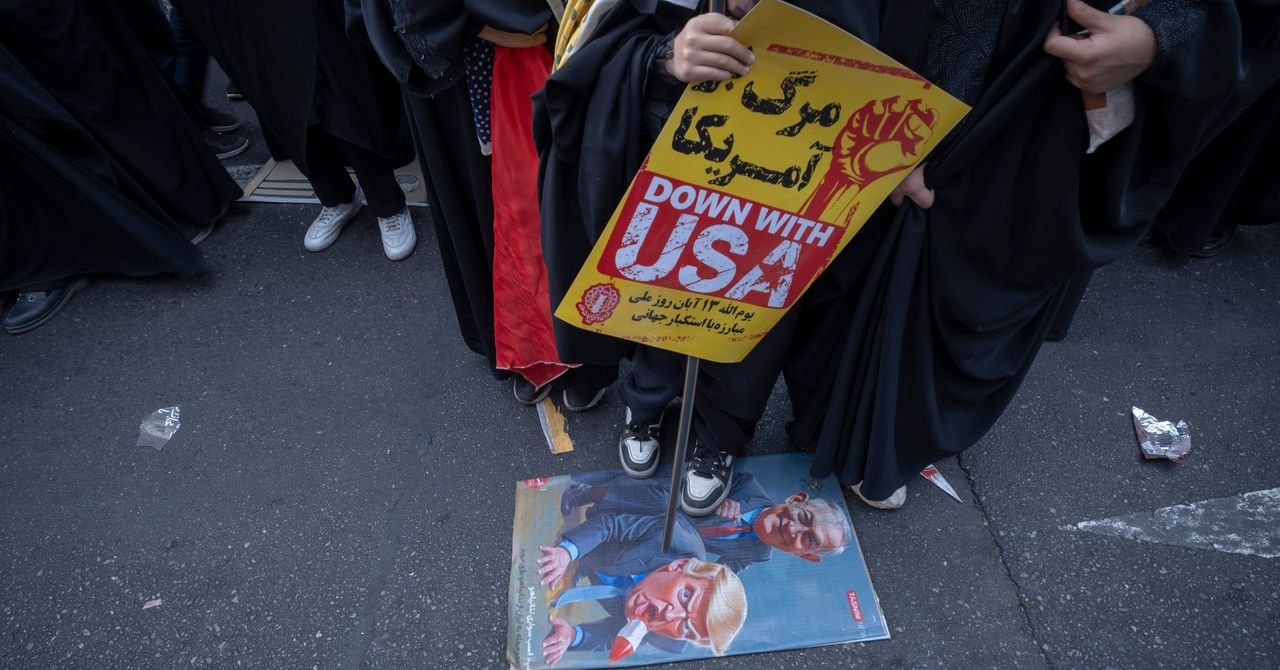

In a move that echoes his past as a high-stakes real estate mogul, Donald Trump has plunged the United States into a new, deeply personal war with Iran. This conflict, launched over the weekend, represents perhaps the most audacious gamble of his political career, immediately escalating with the reported death of Iran’s supreme leader in its opening hours. The ramifications are immense, not just for Trump and his ally, Israeli Prime Minister Benjamin Netanyahu, but for the entire volatile region and the global community.
A High-Stakes Wager in the Middle East
For many observers, the initial events of this new war felt almost preordained. The steady US military buildup in the region had been evident for months, and Trump’s trajectory towards this confrontation arguably began on May 8, 2018, with his unilateral withdrawal from the Joint Comprehensive Plan of Action (JCPOA), the meticulously negotiated Iranian nuclear deal. Similarly, Iran’s immediate retaliatory strikes—missiles targeting various Gulf States including Kuwait, Qatar, Bahrain, Israel, the United Arab Emirates, Saudi Arabia, and Jordan—were widely anticipated, having been telegraphed well in advance.
However, the predictable opening salvos quickly give way to a landscape of profound uncertainty. The ultimate duration and far-reaching scope of this war, coupled with the fate of Iran’s regime in the coming days, weeks, and months, stand as some of the most significant “known unknowns” ever to confront this famously fraught and explosive region.
The Unfolding Enigma: Iran’s Future and Regional Fallout
Modern history offers a stark warning: upheaval in Iran is rarely contained. It is the proverbial butterfly flapping its wings, capable of triggering enormous, unforeseen consequences that can ripple across decades. The United States, for instance, continues to grapple with the downstream effects of Iran’s last major upheaval nearly half a century ago, when the US-backed Shah, installed by a 1953 CIA coup, was overthrown in 1979 by Ruhollah Musavi Khomeini. His successor, Ali Hosseini Khamenei, led Iran until his reported demise in the Israeli and American airstrikes this weekend.
In the lead-up to the 2003 Iraq War—often cited as America’s first great folly of the 21st-century Middle East—then-Secretary of Defense Donald Rumsfeld famously articulated the concepts of “known unknowns” and “unknown unknowns.” Today, a critical examination of the “known unknowns” surrounding Donald Trump’s grand new adventure in Iran is essential to grasp the monumental stakes involved.
Echoes of Past Interventions: Lessons Unheeded?
The specter of past interventions looms large. The long-term instability and unforeseen costs of previous engagements in the Middle East serve as a potent reminder of the complex, often intractable nature of regional conflicts. The current situation in Iran carries the potential for similar, if not greater, long-term consequences, demanding a sober assessment of every move.
The Cost of Conflict: From “Bloodless” Victories to American Casualties
Over the past year, Donald Trump appeared emboldened by two tactical military successes that were, for America, largely bloodless: an airstrike campaign on Iranian nuclear facilities, executed with stealth bombers and Israeli cooperation, and the audacious raid to seize Venezuelan leader Nicolás Maduro, which also initially reported no US fatalities. Yet, history frequently hinges on narrow margins, and a recent State of the Union address offered an unexpected glimpse into a narrowly averted alternate reality.
During the address, Trump presented Chief Warrant Officer 5 Eric Slover, an Army special operations pilot, with the Medal of Honor. Slover was lauded for his bravery and composure after being wounded four times by machine-gun fire while piloting the lead MH-47 Chinook helicopter during the Maduro raid. This moment, while a rushed, made-for-TV spectacle, starkly revealed that Slover’s extraordinary courage, dedication, and fortitude prevented the Maduro operation from spiraling into a catastrophic debacle. A helicopter crash in the raid’s opening minutes could have transformed a perceived success into a disaster akin to Jimmy Carter’s ill-fated Operation Eagle Claw, which claimed eight US servicemen and severely damaged his presidency.
There is little to suggest that the new Iranian operation, dubbed “Operation Epic Fury”—a name that sounds more like a retaliatory vendetta than a war of choice—will maintain the same bloodless or costless profile for the US in terms of materiel, personnel, or economic toll as Trump’s previous “one-and-done” strikes, Operation Midnight Hammer and Operation Absolute Resolve.
Indeed, the grim reality has already set in. On Sunday morning, US Central Command confirmed that three US service members have tragically died, and five others sustained injuries, as a direct result of the Iran operation.
Iran’s Resilience: A Miscalculated Adversary?
A key part of Donald Trump’s calculation in initiating this strike against Iran appears to be the assumption that Iran, perceived as weaker than it has been in a generation, would be incapable of a robust retaliation. While Iran’s traditional arsenal of world-ranging proxy terror campaigns may have seen some depletion in recent years, underestimating its capacity for asymmetric warfare and its deep-seated resolve could prove to be a perilous misjudgment. The full extent of Iran’s response, and the broader regional reaction, remains a critical and dangerous unknown.
For more details, visit our website.
Source: Link





Leave a comment