




The world of personal computing is constantly evolving, and at MWC 2026, Lenovo unveiled a concept that pushes the boundaries of laptop design and functionality. Dubbed the ThinkBook Modular AI PC Concept, this innovative machine isn’t just a laptop; it’s a bold statement about the future of modularity and multi-screen productivity, reminiscent of Framework’s repairable ethos but with a distinct Lenovo twist.
A Vision of Modularity: Swappable Ports
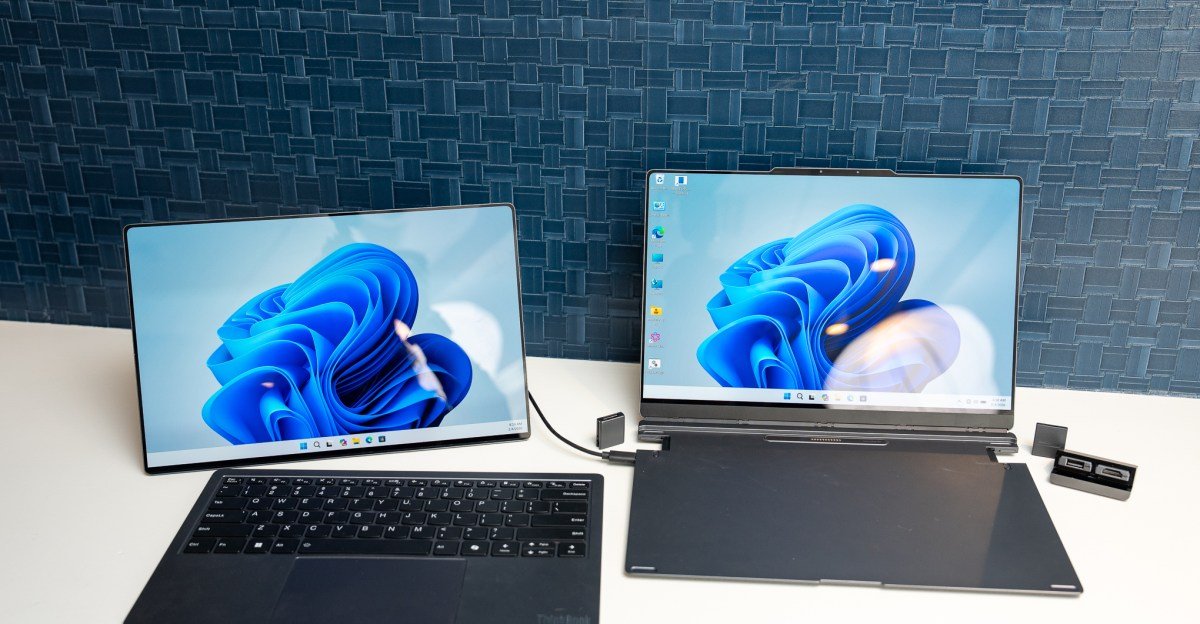
At the heart of the ThinkBook Modular AI PC Concept lies its ingenious approach to connectivity. Echoing the user-centric design philosophy seen in Framework laptops, Lenovo’s concept features two plug-and-play interchangeable ports. While the initial demonstration showcased essential options like USB-C, USB-A, and HDMI, the potential for an expanding ecosystem is clear. What sets Lenovo’s implementation apart is the use of an M.2 interface for these hotswappable ports, offering a different engineering solution compared to Framework’s USB-C based modules. The ease of swapping ports, coupled with a clever carry case for on-the-go customization, highlights a future where users truly dictate their laptop’s I/O.
Beyond the modular slots, the ThinkBook concept maintains a single permanent USB-C port, serving dual duty for charging and connecting the secondary display.
The Dual-Screen Revolution: Productivity Unleashed
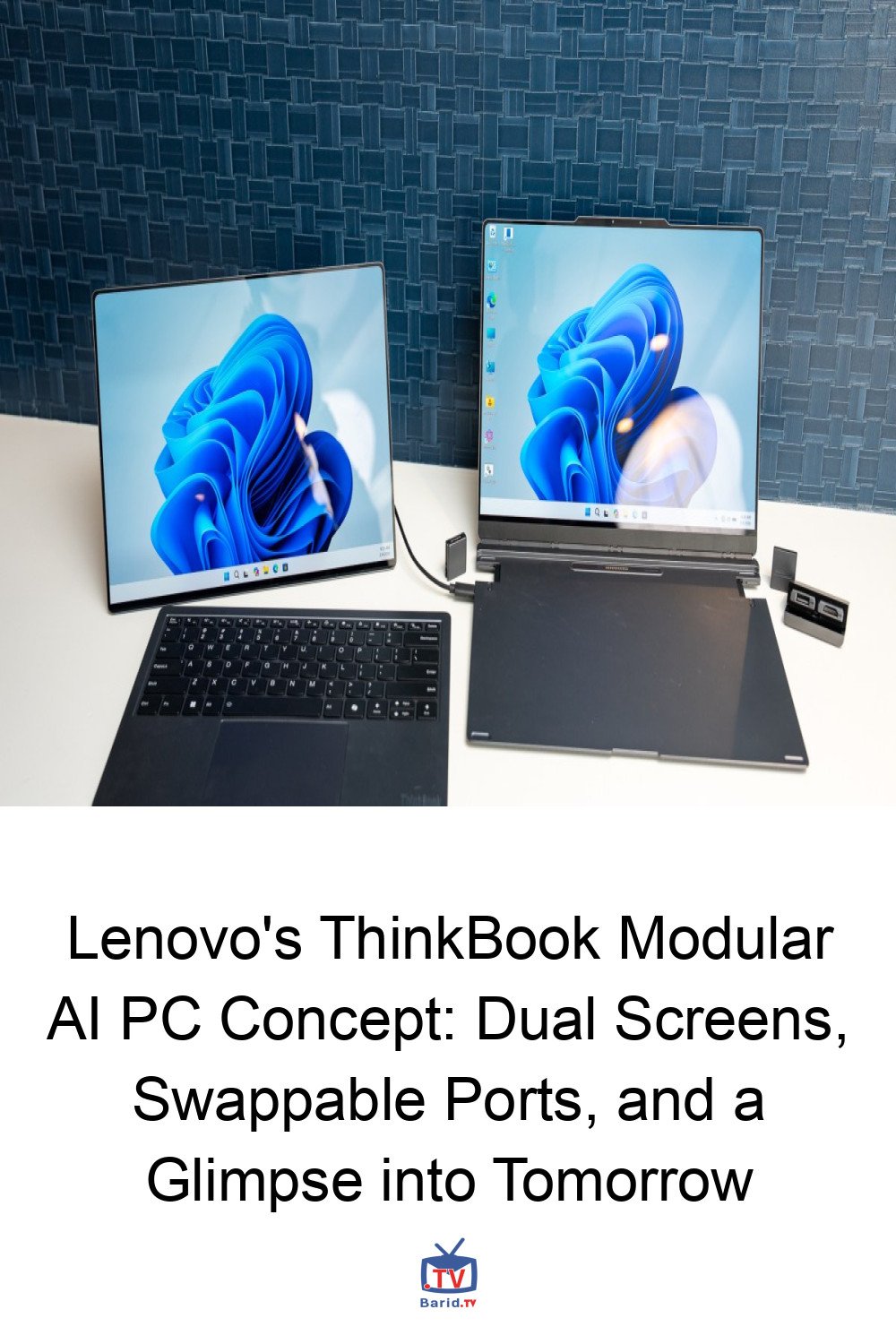
Lenovo didn’t stop at modular ports; they embraced the burgeoning trend of dual-screen computing with remarkable flair. The ThinkBook Modular AI PC Concept boasts not one, but two vibrant 14-inch OLED displays. The primary screen is integrated, while a secondary 14-inch display magnetically attaches to the rear of the lid. This removable secondary screen can be detached, propped up with a magnetic kickstand (cleverly stored beneath the laptop), and connected via USB-C, offering an instant external monitor setup.
Beyond the Lid: A True Dual-Screen Laptop
The concept’s most intriguing trick, however, transforms it into a full-fledged dual-screen laptop akin to the Asus Zenbook Duo. By removing the traditional keyboard/trackpad deck, the secondary screen can be positioned in its place, creating an expansive dual-display workspace. Users would then interact with the system using a Bluetooth-connected keyboard and trackpad, offering unparalleled screen real estate for demanding tasks.
Cutting-Edge Displays and Performance Aspirations
Both 14-inch screens are touch-compatible OLED panels, boasting a stunning 16:10 4K (3840 x 2400) resolution, a smooth 120Hz refresh rate, and a bright 500 nits. These specifications promise an exceptional visual experience, whether for creative work or general productivity.
Under the hood, Lenovo envisions powerful internals, including an Intel Core Ultra 7 255H Arrow Lake processor, paired with a generous 32GB of RAM and a speedy 1TB SSD. These specs suggest a machine built for high performance and demanding applications.
The Elephant in the Room: Battery Life
While the ThinkBook Modular AI PC Concept is undeniably exciting, one significant concern emerges: battery life. Powering two high-resolution, power-hungry OLED displays and a robust processor with just a 33Wh battery raises immediate questions. This capacity is notably smaller than even a 13-inch MacBook Air, leading to potential “anemic battery life” as noted by early observers. The concept’s current thin-and-light design (weighing 2.54 pounds with one display, 3.11 pounds with both) might be a trade-off for battery capacity.
However, as a proof-of-concept, there’s hope for future iterations. Lenovo could address this by integrating a larger battery or optimizing for more power-efficient components. Even if the dual-screen theatrics are eventually scaled back, the core idea of user-customizable ports remains a compelling proposition.
A Glimpse into Tomorrow’s Productivity
The ThinkBook Modular AI PC Concept from Lenovo is more than just a gadget; it’s a fascinating exploration of what’s possible when design prioritizes flexibility and user control. While challenges like battery life need to be overcome, the vision of a laptop with swappable ports and dynamic dual-screen capabilities offers an exciting preview of the future of mobile computing. It’s a bold step, and one that could truly redefine how we interact with our personal computers.
For more details, visit our website.
Source: Link




Leave a comment