



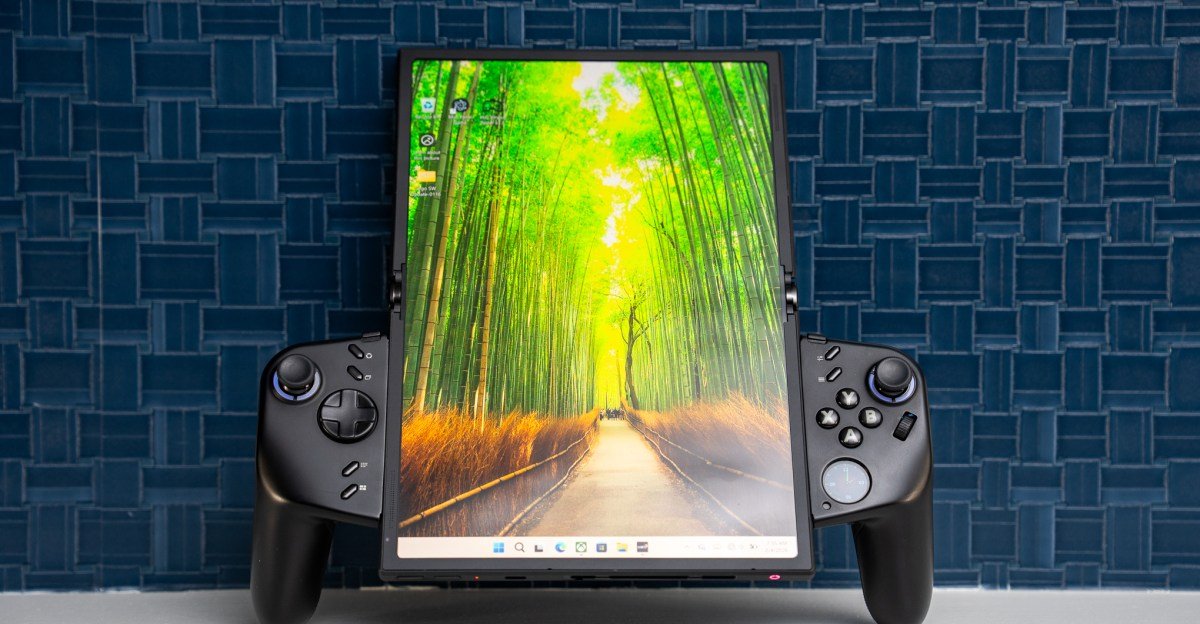

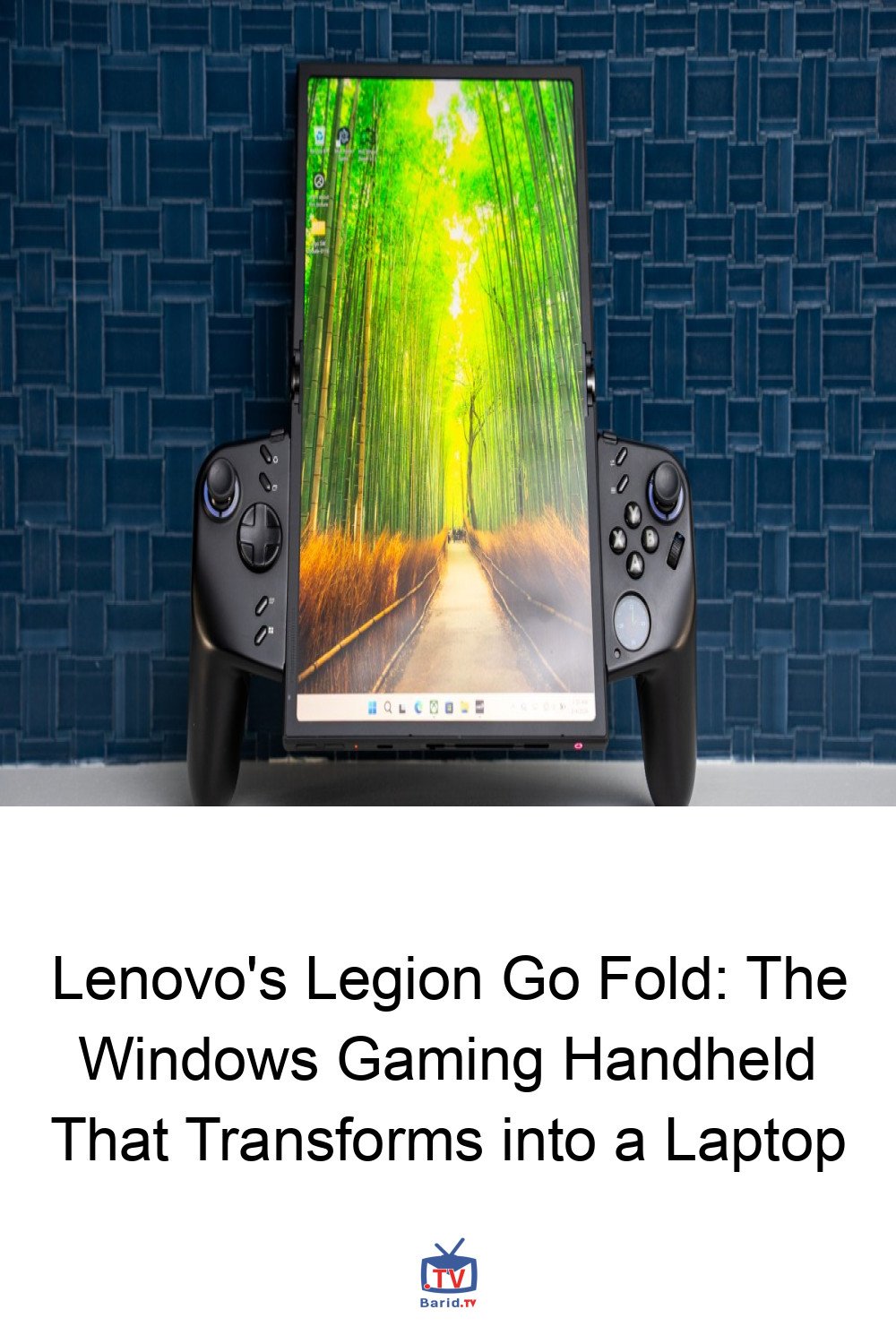
The world of portable gaming is constantly evolving, pushing the boundaries of what’s possible in a compact form factor. Enter the Lenovo Legion Go Fold Concept, a device unveiled at MWC 2026 that isn’t just another gaming handheld – it’s a bold vision of a Windows-powered machine with a screen that literally folds in half, transforming into a versatile mini-laptop.
A Glimpse into the Future of Portable Gaming
Lenovo has once again demonstrated its penchant for innovative, albeit sometimes audacious, designs. The Legion Go Fold Concept takes the familiar handheld gaming experience and injects it with the flexibility of a foldable display. Imagine a device that starts as a 7.7-inch gaming powerhouse and, with a simple unfold, expands into an expansive 11.6-inch canvas, complete with detachable, Joy-Con-like controllers.
Unleashing Versatility: More Than Just a Handheld
The true genius of the Legion Go Fold lies in its adaptable nature. In its compact, folded state, it offers a traditional Steam Deck-esque experience, perfect for gaming on the go. But the moment you unfold it, a new world of possibilities emerges. The flexible POLED display unfurls, and the controllers can be repositioned to any of its four sides, allowing for both vertical and horizontal screen orientations.
- Vertical Splitscreen:
Ideal for multitasking, allowing you to game on one half of the screen while keeping a chat window or game guide open on the other.
- Horizontal Fullscreen: Immerse yourself in games with the full 11.6 inches of 16:10 aspect ratio real estate.
- Laptop Mode: Detach the controllers, mount the handheld into a dedicated folio case equipped with a stand, built-in keyboard, and trackpad, and suddenly you have a functional mini-laptop. The controllers can even be combined into a single gamepad via a separate grip mount.
Adding to its unique features, one of the controllers can even transform into a vertical mouse, echoing functionality seen in other Legion Go devices. However, it’s worth noting one key design choice: the Go Fold only folds outwards. Unlike a Nintendo DS or GameBoy Advance, it doesn’t offer a clamshell design for screen protection during transport, prioritizing an expansive display over compact closure.
Under the Hood: Power and Innovation
Beyond its transformative design, the Legion Go Fold Concept packs a serious punch. It’s powered by an Intel Core Ultra 7 258V Lunar Lake processor, complemented by a robust 32GB of RAM and a spacious 1TB of storage. A 48Whr battery aims to keep the gaming sessions going. The plastic-covered OLED display boasts a sharp 2435 x 1712 resolution and a smooth 165Hz refresh rate, promising vibrant visuals and fluid gameplay.
Perhaps one of the most intriguing additions is a second, circular touchscreen embedded in the right controller, beneath the face buttons. This innovative feature doubles as a touchpad and can serve as a support display, offering functions like system monitoring, a clock, or even an animated GIF. While its utility for “extracted UI elements from a game” might be niche, it certainly adds a layer of futuristic flair.
First Impressions and Future Prospects
During a brief hands-on demo, the device showcased its potential, even if limited to less graphically demanding titles like Balatro. The screen clarity was impressive, though, like all foldables, a visible crease ran down the middle – a common trade-off that users tend to adapt to. The initial build quality, particularly the detachment and reattachment of controllers, felt somewhat “janky,” suggesting room for refinement should this concept ever reach mass production.
The laptop mode, surprisingly, proved to be a highlight. The ability for a gaming handheld to double as a conventional computer capable of productivity tasks was a pleasant revelation, despite the initial fumbling required to set up the folio case. This dual functionality could carve out a unique niche for the device.
However, the journey from concept to consumer product is fraught with challenges. The potential cost of the Legion Go Fold is a significant hurdle. With the existing Legion Go 2 already priced well over $1,000, and current market conditions affecting RAM prices, a foldable iteration could easily enter a prohibitive price bracket. While the Legion Go Fold Concept is undeniably cool and a testament to Lenovo’s innovative spirit, its market viability remains a grand question mark.
Ultimately, while the Legion Go Fold may not be the folding PC handheld that goes from “kinda-big to really small” – a form factor many might desire for ultimate portability – it undeniably pushes the envelope. It’s a fascinating exploration of what’s possible when cutting-edge display technology meets the demands of modern gaming and productivity, offering a tantalizing glimpse into the future of hybrid devices.
For more details, visit our website.
Source: Link



Leave a comment