
The hallowed halls of the United Nations Security Council became a crucible of diplomatic fire on Saturday as the United States and Israel found themselves in a heated confrontation with Iran. An emergency session, convened amidst escalating military actions, saw the UN chief and a chorus of nations desperately appeal for an immediate cessation of hostilities and a return to the negotiating table, fearing a wider conflict with catastrophic global implications.
UN Chief Warns of Catastrophic Escalation
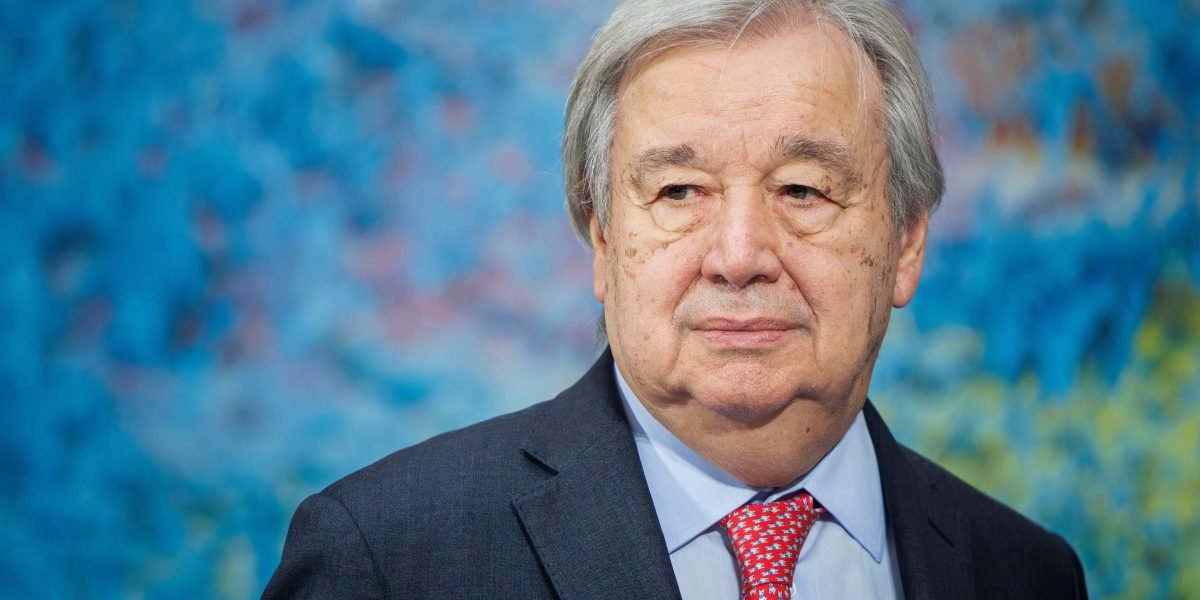
Secretary-General António Guterres minced no words, emphasizing the imperative to prevent further escalation. “The alternative,” he cautioned, “is a potential wider conflict with grave consequences for civilians and regional stability.” Guterres pointedly stated that the U.S. and Israeli airstrikes constituted violations of international law, including the foundational U.N. Charter. In a move to underscore impartiality, he also condemned Iran’s retaliatory attacks for infringing upon the sovereignty and territorial integrity of Bahrain, Iraq, Jordan, Kuwait, Qatar, Saudi Arabia, and the United Arab Emirates.
US and Israel Defend Actions Amidst Condemnation
Defending Washington’s position, U.S. Ambassador to the United Nations, Mike Waltz, asserted the legality of American military actions. “Iran cannot have a nuclear weapon,” Waltz declared, framing it as “not a matter of politics, but a matter of global security.” He affirmed that the United States was undertaking “lawful actions” to uphold this principle. Similarly, Israel’s U.N. Ambassador Danny Danon vigorously defended the airstrikes as a vital measure against an existential threat. “We are stopping extremism before it becomes unstoppable,” Danon stated, pledging to “ensure that no radical regime armed with nuclear weapons and ballistic missiles can threaten our people or the entire world.”
Iran Accuses, Condemns, and Warns
On the opposing side, Iran’s Ambassador to the U.N., Amir Saeid Iravani, launched a scathing critique, labeling the U.S.-Israeli airstrikes, which he claimed killed and injured hundreds of Iranian civilians, as “war crimes and crimes against humanity.” Iravani lambasted the U.N. and its most powerful body, the Security Council, for allegedly disregarding Tehran’s prior warnings regarding “warmongering statements” from the U.S. He urged immediate council action, posing a fundamental question: “whether any member state may, including a permanent member of this council, through the use of force, coercion or aggression, determine the political future or system of another state or impose control over its affairs.” Notably, Iravani refrained from commenting on President Donald Trump’s statement regarding the death of Supreme Leader Ayatollah Ali Khamenei in the strikes, though Iranian state media later confirmed the assassination. This development, concerning the second leader of the Islamic Republic with no designated successor, significantly heightened fears of a prolonged conflict given Iran’s threats of retaliation.
A Tense Diplomatic Exchange
The emergency session culminated in a rare and intensely personal exchange between the U.S. and Iranian ambassadors, underscoring the raw tension as military aggression threatened to ignite a regional war. Following Ambassador Waltz’s rebuttal of Iranian claims concerning U.S. violations of international law, Iravani interjected with a pointed warning: “I advise to the representative of the United States to be polite. It will be better for yourself and the country you represent.” Waltz’s immediate retort was equally sharp: “This representative sits here, in this body, representing a regime that has killed tens of thousands of its own people, and imprisoned many more, simply for wanting freedom from your entire tyranny.”
Global Voices Call for De-escalation
Other Security Council members weighed in, reflecting the global concern. Russia’s Ambassador Vassily Nebenzia unequivocally condemned the U.S.-Israeli airstrikes, demanding their immediate cessation and insisting on the “immediate resumption of political and diplomatic settlement efforts… based on international law, mutual respect and a balance of interests.” China’s Ambassador Fu Cong, while more measured, expressed “very concerned” by the “sudden escalation of regional tensions” and echoed Russia’s call for diplomatic negotiations. Maged Abdelaziz, the permanent observer of the 22-nation Arab League, highlighted what he perceived as Israeli hypocrisy, noting that while Israel justified its attacks by citing Iran’s nuclear ambitions, it has consistently refused to allow inspection of its own nuclear facilities by the U.N. nuclear watchdog.
European Powers Urge Nuclear Talks
The emergency meeting, initiated by Bahrain, France, Russia, China, and Colombia, also saw a joint statement from the leaders of Britain, France, and Germany. These three European powers, integral to the 2015 nuclear deal with Iran, called for a resumption of U.S.-Iranian talks on Tehran’s nuclear program, a deal from which Trump had withdrawn the U.S. in 2018. Significantly, their statement strongly condemned Iranian airstrikes in the region, while conspicuously omitting condemnation of the U.S.-Israeli actions, urging Iran’s leaders to pursue a negotiated solution.
For more details, visit our website.
Source: Link