
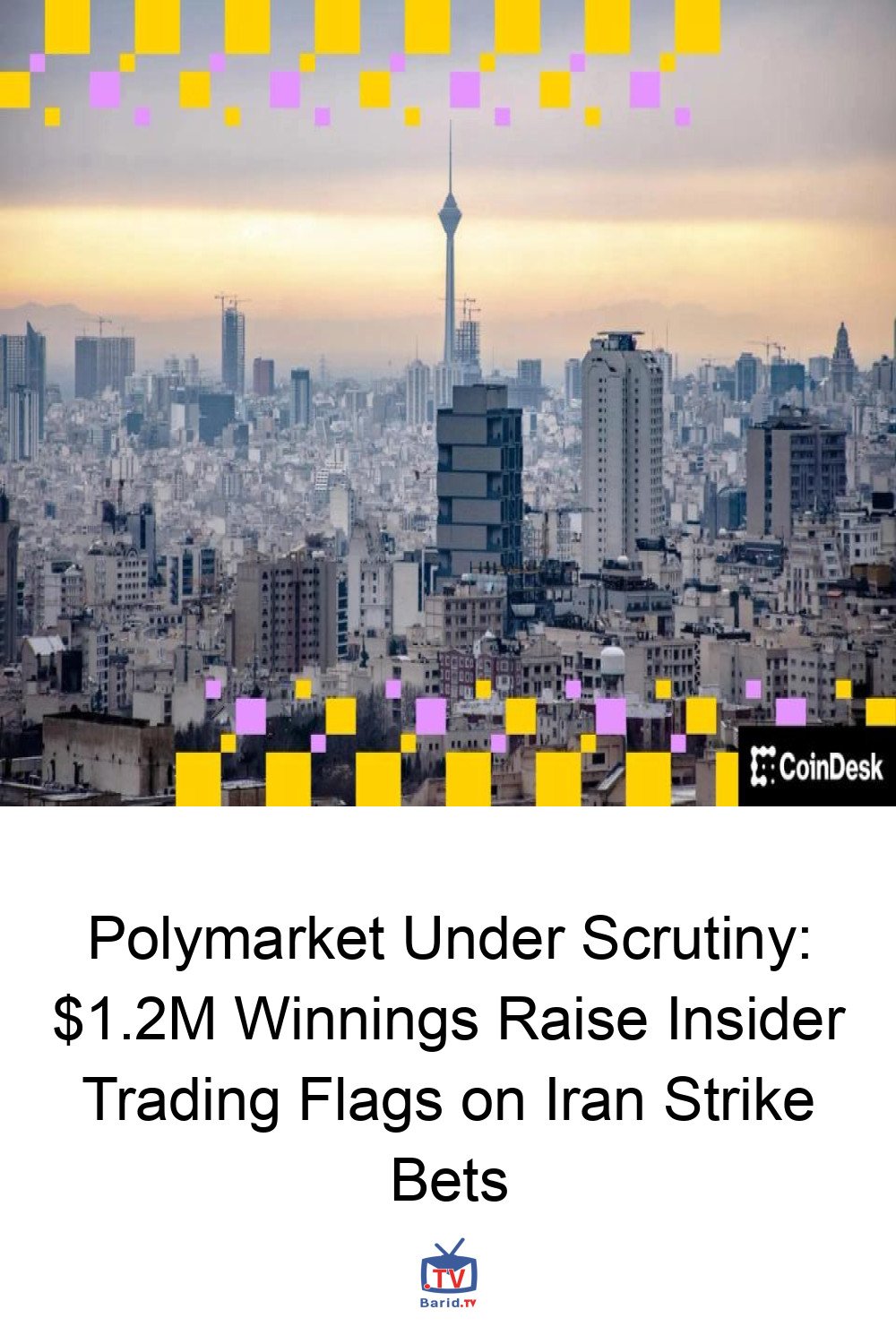
A staggering $1.2 million windfall on the decentralized prediction market Polymarket has ignited a fierce debate and raised serious questions about potential insider trading. Six accounts, exhibiting highly unusual activity, accurately predicted the U.S. would launch strikes against Iran on February 28, profiting handsomely just hours before the events unfolded.
Suspicious Activity Precedes Geopolitical Conflict
According to blockchain analytics firm Bubblemaps, these six Polymarket accounts collectively earned approximately $1.2 million by betting “Yes” on the market “U.S. strikes Iran by February 28, 2026?”. What makes these winnings particularly suspicious is the timing and nature of the accounts:
- Most wallets were funded within 24 hours of the attack.
- “Yes” shares were purchased just hours before explosions were reported in Tehran and other Iranian cities.
- The accounts showed no other trading activity beyond these specific predictions.
- All six profiles were created in February, indicating a targeted, short-term operation.
One account alone purchased over 560,000 “Yes” shares at 10.8 cents each, resolving at $1 for a profit nearing $560,000. Another secured a six-figure gain from nearly 150,000 shares bought at 20 cents. The sheer volume of trading on this specific contract was immense, reaching almost $90 million, part of over $529 million wagered across related strike-date markets since December.
Bubblemaps further solidified their suspicions by publishing a visual map illustrating how these six wallets were clustered together and funded through similar, interconnected paths, suggesting a coordinated effort rather than independent speculation.
Market Reactions and Broader Implications
The U.S. strikes, announced by President Donald Trump as “major combat operations” targeting Iran’s missile, naval, and nuclear infrastructure, sent immediate ripples through global financial markets. Bitcoin’s price experienced a notable drop, while oil futures on Hyperliquid surged, reflecting the heightened regional conflict‘s consequences.
This incident underscores the volatile interplay between geopolitical events and digital asset markets, where information asymmetry can lead to significant financial gains for those with privileged knowledge.
Regulators Take Notice: A Growing Concern
The Commodity Futures Trading Commission (CFTC) has previously issued warnings regarding potential insider trading violations on prediction markets, viewing such activities as a serious breach of market integrity. This latest Polymarket incident is likely to intensify regulatory scrutiny on the burgeoning prediction market sector.
Precedents and Enforcement Actions
The issue of insider trading on prediction markets is not new. Rival platform Kalshi, registered with the CFTC as a designated contract market, has actively pursued and penalized users for such violations:
- Recently, Kalshi suspended and fined a visual effects editor for MrBeast’s “Beast Games” who allegedly traded on non-public information about show outcomes. The individual was banned for two years and fined over $20,000.
- In another instance, a political candidate faced penalties for betting on their own election race.
Kalshi reports having investigated approximately 200 cases and currently has over a dozen active probes, highlighting the industry’s ongoing struggle to maintain fair play. CFTC Chairman Mike Selig has emphasized that exchanges serve as the “first line of defense” against such illicit activities.
Insider Trading on Insider Trading?
Intriguingly, Polymarket itself recently saw traders appear to insider-trade a market on insider trading. When blockchain sleuth ZachXBT teased an upcoming investigation into a crypto platform (later revealed to be Axiom), a Polymarket contract was created to predict which company would be named. Blockchain analysis by Lookonchain revealed 12 wallets that heavily bet on Axiom ahead of the official reveal, suggesting yet another instance where non-public information was exploited for profit.
The Future of Prediction Markets
While prediction markets offer a unique mechanism for aggregating collective intelligence and hedging against future events, incidents like these threaten their legitimacy and sustainability. The challenge for platforms like Polymarket, especially those operating in decentralized or less regulated environments, will be to implement robust mechanisms to detect and deter insider trading, ensuring a level playing field for all participants and fostering trust in their markets.
For more details, visit our website.
Source: Link