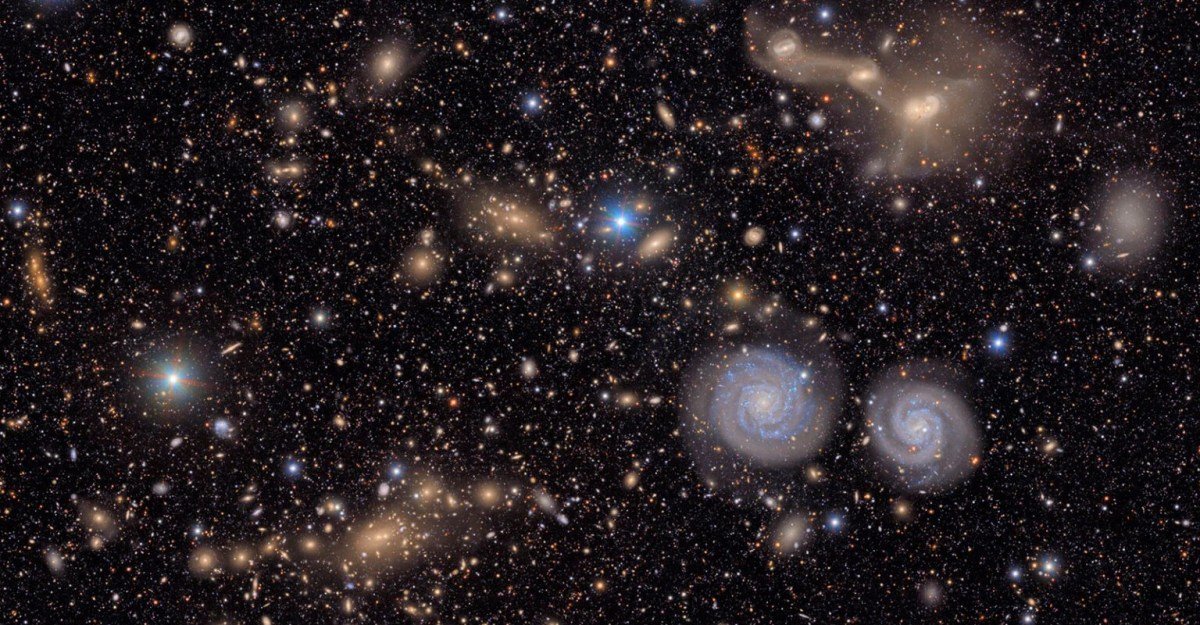

The night sky, a canvas of endless mysteries, has just become significantly more dynamic for astronomers worldwide. The Vera C. Rubin Observatory’s automated alert system, a groundbreaking technological marvel, officially went public on Tuesday, February 24th, and immediately made its presence known. On its very first night of operation, the system barraged astronomers with an astonishing 800,000 alerts, signaling everything from newly discovered asteroids to distant supernovas and the tell-tale signs of black holes actively feeding. This initial torrent is merely a prelude, with projections indicating that the number of daily alerts could soon escalate into the multiple millions.
A New Era of Astronomical Discovery Dawns
While the observatory unveiled the first breathtaking images from its car-sized Legacy Survey of Space and Time (LSST) camera in June of last year, the true anticipation has been for the launch of this real-time alert system. This innovation promises to fundamentally transform how scientists engage with fleeting celestial phenomena. Rather than waiting for manual data analysis, astronomers will now receive notifications about significant cosmic events within minutes of their detection, enabling rapid follow-up observations and unprecedented insights into the universe’s most transient occurrences.
The Engine Behind the Alerts: LSST Camera and Advanced Algorithms
At the heart of this cosmic notification network is the LSST camera, a powerhouse capable of capturing approximately 1,000 images every single night. The system operates by meticulously comparing these fresh captures against a comprehensive reference image taken when the telescope first commenced operations. Any discernible differences are automatically flagged for further scrutiny. Sophisticated algorithms then spring into action, adeptly distinguishing between various types of celestial events – be it the sudden flare of a supernova or the subtle movement of an approaching asteroid. These classifications are then swiftly disseminated as alerts to interested research parties, all within a remarkable timeframe of mere minutes.
From Supernovas to Asteroids: What the System Detects
The breadth of phenomena the Rubin Observatory is designed to detect is vast. From the violent death throes of massive stars manifesting as supernovas to the silent, swift passage of near-Earth asteroids, and even the energetic signatures of black holes consuming matter, the system is a vigilant sentinel. This immediate notification capability means that astronomers can pivot their research focus almost instantly, capturing crucial data from events that might otherwise vanish or evolve beyond recognition before traditional observation methods could react.
Navigating the Cosmic Deluge: Intelligent Filtering for Astronomers
Recognizing the potential for information overload, the Rubin Observatory’s developers have wisely incorporated a robust filtering system. These alerts are not an all-or-nothing proposition; researchers can customize their notifications based on a variety of parameters. Filters can be applied by event type, brightness, or even the frequency of events within a specified period. This intelligent design is crucial for preventing astronomers from being overwhelmed by the sheer volume of data, ensuring that they receive only the most relevant and actionable alerts as the Rubin Observatory continues to ramp up its rate of cosmic discoveries.
As the Rubin Observatory embarks on its full operational journey, its alert system stands as a testament to human ingenuity, promising to unlock new chapters in our understanding of the cosmos, one ping at a time.
For more details, visit our website.
Source: Link