

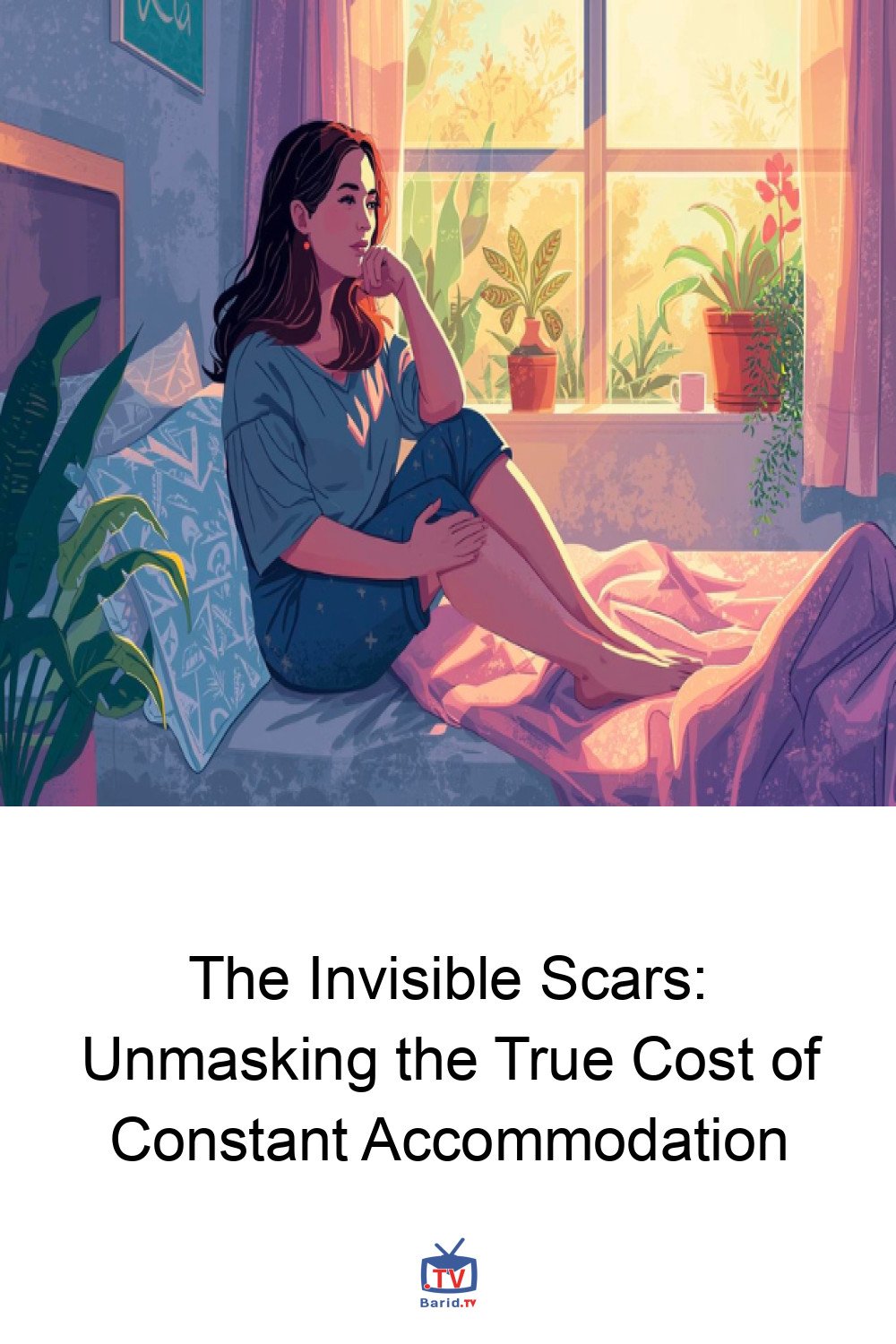
The Invisible Scars: Unmasking the True Cost of Constant Accommodation
“When you say yes to others, make sure you are not saying no to yourself.” — Paulo Coelho
In a world that often praises self-sacrifice, many of us learn early to prioritize the comfort and needs of others over our own. For some, particularly first-born daughters, this tendency is deeply ingrained, shaping a life defined by unwavering reliability and a quiet suppression of personal truth. But what is the true, often invisible, cost of always being “the easy one”? This is a journey into the profound impact of self-abandonment, from childhood struggles to the precipice of physical and emotional collapse.
The Genesis of Self-Abandonment: A Childhood Blueprint
From an early age, I embodied the role of the responsible first-born: the helper, the peacekeeper, the one who never wanted to cause trouble. “Good” was synonymous with quiet, easy, and undemanding. What I didn’t grasp then was that I was meticulously crafting a blueprint for self-abandonment. My academic life was a silent battleground. Reading and focus were constant challenges, a stark contrast to my younger sister’s effortless comprehension. I worked twice as hard to achieve half as much, staying up late, rewriting notes, pushing against an invisible current. Yet, terms like dyslexia or ADHD were never uttered. Instead, girls like me were simply “sensitive,” “scattered,” “anxious,” or “not trying hard enough.” I internalized the belief that I was inherently flawed, that ease was a luxury reserved for others. To avoid being “the difficult one,” I struggled in silence, keeping my needs small and my presence unobtrusive.
The Adult Burden: Motherhood and Unseen Grief
This pattern of prioritizing external harmony over internal honesty became deeply wired by adulthood. The arrival of motherhood only intensified this ingrained behavior. My first pregnancy was a quiet joy, carefully guarded. Its tragic end in miscarriage felt profoundly isolating; an invisible loss that, I told myself, wasn’t “the same” as losing a child, not “a big deal.” Yet, grief unacknowledged doesn’t vanish; it burrows deep within the body. Subsequent pregnancies and the birth of my children demanded an even greater suppression of self. When my first child arrived, I declared, “I’ve got this,” masking overwhelming emotions. When my second child was born prematurely and rushed to the NICU, my terror was met with a stoic, “Tell me what to do.” As my body began to buckle under the relentless weight of stress, exhaustion, and fear, my plea for help was replaced with a resolute, “I’ll push through.” This is the unspoken creed of many first-born daughters: choosing harmony over honesty, being needed over needing, and peace, even when the price is oneself.
The Breaking Point: When the Body Keeps Score
The NICU days were a blur of beeping monitors, hospital parking tickets, and the relentless demands of a toddler at home. With no paid leave and my family’s financial stability resting solely on my shoulders, I returned to work almost immediately. I was the income, the insurance, the unwavering pillar. For years, I projected an image of competence, but internally, I was fraying. Each January, the anniversary of that initial trauma, my nervous system would ignite. I dismissed it as “seasonal depression,” but my body was meticulously tallying every unprocessed emotion, every suppressed need. Trauma doesn’t always manifest as dramatic flashbacks; sometimes, it’s a quiet, relentless obsession with maintaining control, a terrifying fear that if one thread unravels, the entire world will collapse.
The Ultimate Reckoning: A Body Under Siege
Eventually, the bill for constant self-abandonment comes due. You cannot endlessly disappear for the sake of others and expect to find a self to return to. Burnout became a physical presence in my bones, anger simmered beneath my skin, and resentment became an unwelcome shadow. The shift wasn’t a sudden revelation but a thousand tiny ignored whispers from my body that eventually escalated into a deafening shout. The terrifying clarity of this cost manifested most acutely during my second pregnancy. Confined to a hospital bed, my body under siege from preeclampsia—a condition where my own blood pressure attacked me—the world should have narrowed to just me and my breath. Instead, I was still performing the role of “The Calm One.” I was on the phone, soothing my wife’s anxieties over a biology class, managing my mother’s frustration over a toddler’s tantrum, absorbing their angry tones and anxieties even as my own life hung precariously in the balance.
Reclaiming the Self: A Path to Wholeness
This harrowing journey underscores a critical truth: the relentless pursuit of being “easy” or “good” at the expense of one’s own well-being is a unsustainable path. It’s a profound call to recognize the subtle ways we abandon ourselves, to honor our needs, and to set boundaries that protect our physical and emotional health. The cost of constant accommodation is not just personal; it echoes through our relationships and ultimately diminishes the very self we strive to preserve for others. It is a powerful reminder that true strength lies not in endless sacrifice, but in the courage to say “yes” to ourselves, first and foremost.
For more details, visit our website.
Source: Link