
NASA’s Lunar Leap: A Bold New Strategy for Artemis Acceleration
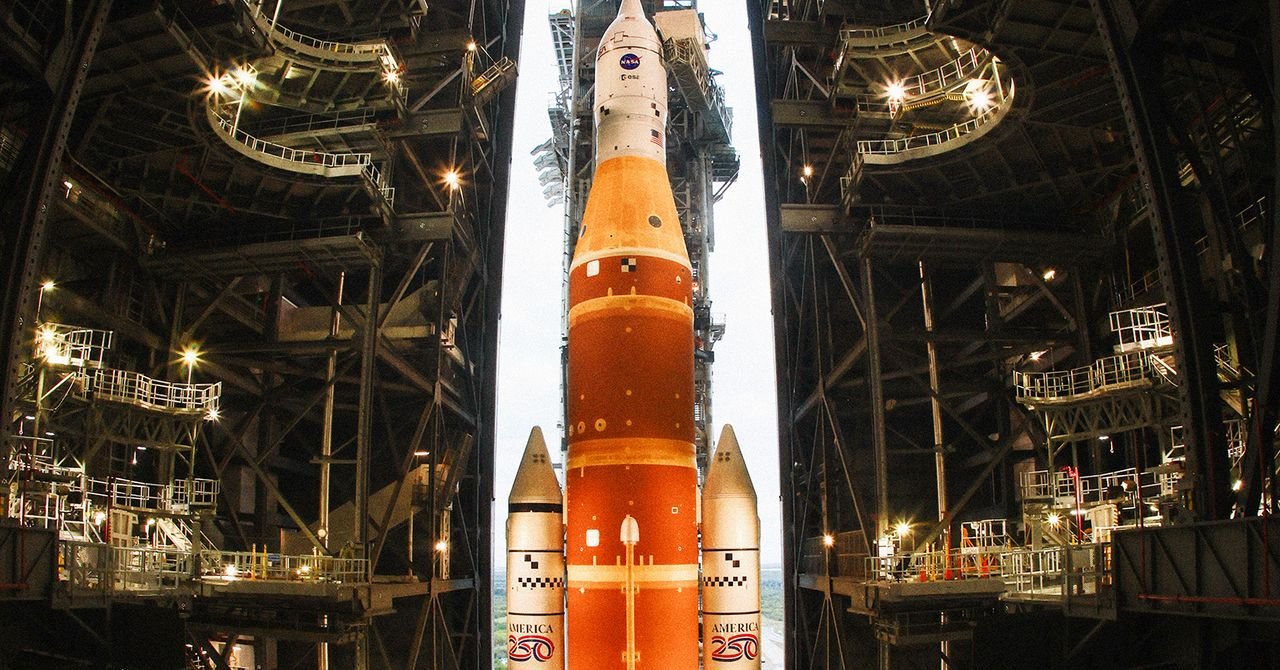
In a decisive move to reinvigorate its deep-space ambitions, NASA Administrator Jared Isaacman has announced a sweeping overhaul of the Artemis program. The changes, revealed on Friday morning, signal a dramatic shift towards an increased mission cadence and the strategic cancellation of an expensive rocket stage, aiming to propel humanity back to the lunar surface with unprecedented urgency.
The Urgency of the Lunar Race
This significant shake-up comes amidst growing concerns over the program’s pace. NASA has faced persistent challenges, including difficulties fueling the colossal Space Launch System (SLS) rocket for the upcoming Artemis II lunar mission. Isaacman’s leadership seeks to inject vitality into an agency perceived by some as moving at a “glacial pace” on its deep-space endeavors. A palpable sense of competition looms large, with fears that China’s rapidly advancing space program could achieve a human lunar landing before NASA returns this decade with Artemis.
“NASA must standardize its approach, increase flight rate safely, and execute on the president’s national space policy,” Isaacman declared. “With credible competition from our greatest geopolitical adversary increasing by the day, we need to move faster, eliminate delays, and achieve our objectives.”
Sweeping Changes to the Artemis Roadmap
The announced revisions to the Artemis program are comprehensive and designed to streamline operations and accelerate timelines:
- Exploration Upper Stage (EUS) Cancellation: The costly Exploration Upper Stage and Block IB upgrade for the SLS rocket have been canceled.
- Standardized SLS Configuration: Artemis II and Artemis III missions will now utilize the SLS rocket with its existing upper stage. Subsequent missions, Artemis IV, V, and any beyond, will adopt a “standardized” upper stage.
- Artemis III’s New Role: The Artemis III mission will no longer involve a direct lunar landing. Instead, the Orion spacecraft will launch on SLS and rendezvous with commercial lunar landers, such as Starship and/or Blue Moon, in low Earth orbit.
- Artemis IV: The First Lunar Landing: Consequently, Artemis IV is now slated to be the program’s inaugural human lunar landing mission.
- Annual Mission Cadence: NASA aims to fly Artemis missions annually, commencing with Artemis III in mid-2027, followed by at least one lunar landing in 2028.
- Commercial Lander Acceleration:
NASA is intensifying its collaboration with SpaceX and Blue Origin to expedite the development of their commercial lunar landers for Artemis IV and subsequent missions.
Standardization: The Key to Speed and Reliability
At the heart of Administrator Isaacman’s strategy is a critical focus on increasing the flight rate of the SLS rocket and Artemis missions. Historically, during programs like Mercury, Gemini, Apollo, and the space shuttle era, NASA launched humans approximately once every three months. In stark contrast, nearly three and a half years have passed since Artemis I launched.
“This is just not the right pathway forward,” Isaacman emphasized. A senior NASA official, speaking anonymously, highlighted persistent hydrogen and helium leaks during both Artemis I and Artemis II prelaunch preparations, problems that have caused month-long delays.
“If I recall, the timing between Apollo 7 and 8 was nine weeks,” the official noted. “Launching SLS every three and a half years or so is not a recipe for success. Certainly, making each one of them a work of art with some major configuration change is also not helpful in the process, and we’re clearly seeing the results of it, right?”
The new objective is to standardize the SLS rocket into a single, reliable configuration, enabling launches as frequently as every 10 months. NASA plans to operate the SLS vehicle until viable commercial alternatives for crewed lunar transport emerge, potentially through Artemis V, as mandated by Congress, or even longer.
Lessons from Apollo: A Phased Approach
NASA’s revised approach to Artemis marks a deliberate return to the foundational philosophy of the Apollo program. In the late 1960s, Apollo missions systematically built up to the Apollo 11 lunar landing through a series of preparatory crewed flights. These included Apollo 7 (low-Earth-orbit spacecraft test), Apollo 8 (lunar orbiting mission), Apollo 9 (low-Earth-orbit rendezvous with the lunar lander), and Apollo 10 (lunar lander descent test without touchdown).
The previous Artemis blueprint had notably bypassed these crucial preparatory steps, jumping from Artemis II—a crewed lunar flyby testing only the SLS rocket and Orion spacecraft—directly to a full-scale lunar landing with Artemis III. Many industry experts viewed this leap as excessively ambitious, and the new strategy addresses this by reintroducing a more phased, incremental path to the Moon.
Industry Partners Onboard
Despite the significant programmatic shifts, NASA officials confirm that all key agency contractors are aligned with the new direction, and senior congressional leaders have been thoroughly briefed. While the cancellation of the Exploration Upper Stage might have presented a challenge for Boeing, its prime contractor, the company has publicly expressed support for the revised plans.
Steve Parker, Boeing Defense, Space & Security president and CEO, stated in a NASA news release, “Boeing is a proud partner to the Artemis mission and our team is honored to contribute to NASA’s vision for American space leadership. The SLS core stage remains the world’s most powerful rocket stage, and the only one that can carry American astronauts directly to the moon and beyond in a single launch. As NASA lays out an accelerated launch schedule, our workforce and supply chain are prepared to meet the increased production needs.” This unified front underscores the collective commitment to accelerating America’s return to the Moon.
For more details, visit our website.
Source: Link