
From Viral Sensation to Tariff Expert: The MorphCostumes Saga
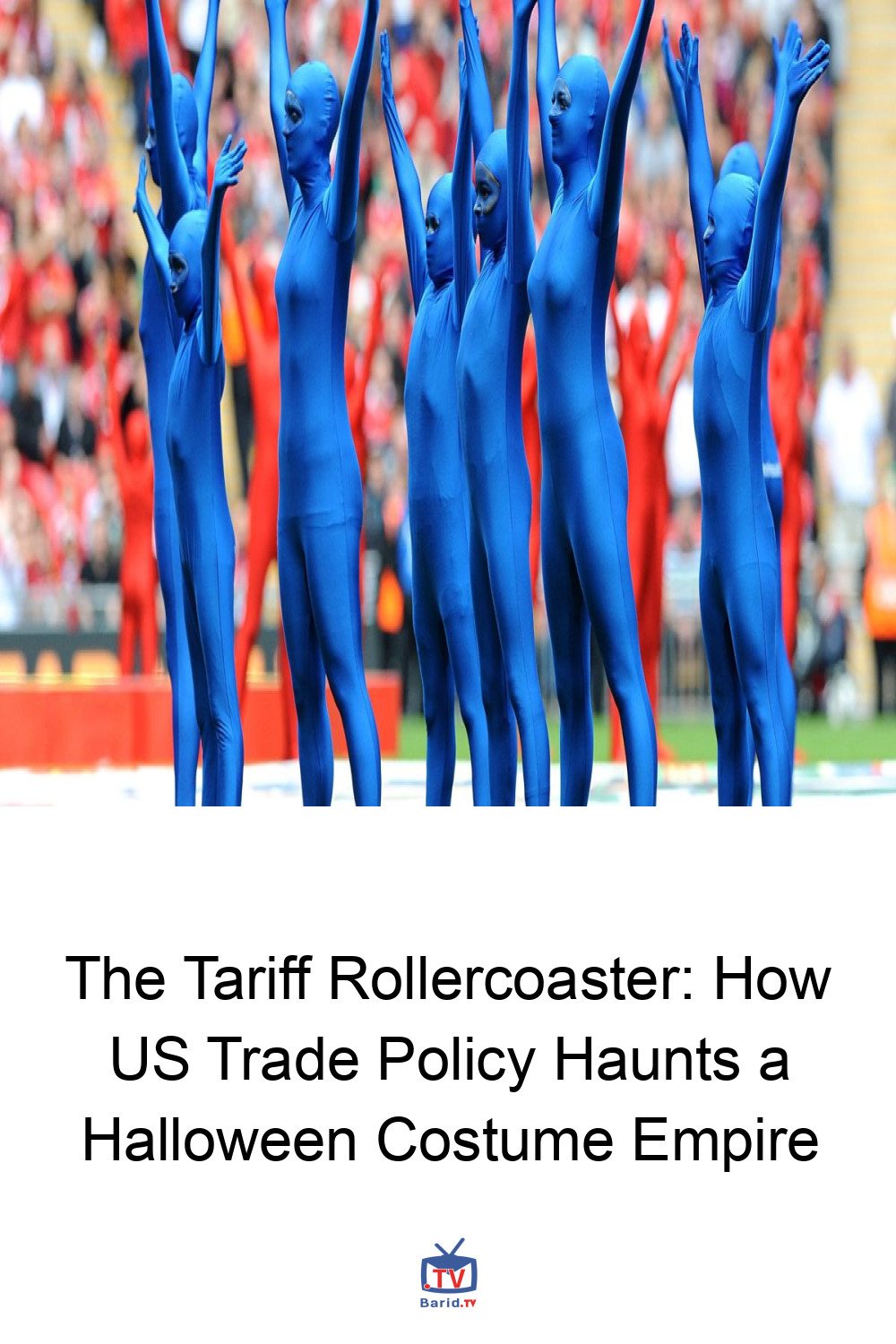
For millions across America, especially around Halloween, the name MorphCostumes conjures images of vibrant, full-body spandex suits, viral videos, and unbridled fun. Behind this global phenomenon stands Fraser Smeaton, co-founder of the Scottish company, alongside his brother Ali and former roommate Gregor Lawson. What began in 2009 as a quirky twist on the zentai suit quickly exploded, leading to memorable stunts like the 2018 ‘morphing’ of a Fifth Avenue Gap store, a spectacle that garnered millions of views and even a police call-out.
Yet, the journey of MorphCostumes, whose biggest market remains the United States, has taken an unexpected turn. From its Edinburgh headquarters, Smeaton has become an unlikely expert in the labyrinthine world of global tariff policy, grappling with the profound impact of economic volatility and trade barriers. His story offers a Main Street perspective on a high-stakes economic drama, one that policymakers, including the President, would do well to heed.
The Unmasking of Trade Volatility: A Business Under Siege
MorphCostumes manufactures its iconic outfits in China, a nation with a three-decade head start in clothing production expertise. Relocating this intricate supply chain is, for now, prohibitively expensive. This reliance has placed MorphCostumes, a supplier to retail giants like Walmart and Target, squarely in the crosshairs of America’s fluctuating trade policies.
Since the recent presidential term began, the company has endured a dizzying ride on the tariff rollercoaster. Import taxes have lurched wildly: from zero to 20%, then to 50%, briefly flirting with an astonishing 145%, before settling back at 20%. A Supreme Court intervention last week declared these tariffs illegal, bringing them back to zero, only for the President to announce a new 10% tariff – with lingering confusion over whether it might actually be 15%.
“It is certainly not good for investment,” Smeaton observes with a characteristic Scottish understatement. “Or for the U.S. consumer. They are paying higher prices.” Indeed, MorphCostumes’ outfits now cost 9% more, a direct consequence of a staggering $3 million duty bill that decimated the company’s profits. While a slight increase in the price of a witch’s outfit might not spark a supermarket riot, it carries a crucial economic lesson.
Tariffs: A Double-Edged Sword for the Economy
Tariffs, essentially taxes on imported goods, do serve to raise revenue for the U.S. government. Smeaton notes these bills typically fall due within seven to ten days. However, their broader impact is far more significant: they fuel inflation across all affected goods, from superhero costumes to essential household appliances like fridge-freezers. These cost-of-living effects have a direct and undeniable read-through to public sentiment and, ultimately, the polls.
Goldman Sachs underscored this reality last autumn, reporting that “consumer prices have risen disproportionately in categories facing larger tariff increases.” An updated forecast this week further estimated that “tariff pass-through increased core PCE (personal consumption expenditure) prices by about 0.7% through January and will raise prices by a further 0.1% in the remainder of 2026.” The economic ripple effect is clear and far-reaching.
The Reshoring Illusion? Challenging the Narrative
The presidential administration often champions tariffs as a mechanism to encourage the reshoring of jobs back to the U.S. While this strategy may hold true for certain large-scale manufacturing sectors – Volvo’s increased production at its Ridgeville plant in South Carolina being a prime example – it proves largely unfeasible for many firms heavily reliant on China’s manufacturing ecosystem. Consider that three-quarters of all U.S. toys are manufactured there.
“Cut and sew is not the type of work Americans want,” Smeaton asserts, highlighting the vast disparity in labor costs: “In China, labor costs are $2 to $3 an hour. In America they are $20 an hour.” He calculates that tariffs would need to skyrocket to 500% to even make reshoring a viable consideration, a level that would undoubtedly drive countless businesses into insolvency long before any such shift could occur.
MorphCostumes has diligently explored alternatives to Chinese production, scouting locations in Vietnam, Bangladesh, and Cambodia. Yet, none offer the unparalleled, deep-seated expertise – from cloth-sourcing to zip-making – that China provides, often in the crucial small batches required for fast-moving consumer goods. “We planned to open a factory in India, but then there was a fallout there, and tariffs were imposed, so we had to cancel that idea,” Smeaton recounts, illustrating the global complexities.
The Urgent Call for Stability
For some, political chaos can be a strategic tool. For businesses like Fraser Smeaton’s, however, the antithesis is desperately needed: stability. Donning a Morph suit might be a source of viral amusement and millions of YouTube views, but the wipeout of profits following the latest White House announcement is unequivocally no laughing matter. The saga of MorphCostumes serves as a stark reminder that predictable, consistent trade policies are not merely desirable; they are essential for the health and vitality of global businesses and the pockets of everyday consumers.
For more details, visit our website.
Source: Link