
The Lingering Echoes of Childhood Trauma
In the intricate tapestry of human experience, some threads are woven with pain, leaving scars that, even with time and healing, can resurface unexpectedly. It’s a profound truth that age and recovery do not render us invulnerable to moments that can transport us back to the very traumas we endured as children. This doesn’t signify a fundamental brokenness, but rather highlights an ongoing opportunity for deeper healing and self-discovery. There is nothing inherently “wrong” with you.
My own journey through trauma in my twenties was a harrowing period, marked by the active reliving of childhood sexual abuse, leading to repeated hospitalizations to contain overwhelming grief. As I crossed into my thirties, a pervasive sense of despair settled in; I feared peace was an unattainable myth, having no genuine reference point for it. Yet, it wasn’t traditional psychiatry or therapy that ultimately anchored me, but a profound spiritual relationship with myself. Integrating practices like meditation, prayer, and a life dedicated to serving others became my lifeline, pulling me from that vortex of suffering. Three years on, I’ve maintained my stability, found financial footing, cultivated meaningful friendships, and achieved numerous personal goals.
A Familiar Yet Destructive Connection
Earlier this year, however, I encountered someone—let’s call him Brian—who was unlike any man I had met before. He exuded an extreme strength, yet simultaneously possessed a striking rawness. “This feels familiar,” I thought, sensing a kindred spirit, a “wounded soldier” much like myself. I was drawn to understand him more deeply.
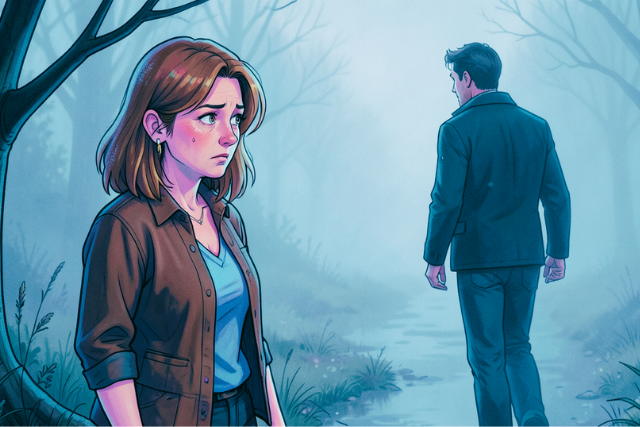
After an initial night of romance and tenderness, Brian swiftly began to sabotage our burgeoning connection. He became distant, oscillating between hot and cold, and deliberately introduced other women into our conversations, later admitting this was a “test” to provoke jealousy. It became clear he was uncomfortable with my ability to truly “see” him. Energetically, I felt his pain and offered support as he vented about his own traumas. While I didn’t aim to “save” him, I found a strange relief in meeting someone who mirrored my own painful duality, fostering a sense of camaraderie and tenderness.
The Trap of Self-Doubt
Despite our undeniable chemistry, Brian’s regard for me was not reciprocal. As his initial charm faded, he became increasingly cruel, falling into a cycle of ignoring me, returning, apologizing, and then making me feel special again. Any rupture in our dynamic was invariably blamed on me. He was relentlessly critical, while I, in turn, made endless excuses for his behavior. My past hospitalizations in my twenties had left me with a deep well of self-doubt and self-hatred, leading me to believe I was, in fact, the sole problem.
At this point, I was still indoctrinated with the dangerous belief that enduring pain was an intrinsic part of “real love.” This dynamic triggered a regression, pulling me back into self-destructive patterns from my childhood, including disordered eating and self-harm, alongside escalating depression and anxiety. When I communicated my struggles to him, Brian made it unequivocally clear that I was on my own with the emotional fallout our relationship created. Yet, my old wounds compelled me to relentlessly “earn back” his love, believing it was the path to my own well-being. It was an utterly miserable existence.
Unmasking the Cycle of Abuse
Eventually, a painful truth emerged: Brian was incapable of acknowledging that despite our connection—and his persistent returns—he could not sustain intimacy due to his own unresolved issues. Instead, he framed my actions as “pushing him away” or “turning him off.” While I admit my clinginess might have been a “turn-off” at times, it in no way justified his abusive conduct. I now understand that his inconsistency and withdrawal only amplified my desperate need for reassurance.
Having navigated my own profound struggles, I am not a judgmental person. However, there came a point where I had to confront his mistreatment for what it truly was. He would punish me with weeks of silent treatment, resort to name-calling, and leverage resources like money to maintain control. Regardless of the initial tenderness I felt, I eventually had to let him go. The terms of our dynamic had become chillingly clear: I had to be diminished or destroyed for him to thrive.
Breaking Free and Reclaiming Self
The turning point arrived one night when he uttered something particularly vile—a comment about my “insides being broken.” This statement, given my history of sexual abuse, was inherently cruel and deeply shocking. When I visibly reacted with distress, he dismissed it as me being “too sensitive.” And because of my past, I doubted myself. I shouldn’t have. Such a comment is unequivocally horrible. But it took me an agonizingly long time to recognize his true character, largely due to the insidious self-doubt that had been a constant companion since childhood.
After we parted ways, the path forward became clear: I had to confront and heal these lingering wounds of self-doubt to prevent similar destructive patterns from recurring in my future relationships. It was a commitment to myself, to truly break free from the echoes of the past and build a foundation of self-worth that no toxic dynamic could ever dismantle again.
For more details, visit our website.
Source: Link