
The Digital Demise: Why Sierra, the Supercomputer Titan, Was Decommissioned
In the world of high-performance computing, even titans have a finite lifespan. Sierra, a name synonymous with unparalleled processing power and critical national security, recently completed its remarkable seven-year journey at the Lawrence Livermore National Laboratory in northern California. Though never truly ‘alive’ in the biological sense, this colossal supercomputer lived an impressive, impactful existence before the government made the decisive call for its decommissioning. Its final tasks were completed last October, marking the end of an era for a machine that once ranked as the second-fastest on the planet.
A Legacy Forged in Silicon and Steel
Conceived over a decade ago in a Chicago hotel conference room, Sierra was a marvel of engineering, a ‘designer baby’ assembled from thousands of IBM Power9 CPUs and Nvidia Volta V100 GPUs. This daring, offbeat architecture for Livermore at the time allowed her to house her processing innards across 240 racks, sprawling over approximately 7,000 square feet. Her primary mission was to perform specialized, super-high-security simulations for the National Nuclear Security Administration – a role she executed with distinction. At the time of her ‘death sentence,’ her processing power still commanded a respectable 23rd position globally.
The sheer scale of Sierra’s construction and operation represented an immense investment. While the lab’s leadership remains tight-lipped about the exact figures, the government spent at least $325 million on Sierra and her fraternal twin, Summit (decommissioned in late 2024) at the Oak Ridge National Lab. Given her continued functionality, the decision to pull the plug might seem counterintuitive. As John Allen, the lab’s organizational information security officer, acknowledges, “At the end of the life of a machine, you could think, Oh, we have all these sunk costs. You should just keep running the machine forever.” But, he clarifies, “Its good and faithful service is over, and we have to move on.”
The Inevitable Cycle: Reasons for Retirement
The decommissioning of a supercomputer like Sierra is not a whimsical decision but a calculated necessity driven by several critical factors, illustrating the relentless pace of technological evolution.
The Bathtub Curve: Hardware’s Natural Lifespan
One primary reason is the inherent lifespan of hardware. Like any complex system, supercomputers experience a “bathtub curve” of failure rates. Initially, there’s a higher failure rate due to manufacturing defects in nascent components. This gives way to a “golden era” of stable operation. Eventually, however, components begin to degrade, pushed to their operational limits, and the failure rate inevitably climbs again. “As you age—just like humans—you are likely to get more disease,” explains Devesh Tiwari, a high-performance computing researcher at Northeastern University. “You are likely to fail more, so you need more caring and feeding.” The goal is to retire a machine before it enters this costly and unreliable final phase.
The Shadow of Obsolescence
Closely linked to hardware degradation is obsolescence. For a machine built with cutting-edge technology a decade ago, finding replacement parts becomes increasingly difficult, if not impossible. Rob Neely, the lab’s associate director for weapons simulation and computing, notes that neither IBM nor Nvidia components used in Sierra are still in production. Furthermore, the operating system, Red Hat Enterprise Linux, is no longer supported by IBM. This lack of support and parts makes maintaining the machine a logistical and financial nightmare. As Ann Dunkin, former CIO of the US Department of Energy, succinctly puts it, “It’s really about resources. If they had infinite resources, they would run infinite supercomputers.” Seven years, it turns out, is a fairly typical lifespan for such a colossal system.
The Rise of a New Titan: El Capitan
Perhaps the most compelling reason for Sierra’s retirement was the arrival of its successor, El Capitan. Once Sierra’s next-door neighbor, El Capitan represents the next generation of supercomputing power. While visually similar – long lines of whirring racks – El Capitan’s internal architecture is a significant leap forward. Coming online in 2025, it boasts the AMD Instinct MI300A APU and a common memory shared across its CPUs and GPUs, offering vastly superior performance. This new titan also demands more power, capable of drawing up to 36 megawatts compared to Sierra’s 11 megawatts – enough to power 36,000 modest homes. The advent of such a powerful and efficient successor renders older, albeit still functional, machines like Sierra less cost-effective and less capable of meeting evolving research demands.
A Grateful Farewell
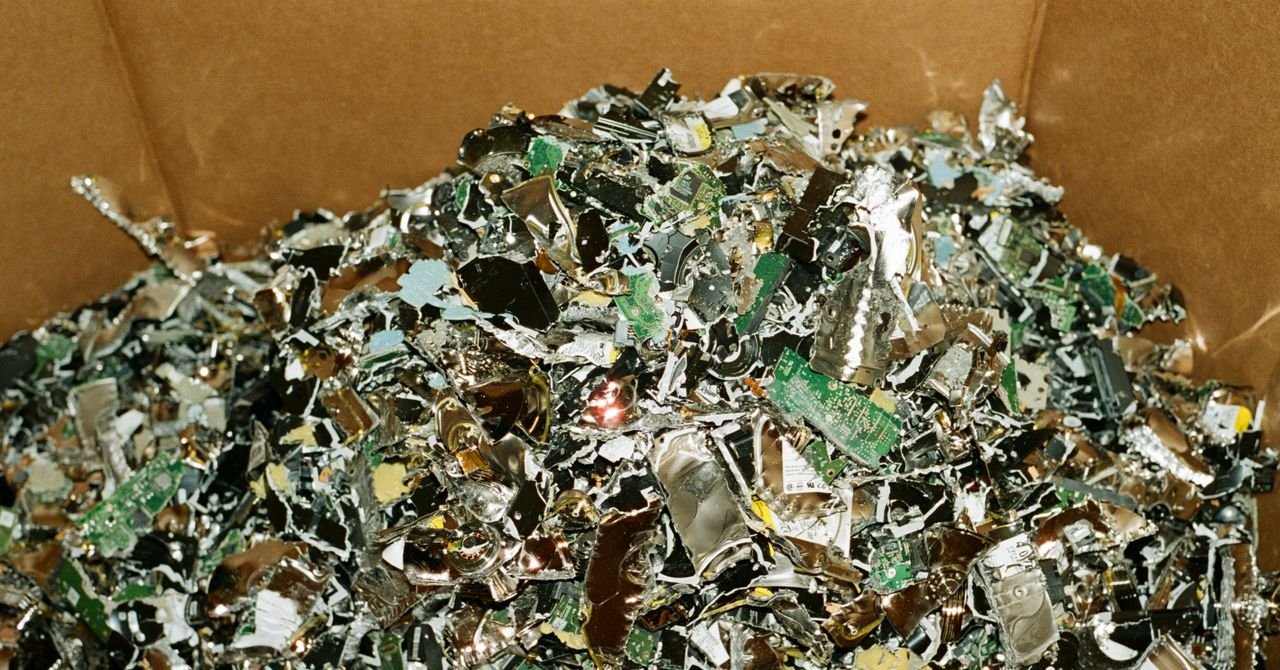
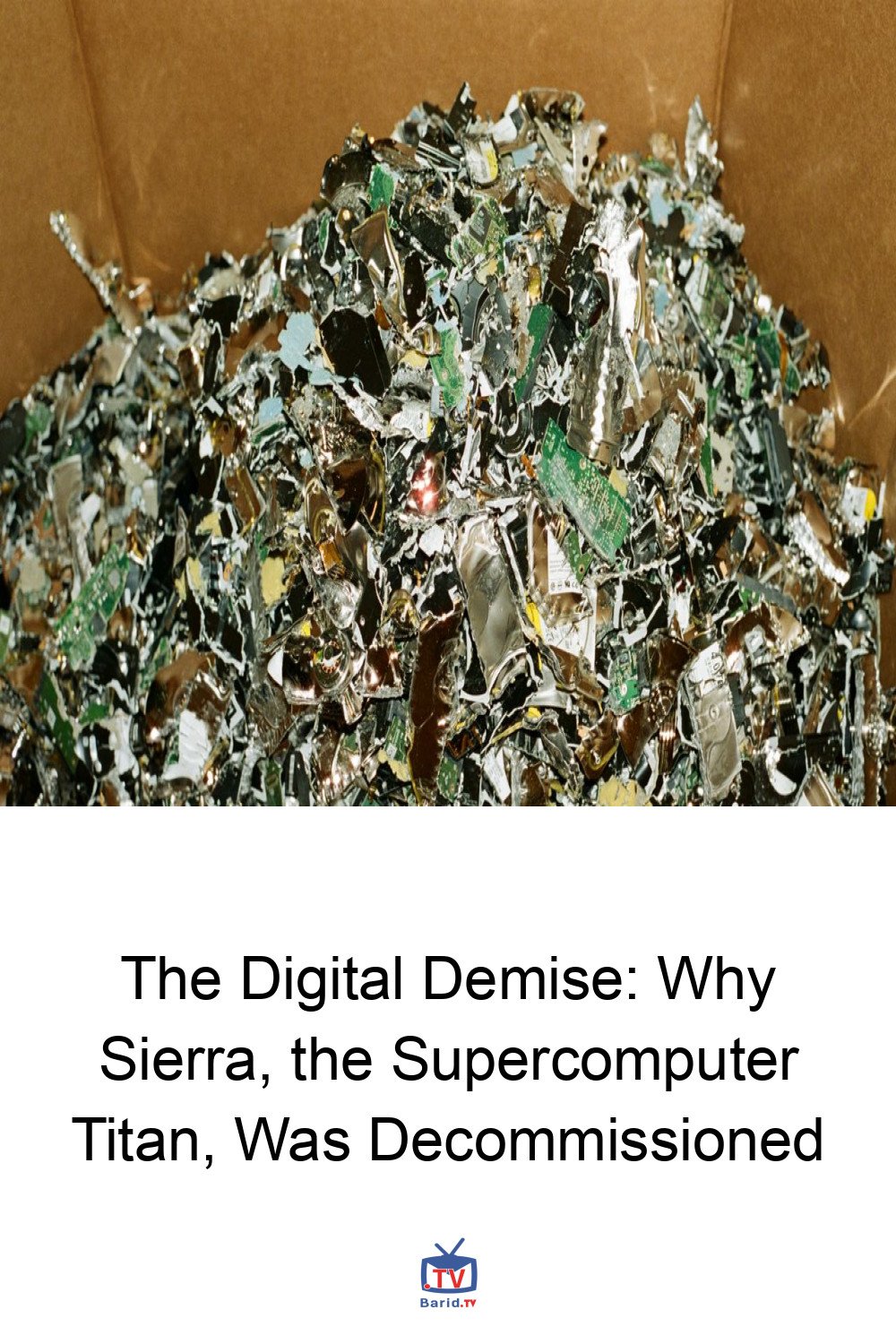
Sierra’s decommissioning proceeded in stages, a methodical dismantling of a machine that served its nation faithfully. Its story is a poignant reminder of the relentless march of technological progress. In the world of supercomputing, even the most powerful machines are but stepping stones, each paving the way for the next, more capable generation. Sierra may be gone, but its legacy lives on in the advancements it enabled and the lessons learned for future digital titans like El Capitan.
For more details, visit our website.
Source: Link