

Nvidia, the undisputed titan of graphics processing units, has once again defied expectations, delivering a fiscal fourth-quarter performance that underscores its pivotal role in the burgeoning artificial intelligence revolution. The company reported earnings and revenue figures significantly above analyst estimates, driven by an astonishing 75% year-over-year surge in its core data center business. This financial triumph not only extended Nvidia’s impressive market rally but also solidified its position as the leading beneficiary of the global AI boom.
The AI Engine: Data Center Dominance Fuels Record Quarter
The numbers speak volumes: Nvidia’s adjusted earnings per share hit $1.62 against an estimated $1.53, while total revenue soared to $68.13 billion, comfortably surpassing the $66.21 billion projection. This remarkable growth represents a 73% increase from the previous year’s $39.3 billion. Crucially, over 91% of Nvidia’s sales now emanate from its data center unit, the powerhouse behind its market-leading AI chips.
Data center revenue alone reached an impressive $62.3 billion for the quarter, outperforming StreetAccount’s estimate of $60.69 billion. This segment’s explosive growth is largely attributed to the insatiable demand from major hyperscalers like Alphabet, Amazon, Meta, and Microsoft, which collectively account for over 50% of Nvidia’s data center revenue as they pour billions into building out their AI infrastructure. Net income nearly doubled to $43 billion, or $1.76 per share, a testament to the company’s operational efficiency and market leverage.
Networking Prowess: Connecting the AI Supercomputers
Within the data center ecosystem, Nvidia’s networking parts — essential for linking hundreds of GPUs — saw an astounding 263% year-over-year sales increase, reaching $10.98 billion. This surge highlights the strong adoption of Nvidia’s NVLink technology and its Spectrum-X Ethernet switches, bolstered by new deals with industry giants such as Meta. The ability to seamlessly connect vast arrays of processing power is as critical as the chips themselves in the race for AI supremacy.
Future-Proofing Growth: Strong Guidance and Strategic Expansion
Nvidia’s forward-looking guidance further fueled investor optimism. The company anticipates revenue for the fiscal first quarter to be approximately $78 billion, plus or minus 2%, significantly exceeding analyst expectations of $72.6 billion. Notably, this forecast does not factor in data center revenue from China, indicating robust demand from other global markets.
The company’s stock has been a standout performer in 2026, outshining all megacap peers with a 5% gain year-to-date, while the Nasdaq experienced a slight dip. This performance underscores investor confidence in Nvidia’s sustained leadership in the AI sector.
Gaming’s Evolution: A Shift in Focus
While the data center unit steals the spotlight, Nvidia’s gaming division, once its largest, also reported solid growth, with revenue climbing 47% from a year ago to $3.7 billion. However, this figure did see a 13% decline from the previous quarter. Industry speculation suggests Nvidia may prioritize AI processors over new gaming GPU launches this year, a strategic move influenced by global memory constraints. This means a greater focus on high-demand AI accelerators, often sold in rack-scale systems like the 72-GPU Grace Blackwell.
Memory supply remains a potential headwind, with CFO Colette Kress noting that constraints are expected to impact the gaming business “in the first quarter of fiscal 2027 and beyond.”
Innovation on the Horizon: Vera Rubin and Global Supply Chains
Excitement is building for the upcoming release of Nvidia’s next-generation Vera Rubin rack-scale systems, the successor to Grace Blackwell. Samples have already been shipped to customers, with production shipments slated for the second half of the year. Vera Rubin promises a tenfold increase in performance per watt, a critical advancement for energy-intensive data centers facing power limitations.
To bolster its resilience and meet escalating demand, Nvidia is strategically expanding its supply chain beyond its traditional Asian concentration, venturing into the U.S. and Latin America. The company is now manufacturing Blackwell GPUs at Taiwan Semiconductor Manufacturing Co.’s new Arizona plants, and some rack-scale systems are being assembled at a new Foxconn facility in Mexico. These moves are designed to strengthen the supply chain, add redundancy, and ensure Nvidia can continue to meet the surging global appetite for AI infrastructure.
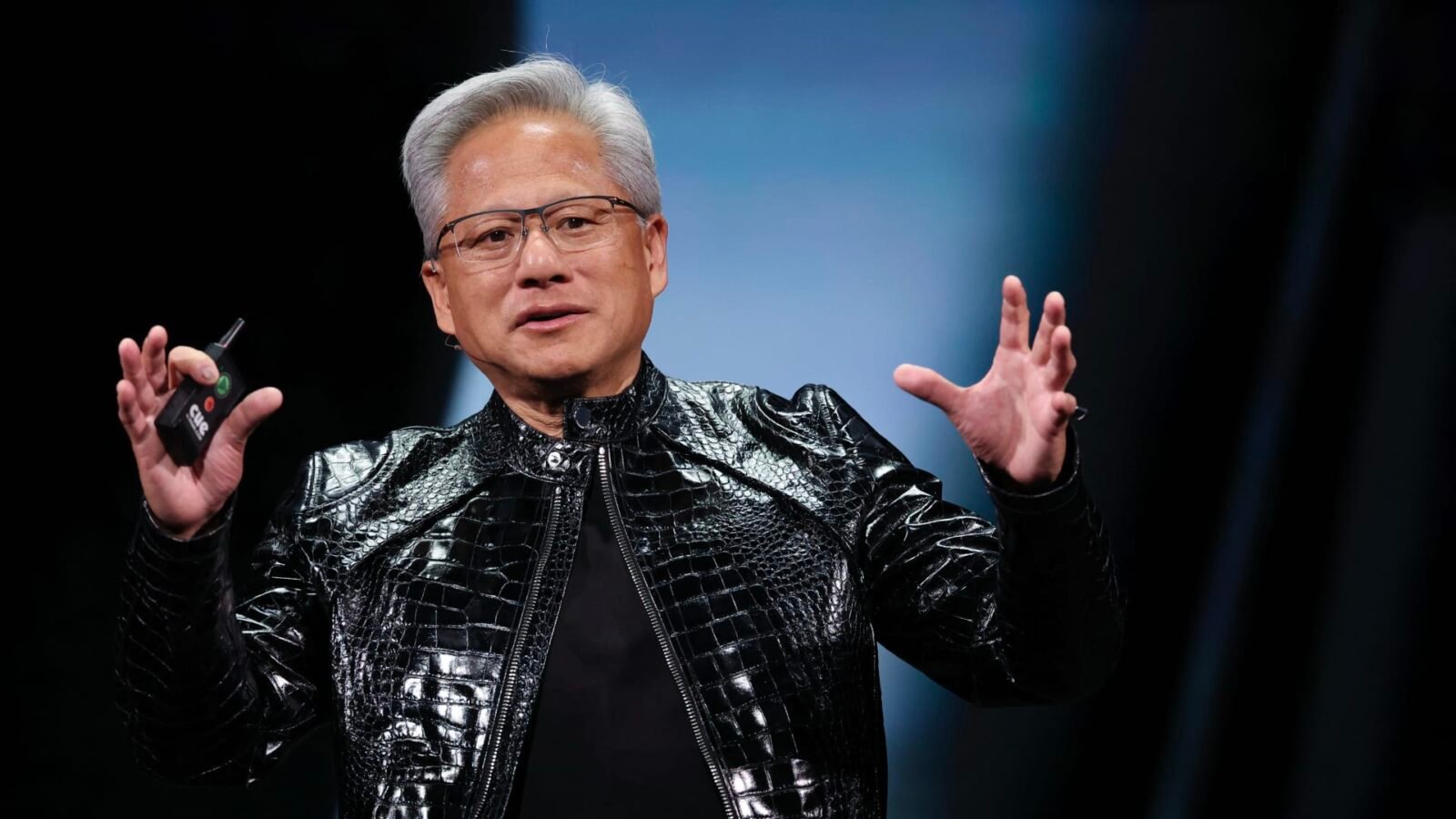
As CEO Jensen Huang stated, “Our ability to increase manufacturing capabilities will depend on the local region’s manufacturing ecosystem’s capacity to ramp production supply to the required levels.” Nvidia’s latest financial results and strategic maneuvers paint a clear picture of a company not just riding the AI wave, but actively shaping its future, demonstrating unparalleled growth and a relentless pursuit of innovation.
For more details, visit our website.
Source: Link