
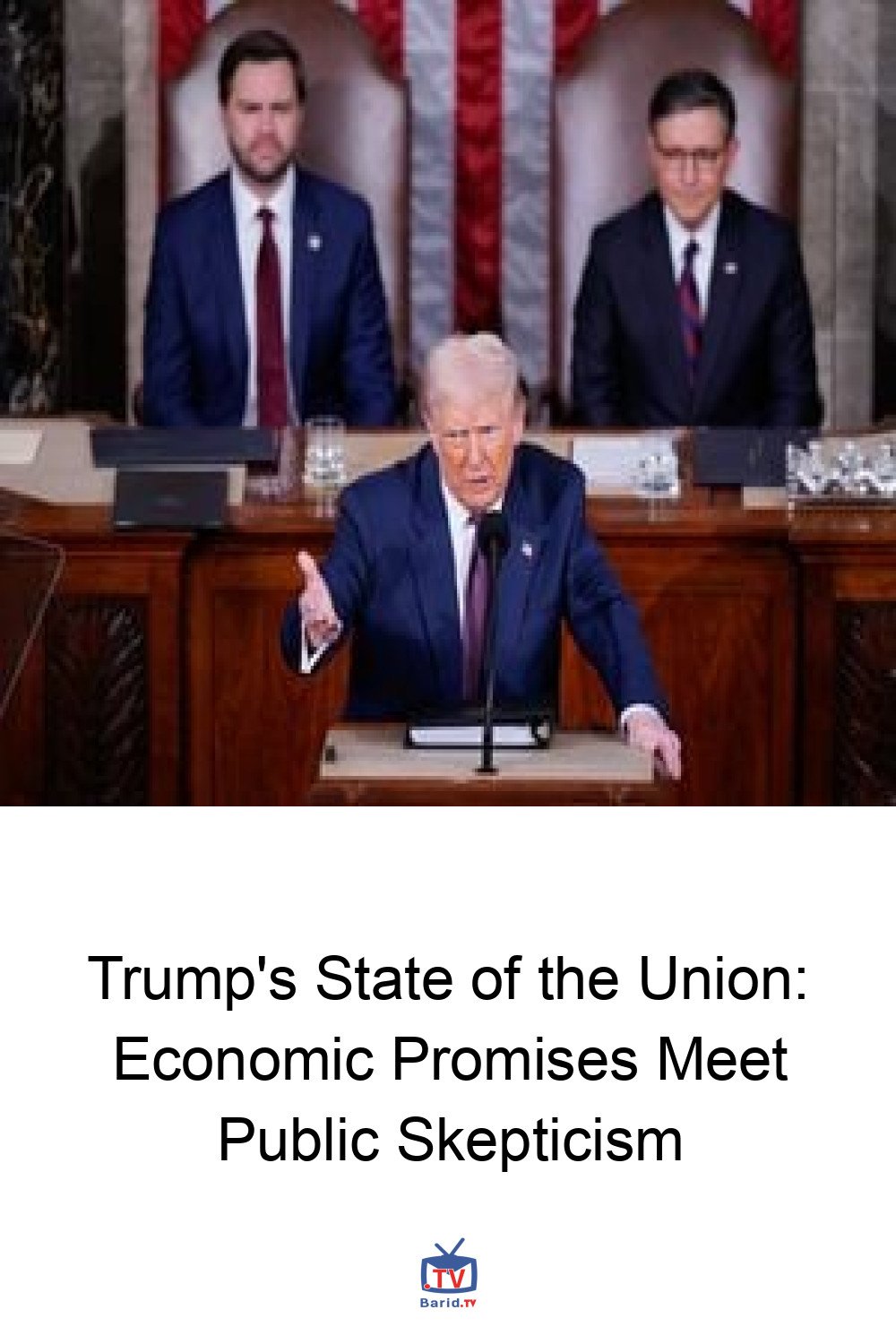
As President Donald Trump prepares to deliver his State of the Union address, all eyes are on his economic pitch. Despite a White House eager to highlight perceived successes, a significant portion of the American public remains unconvinced, grappling with stubbornly high grocery prices, soaring electricity bills, and a competitive job market. This speech arrives just days after a Supreme Court ruling dealt a blow to his signature tariff policy, adding another layer of complexity to his administration’s economic narrative.
Trump’s Economic Narrative: A Battle Against Public Sentiment
The White House, through Press Secretary Karoline Leavitt, has signaled a defiant optimism, stating the President will “proudly tout his Administration’s many record-breaking accomplishments, and also layout an ambitious agenda to continue bringing the American Dream back for working people.” However, this official confidence contrasts sharply with public sentiment. Recent polls indicate a dip in Trump’s overall job approval, with many Americans expressing dissatisfaction over the economy’s direction. The persistent burden of high living costs, coupled with a tight labor market and growing anxieties about AI-driven job displacement, paints a challenging backdrop for the President’s address.
Key Economic Pillars of the State of the Union Address
The Big Tech Pact: Shifting Energy Costs
One of the anticipated announcements from the State of the Union is a series of “rate payer protection pledges.” As reported by The Wall Street Journal, these pledges aim to ensure that major tech companies bear the financial brunt of escalating electricity costs associated with their energy-intensive data centers, rather than passing these expenses onto American households. This initiative comes amidst growing public concern, with a recent Echelon Insights poll revealing that 46% of respondents would “strongly or somewhat oppose” the construction of a new data center in their community, underscoring a potential political win for the administration.
Tariffs Reimagined: A Post-Supreme Court Strategy
The Supreme Court’s recent decision to strike down a key component of Trump’s tariff framework has forced the White House to recalibrate its trade strategy. The President is expected to elaborate on his administration’s backup plans, which include the implementation of a 10% global tariff. While an initial 10% rate took effect on Tuesday, Trump has also signaled an intent to escalate this to 15% using a separate legal authority untouched by the high court’s ruling. The timeline for this potential increase remains undisclosed, leaving businesses and consumers awaiting further clarity on the future of global trade policy.
“Trump Accounts” and Targeted Tax Relief
A cornerstone of Trump’s social and economic agenda, the “Trump accounts,” are also slated for promotion. Established as part of last year’s tax package, these accounts promise a $1,000 benefit for every baby born in the U.S. during Trump’s second term, with the program set to commence on July 5th, coinciding with the nation’s 250th independence anniversary. Beyond this, the President will likely highlight other legislative achievements, such as tax exemptions on tips and overtime pay, specifically targeting workers in the service and hospitality sectors. These measures aim to offer tangible financial relief to specific segments of the workforce, aligning with the broader “American Dream” narrative.
As President Trump delivers his address, the nation will be watching to see how he navigates the complex economic landscape, balancing a message of accomplishment with the palpable concerns of everyday Americans. His ability to articulate a compelling vision that resonates beyond the White House’s optimistic pronouncements will be crucial for the political battles ahead.
For more details, visit our website.
Source: Link