
A Masterclass in Respectful Reinvention: Melbourne’s Federation Gem
In Melbourne’s verdant south-eastern suburbs, where the grandeur of early 20th-century homes lines wide, tree-canopied streets, a magnificent 1912 Federation residence has been reborn. Originally designed by the esteemed architect Augustus Fritsch, known for his iconic Catholic churches, this home bore all the hallmarks of its era: soaring ceilings, intricate plaster cornices, original stained glass, and rooms of generous proportion. Yet, for interior designer Swee Lim of Swee Design, the challenge was clear: how to honour such a rich history without being confined by it? The answer, in this breathtaking transformation, was not restraint, but an exuberant embrace of joy.
Architectural Harmony: A Dialogue Between Old and New
The home unfolds across three distinct levels, a testament to a thoughtful architectural dialogue. The original heritage façade and formal rooms command the front, preserving their dignified composure. Seamlessly, these transition into a contemporary rear extension, a light-filled expanse housing the kitchen and living zone, directly connected to the lush garden. Adding an unexpected layer of drama, a basement level reveals a games room, a sophisticated bar, and an intimate inner courtyard.
For designers embarking on similar heritage renovations, a crucial lesson emerges here: rather than attempting to blur the lines between eras, celebrate their inherent contrast. This project masterfully highlights the natural fault lines, allowing the formal heritage spaces to retain their gravitas while the modern extension exudes fluidity and expression. As Lim aptly notes, “The interplay between old and new became the foundation for the interior direction.” This is modernisation not as erasure, but as a vibrant conversation.
Beyond Trends: A Home Reflecting Personality
Home to a family of five, including three young adult children, the brief was multifaceted. The residence needed to function as an elegant backdrop for adult entertaining, yet remain relaxed and adaptable for a dynamic family life, accommodating partners and friends. Crucially, the clients eschewed safe, neutral interiors. They were creative, adventurous with colour, and open to living with bold art and sculptural furniture. This openness elevated the project from a mere renovation to a curated experience.
A Bold Brief: Colour, Art, and Adventure
Herein lies the second vital lesson: successful modernisation deeply reflects the inhabitants’ personalities, transcending fleeting contemporary trends. A historic shell can indeed house an entirely new narrative, provided the architectural integrity is respected. Lim’s approach was not to apply a single palette, but to choreograph colour as a progression, a journey through the home.
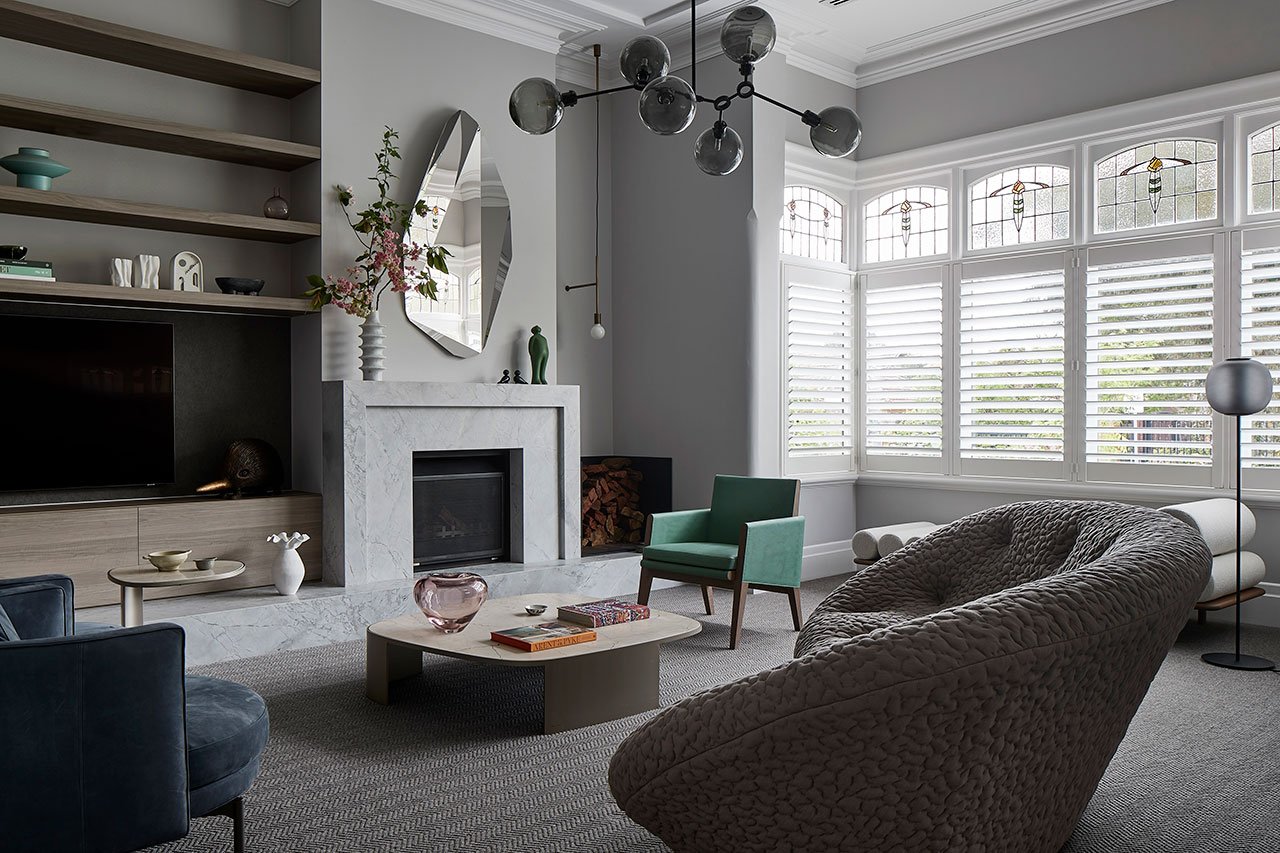
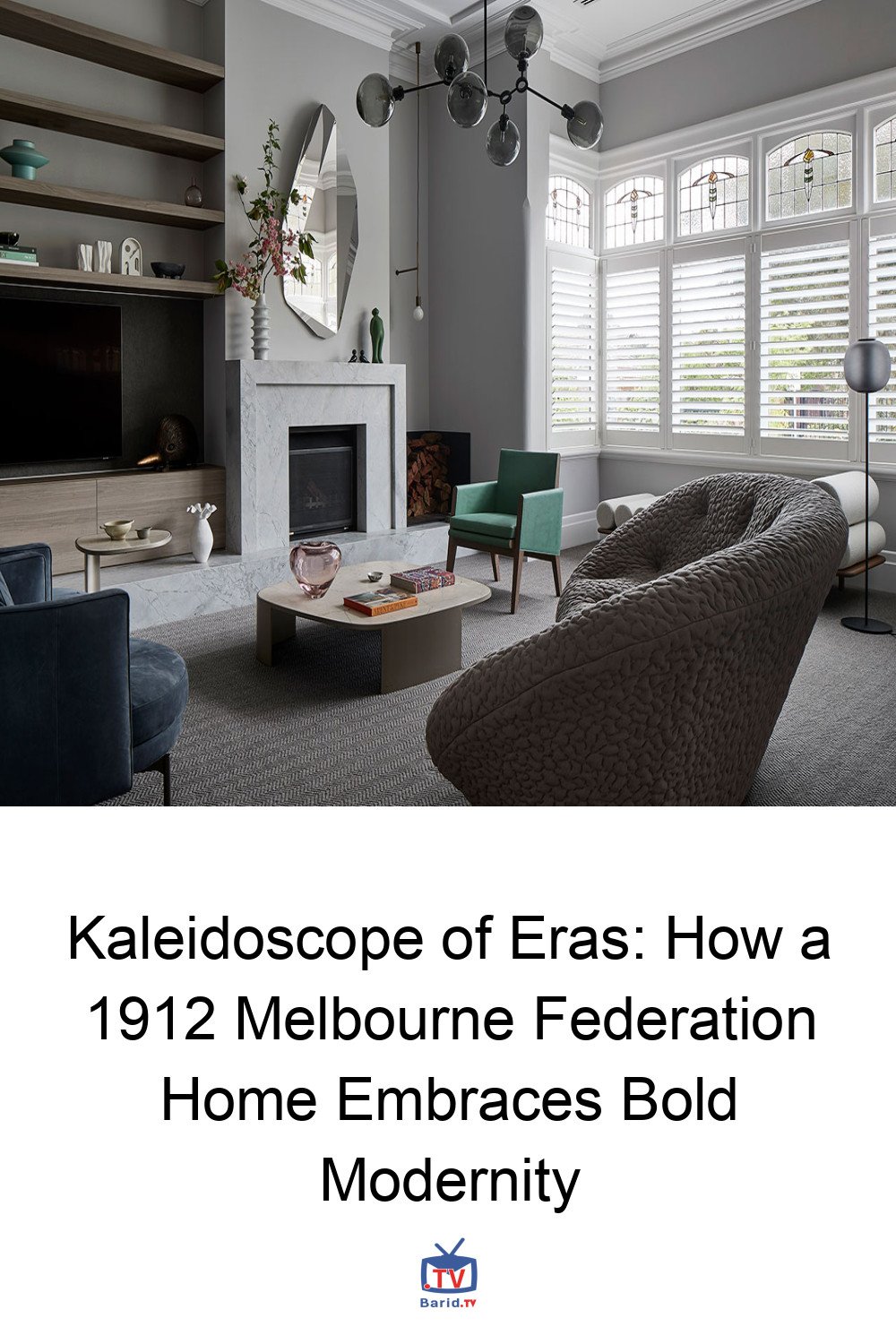
In the original Federation rooms, a sophisticated warm grey provides a quietly luxurious backdrop, respectful of the home’s heritage proportions and formal use. This allows the intricate plasterwork and stained glass to shine, while creating a serene base for art. As one moves into the contemporary wing, the mood shifts dramatically. Oceanic blues emerge in lacquered joinery, deepened by plush velvet furnishings, and punctuated with vibrant accents of pink, burgundy, and bronze. Here, colour is more than a decorative flourish; it’s a powerful thread linking artwork, materiality, and mood across space.
Crafting a Living Gallery: Art, Texture, and Scale
The design philosophy balances restraint in heavily ornamented rooms with a celebration of saturation in new, contemporary zones. Bold choices are anchored not to passing aesthetics, but to enduring materials and carefully selected art. Each room, Lim explains, possesses its own distinct personality, collectively forming a cohesive narrative rather than a matching set.
Curated Collections: Global Artistry and Local Craft
Artworks were meticulously sourced from across Australia and internationally, including a monumental textile commission from Mexican studio Caralarga. Custom lighting, hand-built ceramic totems, and bespoke furniture from local makers further reinforce a sense of collaborative artistry. One of the project’s most dramatic moments lies beneath ground: a colossal 100-kilogram bronze sculpture, craned into the basement courtyard, now serves as a captivating focal point in the light-filled inner garden—a literal testament to the commitment required for a truly creative vision.
The Power of Texture: Adding Depth and Soul
The grandeur of Federation architecture can often feel imposing, even stiff. The antidote in this home is a rich tapestry of textures. Luminous dolomite and pink marble introduce solidity, while cast bronze and brass accents add weight and a beautiful patina. Light timber and lacquered joinery soften transitions, and a luxurious array of velvets, linens, leather, quilted fabrics, and hand-woven tapestries infuse the spaces with tactility and soul.
Grand Scale, Intimate Feel: Designing for Presence
These material choices also modulate scale. The home’s soaring ceilings demand pieces with significant presence—large-scale artworks, sculptural furniture, and custom lighting—elements the architecture not only allows but actively encourages. Heritage homes often intimidate owners into mere preservation; here, history provides the magnificent scale and structure, while contemporary art and vibrant colour inject vitality.
Aptly titled “Kaleidoscope,” this project embodies the idea that a contemporary home can function as a curated, living gallery when designed with intention. Yet, nothing here is treated as untouchable. This is a full-time family home, designed to be used, lived in, and loved—sculptural furniture and all. Ultimately, this 1912 Federation home neither feels frozen in time nor stripped of its past. Instead, it stands as compelling proof that heritage architecture can not only hold contemporary life but thrive within it, creating a vibrant, unique, and deeply personal sanctuary.
For more details, visit our website.
Source: Link