

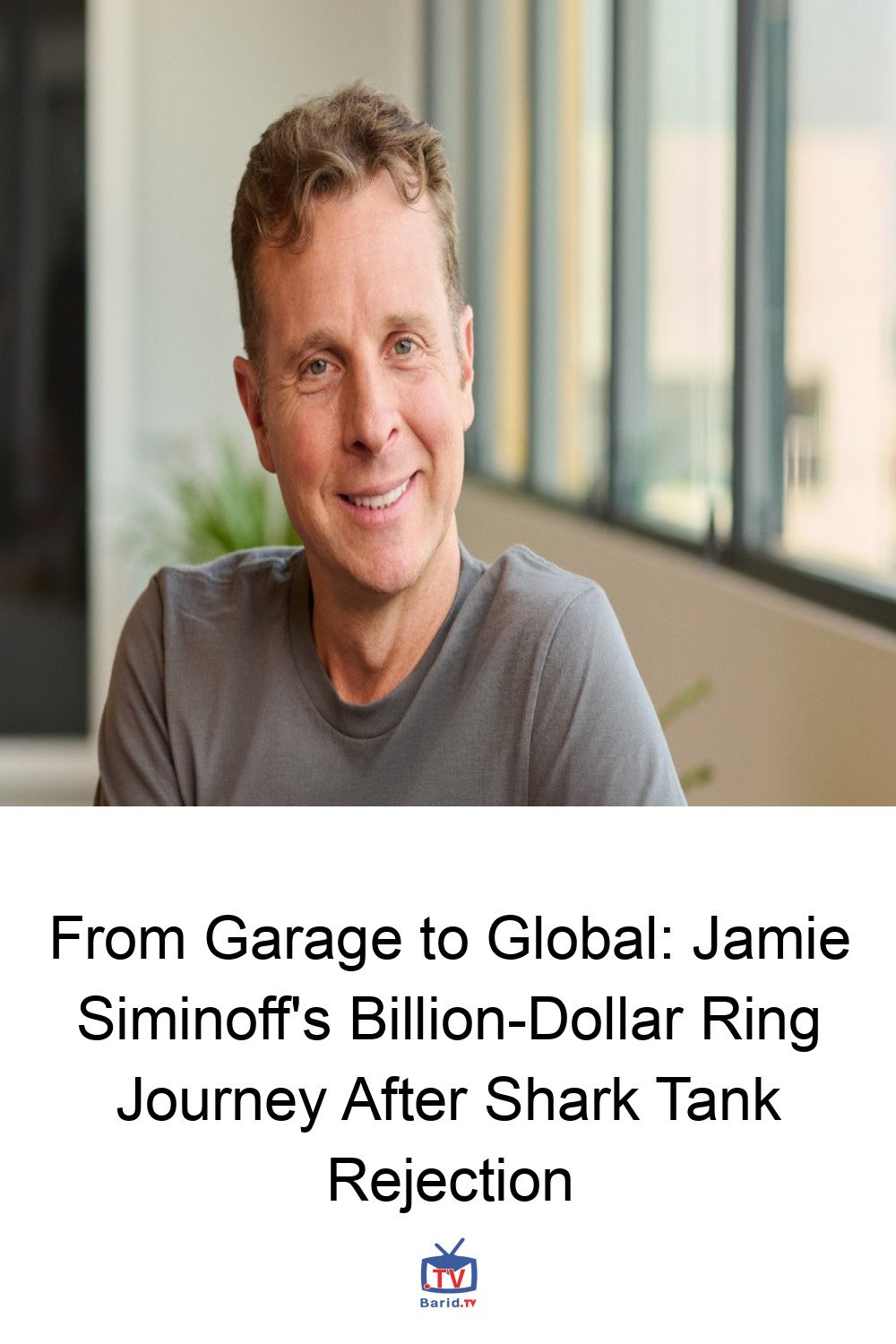
In the annals of entrepreneurial folklore, few tales resonate with the same blend of grit, rejection, and ultimate triumph as that of Jamie Siminoff, the visionary behind Ring. From the humble confines of a garage to a billion-dollar acquisition by Amazon, Siminoff’s journey is a testament to unwavering belief in an idea, even when the titans of industry initially say no.
The Genesis of a Game-Changer: From Tinkering to Doorbot
Jamie Siminoff was always an inventor at heart, a childhood tinkerer who carried that spirit into adulthood through various tech startups. Yet, a true breakthrough eluded him until what he describes as an “entrepreneurial midlife crisis” led him back to his garage in 2011. The catalyst? A simple, relatable problem: he couldn’t hear his doorbell while immersed in his projects. Armed with a new iPhone and a burgeoning belief in connected technology, Siminoff sought a Wi-Fi-enabled doorbell. Finding none, he decided to build it himself.
What emerged was the “Doorbot,” a rudimentary contraption of hacked-together camera parts. Its true potential, however, wasn’t immediately apparent until his wife remarked on the enhanced sense of safety it provided. This was the ‘aha’ moment that transformed a mere gadget into a mission. Siminoff realized that connecting homes to the digital world via smartphones could revolutionize security, leading to the ambitious goal of making neighborhoods safer.
The Shark Tank Crucible: Rejection as a Catalyst
By 2013, Doorbot had gained traction through a Kickstarter pre-sale, setting the stage for its ultimate test: an appearance on ABC’s Shark Tank in November. Siminoff approached the show with the intensity of an Olympian, meticulously preparing for the grilling he knew he’d face. He even built a replica set in his backyard, practicing his pitch with neighbors.
The live demo before the Sharks was fraught with tension, the product still in its nascent stages, far from mass production. Despite a successful, albeit stressful, demonstration, Siminoff’s “reality distortion” – a common entrepreneurial trait – led him to believe a deal was imminent, particularly from Mark Cuban. Yet, within minutes, Cuban backed out, leaving Siminoff without an investment. For a brief period, he feared the episode might not even air.
The Phoenix Rises: Rebranding to Ring and Explosive Growth
The Shark Tank rejection, far from being a death knell, proved to be a powerful validation. The public’s response to the episode demonstrated a clear understanding of Doorbot’s value beyond a mere gadget – it was a vital home security solution. Siminoff recognized that this public awareness would inevitably attract competition, necessitating a rapid evolution.
With the 2013 holiday season approaching, the team knew they had to go “all in” to deliver a truly refined product by the following year. This urgency led to the rebrand: Doorbot became Ring. Launched officially in October 2014, the new iteration boasted improved video quality, enhanced motion detection, and crucial cloud recording capabilities. The timing was impeccable.
By CES 2015, the market was flooded with nearly 30 competing doorbell products, a testament to Ring’s pioneering vision. However, Ring’s early launch and momentum proved insurmountable. The company’s growth trajectory was meteoric: $30 million in 2015, $170 million in 2016, and a staggering $480 million in 2017. A pivotal moment came in the summer of 2015 when Richard Branson invested, a period during which monthly sales doubled from $1 million to $2 million.
The Amazon Alliance: A Vision for Infinite Possibilities
Such exponential growth, while exhilarating, brought its own set of challenges. Siminoff likened it to trying to keep the wheels on a rapidly accelerating car. This incredible momentum ultimately caught the attention of Amazon, leading to a landmark acquisition in early 2018 for approximately $1 billion.
While many speculated Amazon’s interest was solely in package protection, Siminoff reveals a deeper truth. Jeff Bezos and the Amazon team recognized Ring’s potential to address an “infinite problem” – the broader landscape of home security and neighborhood safety. This alignment with Ring’s core mission made Amazon an ideal partner. Today, Siminoff remains deeply involved, steering Ring’s future with a keen focus on integrating advanced AI, continuing the evolution of his garage-born invention into a global security powerhouse.
Key Takeaways from Siminoff’s Journey:
- Innovation
from Necessity:
The best ideas often stem from personal problems.
- Rejection as Redirection: A “no” from investors can be a powerful motivator and market validator.
- Mission-Driven Growth: Focusing on a clear mission (safer neighborhoods) provides direction amidst rapid expansion.
- Adaptation is Key: Rapidly evolving the product and brand (Doorbot to Ring) is crucial in competitive markets.
- Vision Beyond the Gadget: Understanding the broader impact and “infinite problem” your product solves attracts significant partners.
For more details, visit our website.
Source: Link